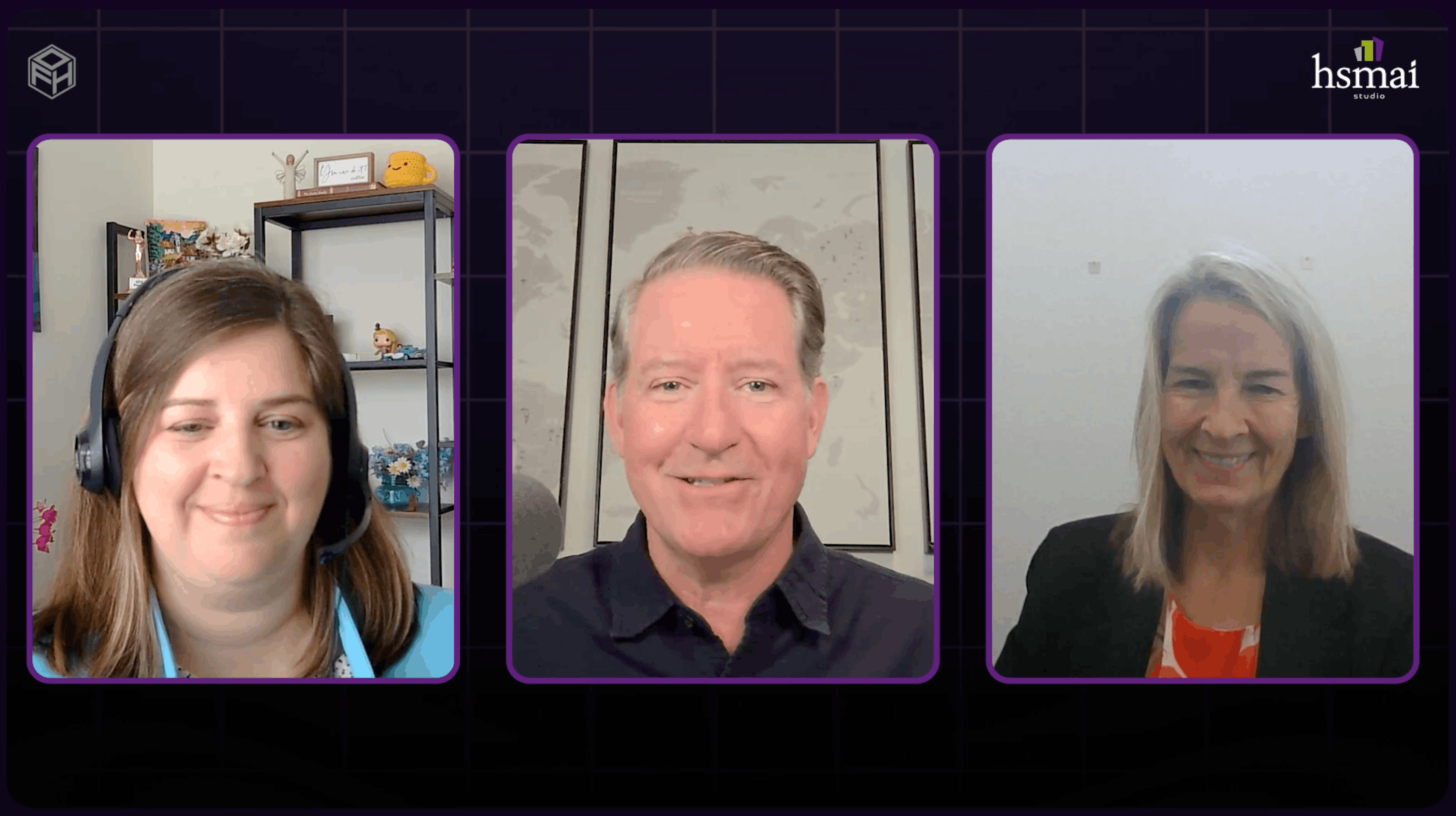
Experiment, Fail, Win: How Great Leaders Adapt in Hospitality
Dr. Florian Ilgen joins HSMAI Studio to unpack why change is so difficult, and why the best leaders learn to embrace it anyway. From failure culture to curiosity to AI, this episode explores the mindset hospitality professionals need to adapt faster and lead with confidence.
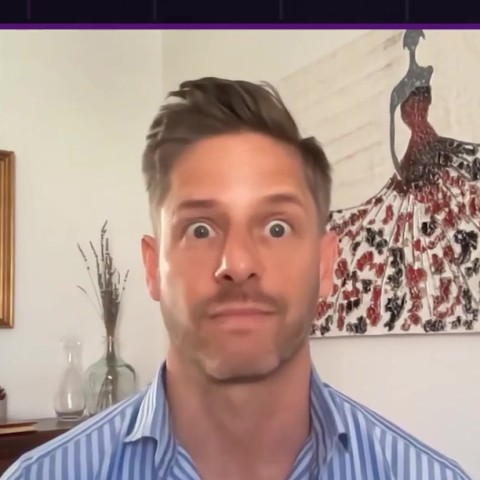
Florian IlgenKeynote Speaker
KEY TAKEAWAYS
01
Run business like experiments
Treat processes as experiments: allow teams to test, fail, learn, and iterate. Leaders must create psychological safety, act authentically and track learning rather than punish mistakes to drive transformation.
02
Make curiosity a daily habit
Build a change mindset by cultivating fearless curiosity: run small enjoyable experiments that trigger dopamine, reframe loss aversion, and use subconscious cues so teams stay motivated to adopt AI and change.
03
Hyper-personalization drives revenue
Use AI to hyper-personalize guest experiences and upgrade process-driven operations. Test which AI tools cut errors, speed tasks, and boost upsells. Successful hotels must run experiments to see what scales.
“
Change never looks sexy in the beginning, but is always worth it.
change never looks sexy in the beginning but is always worth it well hello everyone and welcome to hsmai studio the podcast where we explore the ideas insights and leadership ideas shaping the future of sales marketing and revenue management in the hospitality industry i'm brian hicks president and ceo of hsmai and today i am absolutely pleased to be joined by dr. florian ilgin dr. ilgin brings a very unique perspective that bridges research strategy real world application he challenges the status quo challenges leaders to think a little bit differently as to how organizations learn adaptation especially in ever changing environments i know we'll talk a little bit about ai because that certainly has a big change in the industry i had the privilege of meeting and listening to dr. ilgin a few months ago in london at our hsmai commercial strategy conference and i could not be more pleased to announce that he will be joining us in the americas for the hsmai americas commercial strategy conference june 16th and 17th in san antonio so dr. yildian welcome to hsmai studios great to have you with us today thank you thank you ryan thank you for having me i'm i'm super excited awesome well let's start with letting our our listeners know a little bit about what you do and i'll let you describe what you do and and and and what drove you in what kind of drove you into this this field that's a long story actually i'm i'm a i'm a keynote speaker i'm a motivational speaker i love to dive into the mindset of people when it comes to change when it comes to transformation when it comes to the struggles the challenges we all face both in private life and in business as well because it's two worlds that are connected and we cannot actually we cannot separate them you can't be a professional in business and not be professional in private i don't think this is working so they're quite connected i myself am a chemist my education is chemistry and i love chemistry i still love chemistry as a science so in my talk you witnessed we spoke about dopamine adrenaline when it comes to leaving the comfort zone when it comes to loss aversion however i decided chemistry is nice as a science but i do not want to work within this area within this industry i prefer stages and i love to thrill entertain engage and inspire people to try new things to be like kids again to use fearless curiosity and to try and learn from mistakes love that love that and i love how you kind of pivoted from chemistry you know it's just logical next step right moving from chemistry into speaking and being on stage but what were some of those moments in your in your life in your career when you kind of made that decision to kind of move in that direction what were what were some of the thoughts that kind of went through your head i mean that's you know everybody has you know career path you know move go left go right go straight how did you kind of deal with that and kind of how did you come to that conclusion it's a moving story it's a something i experienced actually was 23 years ago as a chemist i went to australia to canberra did a internship in in canberra capital and after that i've been backpacking and in the first hostel in melbourne i met a interesting a chemical engineer from canada and we were both like the usual chemist you would expect so we went out we partied we did a lot of crazy stuff and he he would entertain people he was like a magician a mentalist and he could hypnotize people and i've seen many many mentalists and magicians in my life and i never connected however this guy was so entertaining and also he like he didn't use a lot of tools or sleight of hand or methodologies but he knew how to entertain people and i was i was caught i was it was contagious and when i returned from australia to munich to germany i started learning what he did because he never told me obviously so this was actually it was interesting because this was 23 years ago and i was 23 then and last year i've been to sydney gave a talk in in in sydney for the australian institute of occupational hygiene and this was exactly 23 years ago and i was 23 and it was like it was it was magic to me and it actually completely australia completely changed my life when i've got a phd in chemistry when i started my phd in chemistry my plan was to be in the lab i wanted to do chemical research for the chemical or pharmaceutical industry this was my plan and somehow life had better plans for me than i and my parents and all the people around me expected it for me to happen yeah i love that i mean it's well it's a benefit for us so we're glad you we're glad you made that made that that turn let's talk a little bit about thought leadership so the work that you do i find really interesting because you've got you're bringing in research you're bringing in strategy and at the same time this is like real world like these are businesses that need to make money right what what's one of the kind of misconceptions that leaders might have when you approach them about applying some of the kind of the research like the academia to their business i think the most striking part the most potential part we have is our experience so if i'm i'm a chemist and i studied chemistry and did something and then i'm working in in the laboratory i might be smart but i have maybe i don't have the experience and i think this translates into almost any industry we can study we can have our mba we can be very good in marketing in in not in sales because i think sales is if you good salesperson you have to have very strong experience so leadership and especially thought leadership is based on experience is based on failure which we learned from theory i mean just imagine i want to learn how to ski i can read a book about how to ski but then i can't ski so i have to go down the slope and i have to fall i have to experience it learn from mistake and get better it's almost like and i gave you this example in my talk it's almost like the the muscle we have we have to destroy the fiber to to grow our muscles and everyday business leadership and as well as thought leadership is based on experiences and the lessons we learn from that i think that's great advice especially if you think about the next generation of coming into the working world trying to capitalize on understanding the need for experience and how that brings such value to that individual i think that's a great great advice when you're working with organizations or speaking to organizations what are some of the kind of traits or habits of a good organization that takes your learnings that takes your advice and actually puts it into practice as opposed to just hearing it in a boardroom or hearing it at an event and going oh that sounds great but you know we're not going to do any of that i think we have to be chemists as well we have to be able as co workers as leaders to run experiments and business is like an experiment because when i did chemistry i run many many many experiments every day and you fail and you fail over and over again and business to some extent is pretty much the same we have to allow our co workers to run experiments and learn from that we have to create an environment where failure culture is not just talked about but actually embraced and lived and it's difficult if a boss tells you yeah we have to have a failure culture but please don't make mistakes it's dysfunctional it's not working it has like leadership is really meaning and especially living and in the end doing what you say so people believe in you and they say that's a true leader he's do actually his work his results match what he said or she said so it has to be congruent what you say what you want for yourself and your co workers and what you do if this is congruent this is strong leadership because if co workers understand and feel that you're just saying something which you basically don't believe in they will follow but not as much as they could or would if you would be authentic genuine and congruent that's so true i've been in situations where let's fail fast right i'm sure you've heard that before let's fail often and fail fast so we can take those learnings and then when it actually happens and somebody sees that there's some sort of retribution then everybody stops right it just nobody's going to continue to try to push that needle knowing that there may be consequences in the end so creating that safe environment to be able to do that is a true leadership skill and i think something that i think needs to be kind of a bit more widely adopted if companies are truly going to succeed so love that yeah so let's talk about the future let's talk about kind of the next few years i had an opportunity last week to speak to a hundred students at my alma mater some of them are going in are in the in the hotel school similar to what i did and yeah it was really interesting i mean their their fears their their hopes you know ai is is top of mind and i i did tell them you know there were many other careers that they could go in that are going to be way more impacted than hospitality from an ai perspective and also that our industry is very slow to adopt new technology and there's just not so i think we're safe for a little while so i gave them a little bit of comfort but when you think about the future obviously ai is going to hit our industry in different ways but from a from a leadership standpoint what what capabilities do you see that are going to be the most critical for leaders over the next few years as ai comes into our world as we've seen ai has been developing with such a high velocity and it's constantly increasing so i mean we cannot look into the future although i presented this mentalism effect in the talk we can be mentalist we can just assume that the velocity will increase even more especially when it comes to agentic ai so it's getting more and more difficult for us to calculate things and to forecast development of ai development within our industry development of what well what customers want we can predict more or less but how the surrounding tools might develop it's very difficult so what i think we have to have or develop is a high flexibility and a resilience resilience resilience yeah resilience it's called resilience i guess when it comes to change because change is the the smallest denominator of ai of all the digital change and transformation so being flexible and thinking outside of the box actually i read a study that especially people that are that suffer from dyslexia that suffer from from from the inability to concentrate are more likely to adapt faster and not to be disturbed by fast and quick changes so if you like structures if you love the beaten path it's more difficult for you people who are already psychologically in the way that they love to change that they need constant new input they are more likely to accept use and benefit from the fast change of ai so we have to train and train and get comfortable with fast changes where we have to give up some sort of control this for many people that are probably residing in the blue area where there's logic where there are systems in it's very difficult because you have to improvise to improvise is for many people difficult because we're moving not within the comfort zone we're doing things for the very first time quite often and this causes stress to many people if we can however somehow develop some and this is the chemical part again if we can create this curiosity about new things and thus releasing dopamine which makes us addicted to more of that we find it easier to embrace change to use ai and even to leave systems we know that work that's fascinating that is a really interesting insight into people's behavior and their ability to accept change and certainly with ai you're absolutely right i mean that's going to be you know change around every corner and every aspect of our industry for the hospitality industry that's that's going to be big so i know you're not an expert in hospitality but you certainly deal with a lot of hospitality leaders is there anything you see within hospitality organizations today specifically that they should be focused on when it comes to some of these changes that are coming i think your industry has a massive potential i just gave a talk and one topic was hyper personalization which you can do with ai which will drastically increase your revenue those results were from hotels in the states actually i gave the talk for a cruise ship company but i use the same thing so so ai within your area hospitality is tremendous it's a game changer i perceive your industry as a process driven industry where you have to fulfill standards and the standards can be changed into speed therefore we need a lot of experiments and in the beginning because i consider your industry rather successful and usually successful industry have more difficulties to change because they're running you're well off so i give many many talks to like small and medium sized companies in germany and in europe and usually they're very successful until there's a point a pivotal point where they either explode or implode your industry is much bigger your industry is a different area is a completely different industry to transform from those process driven yes it is process driven to experimentation this will be the biggest leverage to that's what i what i perceive what i feel and here ai has a massive impact because you can use all those processes and upgrade them with ai and make them faster make them at some point even more reliable what i do not know yet is how good ai within those processes are and i'm very sure we have to learn from mistakes again which tools are really good which which ai is really work for those processes but i use ai within my processes as well and it's it's it's crazy it's astonishing it's fascinating what we can do with ai for processes that were very time consuming and involved errors and mistakes right that's really interesting one of the had a conversation yesterday with contact center leaders and we were talking about the impact of ai and to your point i mean you're spot on there are so many just standardized processes that ai will be able to take over one of them is making a reservation so using ai to find your hotel make a reservation you know send you a confirmation number et cetera these call centers have traditionally over the past few years the average you know it's usually the boomers or you know that are calling in still that still want that contact now they're seeing people that are using ai are still skeptical that it actually happened that the reservation was actually made and so they're calling to just double check so it's you know i think there's still some distrust even in people that are using ai that it actually did what it said it was going to do i found that fascinating so i think that's another one of those curves in terms of people trusting that ai wasn't hallucinating or that it made a reservation at the wrong hotel or that they didn't get all the fact that i have it's a family of four that's coming and not just two people or whatever it might be so i think that's going to be an interesting challenge for the industry as it figures out how to use ai just to your point for those really just standardized processes that they'll easily take that away so i know people are looking forward to i'm looking forward to seeing you again in june at the commercial strategy conference what are some of the things that you're going to share during that time that might just give us a couple of teasers kind of get people interested it will be i'm i'm super stoked about being on your stage and and rocking the people attending your conference what what i love to do is to entertain people to engage people using this form of entertainment to give them an insight on our mindset because i believe mindset is 80% especially when it comes to change because you can have the best tools at your hands but if you don't like to use them the best tools won't work so change is driven by mindset and in my talk change mindset i obviously will address the mindset how we can use different tools how we can actually you remember i spoke about the conscious mind subconscious mind and what this has to do with how we change how we can learn to use the language of the subconscious mind to actually sometimes even trick the subconscious mind helping us to adopt and adapt faster so it will be a mixture from entertainment from science behind the change when we speak about loss aversion when we speak about adrenaline noradrenaline we speak about passion how we can reconnect with our passion to see change as a chance and in the end i want to motivate the people to get out of the comfort zone to try new things to actually commit mistakes and learn from them because once we know we can learn from mistakes it no longer is considered a mistake it's development it's growth it's destroying the fiber of the muscle and i do not i can't think of any company that get successful without committing mistakes and learning from them look i think that is fantastic we're on course to have close to 1,000 attendees and hearing your message of opening up your mind being open to new ideas and thinking differently using those muscles the loss aversion there's this is just such a great platform to set the stage for the two days of learning and networking and really getting our audience prepared for a good couple of days so we're so thrilled you're going to be able to join us and really kind of set the scene and set the stage for the whole conference which is fantastic hooper decided to be there and to see you again in person absolutely no look forward to it all right any final thoughts this has been very insightful and engaging i think your insights are spot on to today's culture and what we're seeing in the world today and some of the challenges that are out there i know our listeners are going to get a nice little taste of what to expect in june but any final thoughts change never looks sexy in the beginning but is always worth it and if we try new things i gave you this line in the talk if you do not ask the answer will always be no so we have to try it and yes there will be mistakes and yes sometimes we get a bloody nose as long as we learn from that we get better and sometimes not sometimes usually this is a process this is a upward spiral that actually involves some neurotransmitters and dopamine and we can get we can get addicted to change and my goal is to entice and increase the curiosity for change during during the conference awesome excellent well thank you again for joining us today and thank you to our viewers and look forward to seeing you in june thank you so much see you soon
NEWSLETTER
Stay up to date
Every other Tuesday we send the latest episode, the key debate inside it and the one number worth remembering. Two minutes to read, no spam.







 EPISODE · 26 MIN
 Florian IlgenKeynote Speaker