De verborgen lekken in je hoteloperatie
Van de keukens van Hong Kong tot een hotel op Vlieland: Harold Pekel vertelt over zijn reis en over efficiëntie in de hoteloperatie, en hoe hij nu drie restaurants leidt, in één hotel, met één visie. Hij vertelt openhartig over teamdynamiek, het opbouwen van loyaliteit en waarom vertrouwen belangrijker is dan ooit in leiderschap, zeker in F&B.
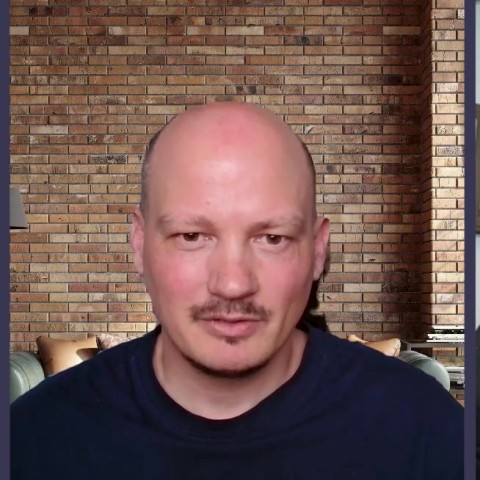 Felix KraemerCo-founder
He will do five times more revenue than you with the same amount of incoming bookings.
Transcript
Klik op een tijdstempel om daar te kijken. De opname is in het Engels.
01:09Can you tell me who you are, where you are?
6
the Future of HospitalityWonderful. So tell me first, who is Felix Kramer? Sorry. I said Kramer, but it's Felix Kramer. Can you tell me who you are, where you are?
Felix KraemerYes. My name is Felix. I live in Germany near Berlin. I I started working in hospitality at the beginning of two thousands and did my apprenticeship with Kempinski and learned a lot about luxury hotels and found my way throughout the the front office I was the front office guy. And from there, starting to do some, yeah, some Excel stuff at the front desk. And from there, you are quite fast promoted to be the system database administrator. And from there, it's not far to revenue management. And from revenue management, I came to my last employed role with hHotel where I was nine years until last year, end of last year, where I first started in regional revenue management and then developed myself and the company in regards to better use in data and ended with a huge orchestration platform which has been built after our cyber incident to make us more resilient against attacks and be more efficient in data management because data management is foundation for everything.
Felix KraemerAnd then last year, my former executive and and I, we decided to, yeah, to found a new company. So that's my my last life in a in a nutshell, I would say. Alright.
the Future of HospitalitySo you started in hospitality. You mentioned early two thousand. Can you tell us why did you enter the hospitality industry in the first place?
Felix KraemerGood question. I guess when when when I recognize that I need to leave school and do some some real work because I was some kind of annoyed. And I I sent out several letters to companies and asked for for for trainings and so on. Mhmm. And, yeah, then I I I started with event management locations and and worked there for some time, but then I recognized, well, maybe it's more the the the upper class hotels where I where I have a a good feeling maybe to interact with with people and learn how to interact with people even better, even from many regions of the world.
Felix KraemerAnd there was a bit of not really planned, but it was perfectly that I I came there where where my journey started because I I had a good learning curve, I can say, compared to when I decided to leave my school.
04:31Can you tell us a bit more about what it is?
5
the Future of HospitalityRight. Right. So you worked in in in various hotels, different positions, and at some point you decided to cofound JF Hospitality. Can you tell us a bit more about what it is? What is JF standing for? And what is it in a nutshell?
Felix KraemerJF is Jens and Felix. The first names of of both of us. Jens Jens Hoffman was was an HR test, was my superior, and we worked nine years together and built centralized structure, data management, etcetera. And then we decided last year at ITB, well, maybe it's time for us to to do that, what we what we are good at, to other companies. And we got a lot of positive feedback. And then we decided, well, then let's do that. It's it's the right time. Mhmm. And since then, we, yeah, we more and more see that that was definitely the right decision to to do something own and, yeah, start delivering services.
the Future of HospitalityWhat service is it that you deliver?
Felix KraemerGood question. We when we first started, we said, what what's our profession? Our profession is data management and revenue management. So we say, let's build data management structures, business intelligence, and then sell consulting on top of that. And when we thought about it, we came to a point where we said, well, it is necessary that we have something like a position, a person who's very good in implementing new technology. Because when we do BI and consulting on that new insights, we often came to the point that we need to optimize given things, like changing the property management system. And then at this point in time, we could say, well, those systems would be good for you, but Mhmm. If you need someone who implement that, we we need to find some. And at this at this point, we said, well, let's get someone who can do that very well.
Felix KraemerAnd now we do have Fredericke, who joined our team in January, who did ten years within H Hotels, the lead for the distribution department. So she's very, very keen in integrating software, building strategies, building great structures, and everything what's needed to create a new system from scratch. And following that up, we came to additional colleague in data management who is supporting the structure internally, but of course for customers. And we would like to spread the word that it's really important, especially today when everybody is talking about AI agents, that we make sure that our company has a proper database because otherwise the result will be rainbow.
07:54Is that a challenge you face a lot?
6
the Future of HospitalityIs that a is that a challenge you face a lot? It's it's about the database itself? The systems, I mean, the the property management systems?
Felix KraemerIt's not only the the database which the vendor provides from your PMS, it's more the culture within your organization, how you treat data at such. And my learning within H2TEST was, especially after we got hacked, if you if you really invest time and a bit of money to build a structure with which is solid based, not maybe not on Windows because Windows will be always the attack system number one. Mhmm. Therefore, we we we built a very clean structure for our data orchestration in Linux. I learned how to how to administrate Linux. That's not that hard, but it gives you a lot of advantages because it's very fast, very robust. There's not not much attacking through the wide danger of the internet spotting the Linux systems at such.
Felix KraemerAnd from there, you've got many opportunities to integrate with different systems, be owner of your data flows because that's what I learned as well. If you are purchasing two systems and both systems are external and those systems need to communicate with each other, then in the previous world with the nature test, it was, well, vendor a, can you talk to vendor b to make sure that you have data exchange? Because that is obviously the easiest way. But it's definitely a long way because you're not taking the ownership you have for that data which is flying through those systems. And you you cannot monitor your data flow and you cannot act on issues in the data flow because if something is not working, you need to call vendor a and vendor b and both will say it's not my fault and you're losing time.
Felix KraemerIn a data management good world, you will just review within your orchestration platform, well, in which stage my data is stuck and what's the issue, which which part of that complex workflow is not working, and then just fix it and everything started working again. And that learning is was was mind changing for me because I I know from my experience that so many are doing it a different way. They say, well, I'm not the IT guy. Can you please take care of that? And in in in that cases where it comes to an error, we are losing so much time and so much money. And in the very worst case, Adena Hotels was attacked this month.
Felix KraemerAnd the infrastructure was yeah, was corrupted from any strange hacker from wherever. In that cases, you're losing so much more money and so much more time compared if you would say, well, let's let's invest in in some consulting on on IT infrastructure, on data management on top of that, and make sure that we that we get our our head around and get ownership of all processes we we own and make sure that the risk of being hacked. And then I can tell from the experience with h hotels, it took us more than six months to get the highest property back into our green network. That means the last property was six months detached from all company activities because it took for 60 properties, took a while to get them all back, get them all new devices, new server configured infrastructure, and then all all back together. It was something like six months, and the opportunities we missed within those six months, you cannot measure.
Felix KraemerBut it was massive
12:29What is the biggest mistake hotels make when handling data?
6
the Future of Hospitalityin the end. I can imagine. Wow. Handling data, that's what we're talking about. What is the biggest mistake hotels make when handling data? I mean, you you you just mentioned ownership. What what else?
Felix KraemerI guess the in in many cases, the understanding what is data is wrong because many say, well, it's IT. No. It's not IT. It's a discipline which sits on IT infrastructure for sure. Yeah. But mindset of someone who's doing the infrastructure maintenance is complete different to someone who just identify data sources and make sure that data flows, that correct data flows, that not all data flows, only relevant data flows. And therefore, I guess, especially in our industry, we need to adapt more adapt that data and that's buzzwordy, but data should be treated as an asset and it definitely is your your your fundament within your company, and you shouldn't should be more open to to ask for help because often it's lack of of of knowledge in in dealing with data or not enough or too huge learning curves you need to take. Because if you do it on your own, your time to market is so long that it's outdated when you're ready.
Felix KraemerAnd therefore, would say being more open in that fast environment, and we're not talking about JetGPT and what all comes on top of that in regards to AI agents, but just make sure that your basics are are reviewed, and you take time to to think about what what what should be achieved, and then take, yeah, internal resources or external to to achieve a solid data management to be able to be productive and effective for the upcoming ten years or so.
the Future of HospitalityRight. Let's move on to the pricing strategy. We're talking about keep talking about data. What's a terrible pricing strategy in your opinion that hotels still use today?
Felix KraemerI guess seasonal and fixed pricing. I can give you an example. I I read in one of those common known hospitality newsletters that the headline was revenue management can change your world. And I said, well, it's interesting because that's what I did past decade. What are they writing about it? And it was a text especially to a target audience, which is not dealing with revenue management right now at all. That means they do something, but they are not doing dynamic pricing or they are not reviewing demand and increasing rates or lowering rates based on their needs. And that was a bit like a shock for me because I said, well, I do that for a decade and then specialize myself even further.
Felix KraemerBut there are still enough companies out there where that this newsletter post has an audience. I wasn't aware that there is an audience out there where we need to communicate that revenue management should be applied in my organization. I guess Well, that there is a a real reason example of that. Yeah. And big opportunity for you, I guess.
16:29What's the most important KPI hotels should track but often ignore?
14
the Future of HospitalityNow they know how to find you. What's the most important KPI hotels should track but often ignore?
Felix KraemerDepending always from the the edge you're looking. Right now, in my opinion, from my current topics which I am working on, would be the duration, the offer needs from the request was sent to the p to the hotel Mhmm. And how long does it take until I can send out an offer. And that number, almost no one really can measure because often that just happens within your your Microsoft Outlook inbox, and you should track at which time which timestamp has a request which coming in. And then what's happening on that journey until someone create an offer and send it out. Mhmm. And recent studies about mice and group business tell us that if you are the first one who's answering on on a lead like that, where 10 or 20 properties are requested.
Felix KraemerIf you are the first one, your conversion rate in average will be 55. If you can answer all your your leads within five hours in average, your conversion rate will be 50% based on your total request you can process. If you need more time to answer on that request, maybe because the variation of the room price within revenue management took so long. If you if you need more than eighteen hours, your your conversion rate will be an average 10%. That means one company sent out 100 offers, and they will receive 10 bookings. The other one who's managing that process better because he knows how long it takes,
the Future of Hospitalityhe will get
Felix Kraemeradditional 50 out of those 100. He will do five times more revenue than you with the same amount of incoming bookings.
the Future of HospitalityI guess But that because of the speed.
Felix KraemerExactly. Only because of speed. And if we are talking about those who are really fast, then we're talking about quality of those those offers which have been sent out. In the first place, to be evaluated by the customer about your quality, you need to be fast. And especially during the past ITB, IHTF period, last couple of weeks, we learned again that sometimes, especially as bigger your organization grows, as big as the problem will be. And there are some companies saying, well, yes, we we cannot do it under forty eight hours. If you cannot do it in forty eight hours, you don't have to do it because it's waste of time. Losing out. Yes. But there are there are a couple of people sitting there and doing that with a backlog of twenty four to thirty six hours.
Felix KraemerAnd basically your complete payroll is waste of time because your conversion rate is real bad. And I guess due to the fact that most executives do not consider that part of of their business. How long does it take until the agent in reservation get feedback from revenue management that he knows which number to put in in the room grid to create the block, to create the offer, and send it back to the to the customer. And that problem will be increasing dramatically in the next coming months due to the fact that all those distributors like Cvent and any other software who will support the customer to be more agile or more able to to send out more offers in the same time, that will result in a way bigger funnel in our hotels.
Felix KraemerBut if we cannot cope with these amount of bookings, currently we learned that only 45% of the incoming requests in chain hospitality is being answered. That's not talking about an offer. It's just answering. And saying that, there's a funnel where 50% of my marketing spend, of my sales stuff is bringing in the toe that 100%. And currently, we are able to convert or to answer 45% and convert 25% of that. One quarter of of that big chunk where we put so much effort in currently cannot be cannot be processed. And now if they use AI agents everywhere and make it even more easy for for a customer, for a company to to to ask for group bookings, then that problem will be even bigger.
Felix KraemerAnd currently, we are not talking about having too many people working in reservation and convention phase. They are leaving us because of work conditions, because they are overloaded all the time. That means on the one hand they will search for something else. That means we will have maybe same same amount of stuff but not that well trained. Therefore, our our efficiency will will not increase. And at the top funnel, there will be additional business because it will be more easy. There will be more channels where you can book. Yeah. Maybe in in October, we can book via Alexa and Mitago to to create group bookings in hotels.
Felix KraemerSuper cool. Additional channel. But that additional channel will not get processed if we cannot fix the problem internally. And that's where I think there should be more awareness of that process chain, and there are several players trying to make that more digital, more automated for the hotels itself. But on the one hand, they need to grow together or they they need to be more integrated, that it's more seamless for the employee. And, yeah, we need to create awareness in senior leadership that say no. Well, if I could optimize my internal quotation management where they're asking a similar department for a price by ten ten ten minutes per per request, I could save up to 50% of my human resource in reservations because that's main part of their job. And if they are processing 25 requests a day, I can optimize that because they don't have to wait, then I can handle more bookings, I can handle the complete funnel with my existing staff, or I don't have to search for my open positions anymore, I can use that budget different.
Felix KraemerI I make life better for those people who are working on reservations. So there are so many important and good things, but we need to talk about it. And I'm so glad that I got the chance to to talk about it because it really comes from my heart. Yeah. Yeah. I can tell. Yeah. I really spent many, many, many hours in the past months to try to find a solution which makes that better from a from a hotelier perspective and with a hotelier approach. It's not that I try to increase my share because I'm an OTA. It's just because I came from that department. I have friends in reservation, friends in convention sales, friends in revenue, and I want to make their life easier because I know how that works. Yes. And that only will will get more impact if we can educate that we do have a problem. It's not to to increase incoming business, that's totally there. We need to find ways to better process that and and meet the expectations of our customers that they would like to receive an offer best case in one hour. Yeah. Because they don't managing
the Future of Hospitalityexpectations from the start until the end. And if there is a bottleneck in between, which you just described perfectly, you have an issue and you will lose revenue. Yes. I get it. Let me see. What are some hidden revenues? Probably you know that revenue leaks that most hotels don't notice. I mean, this is one.
Felix KraemerYes. I will I will just repeat.
26:13What do you see as the next big thing in hospitality?
7
the Future of HospitalityNo. This is one. I mean, you just mentioned it, and I'm I'm I'm thinking I was like, this is a this is a revenue leak in itself and you just explained it perfectly what the dangers are. So let me go to the next one. What do you see as the next big thing in hospitality?
Felix KraemerI guess next big thing will be have the majority of of hotel companies in cloud infrastructure Mhmm. That all can can have benefit out of new technology because that's another part if you're not working with open API infrastructure, you won't be able to use or make use out of smart new technology to make your life easier. And I guess if that will take probably one, two, three years that we have the majority of the smaller and mid scale chains on cloud infrastructure, I guess that will have a big increase on on those performance fact, I would say, but as well on the employee side that they are well treated and they have good systems to work with and that are they are better work conditions because often it goes back to legacy systems, which are just limiting us or or requiring manual processes, which then leads into bad work conditions and losing talent.
Felix KraemerAnd that's, I guess, what will be improving if our industry gets more digital as in some, I would say.
the Future of HospitalityMy last question for you would be, what is the because because we we we talked about data, leaks, revenue. What is an advice you would give to hotels in general? Come to you?
Felix KraemerOf course. That would be a good first step, but it's it's easy to say, well, I I need to get more revenue or I need to save human resource. But even if you get consulting and someone is showing you on hard facts what what what could be improved, you you need to have the ability to say, yes. I need help because that's not my profession. World has changed in the past years, and to be quick in my time to market to then get additional revenues, I should consider really giving that to someone who's only doing that. And yes, I have to pay them, but it's benefit for me because I can get it done quickly and then be in a digital world and make more profit in my in my next twenty years. Right.
the Future of HospitalityFelix, thank you so much. It was very insightful. I learned a few things myself. Thank you for being on our show.
Felix KraemerThanks for having me. Real pleasure. Wonderful.