






















Hotel feasibility study: why it comes before the architect
Alon Shkuri · 20 Oct 2026 · 6 MIN READ
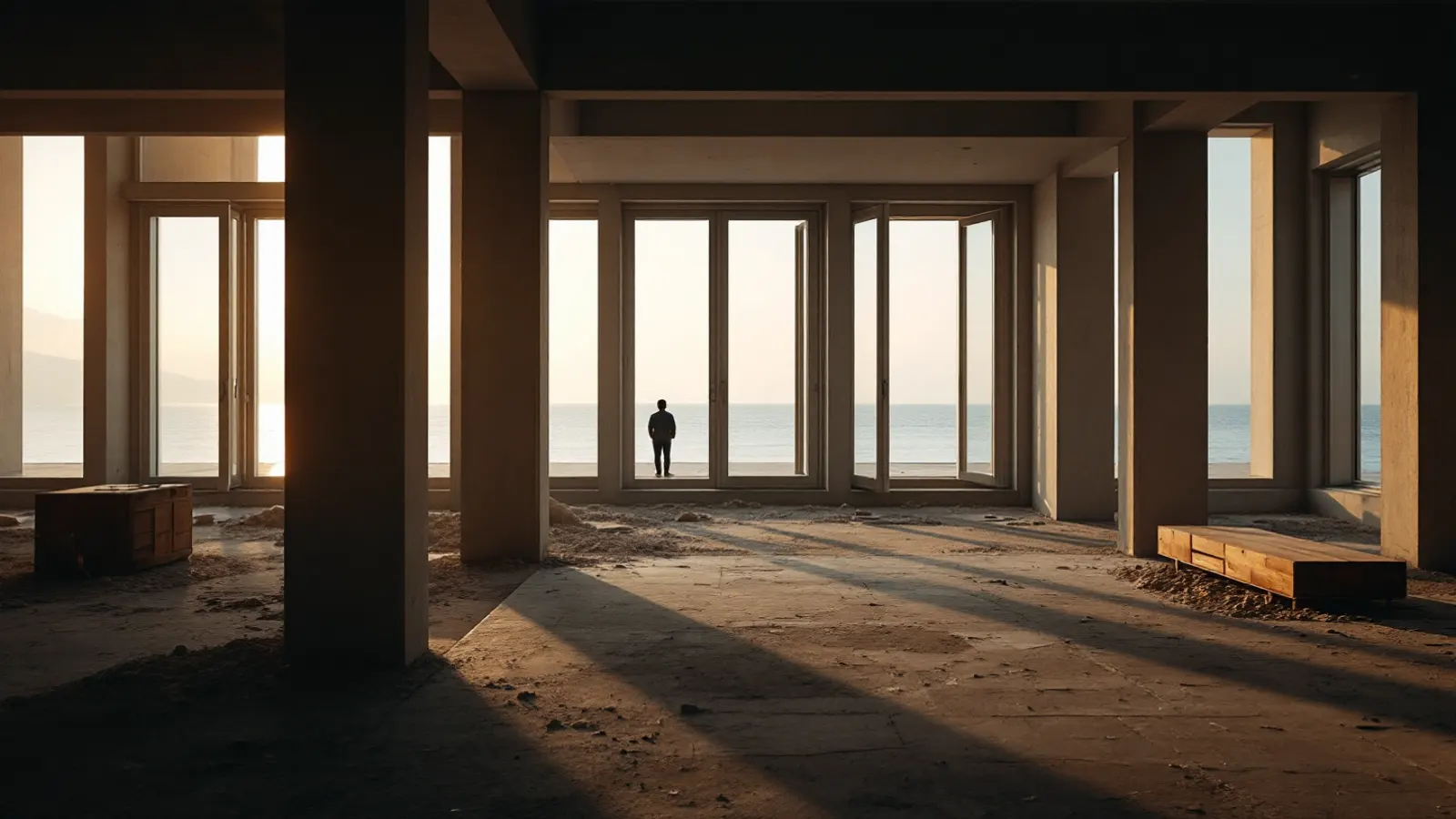
You own a plot of land or an empty building, and you want it to become a hotel. The obvious first call seems to be an architect. A hotel feasibility study should come first: it asks whether the hotel makes business sense, for whom, and at what scale, before anyone draws a single room. Skip it, and you risk a beautiful building that never earns its money back.
Boris Lefterov, CEO and founder of Nomante Hospitality, a hotel development company in Bulgaria, sees this order reversed all the time. His company does feasibility studies and concept development for hotels and mixed-use projects, and he describes a market where capital is plentiful but structure is scarce. His view of what goes wrong, and what to do instead, applies to any owner planning a new property.
Why investors skip the hotel feasibility study
The pattern is familiar. Someone has capital, a building or a piece of land, and an image of the hotel they want. In Lefterov's experience, many investors in Bulgaria go straight to an architect and ask for a hotel. The architect does what architects do: he draws a building, perhaps modelled on the hotels next door or on a resort the owner liked on holiday.
“They just wake up one day. They have the capital, and they decide, I'm gonna do a hotel because it sounds cool.”
Boris Lefterov, 38:47
The problem is not the architect. As Lefterov puts it, an architect is not a finance person, and the work is completely different. Nobody in that first conversation asks who the guests will be, what they will pay, or whether the numbers hold up. He adds that many of these owners do not use bank financing or leverage at all, so there is no lender forcing them to prove the business case either. In his view, an investor needs a trusted partner who leads them through the whole process, so they avoid mistakes that can cost millions. A related article looks at how brokers approach hotel valuation.
When there is no market data to benchmark
A feasibility study depends on data: comparable hotels, demand, performance. In markets where that data is collected and shared, benchmarking is routine. Where it is not, owners fall back on instinct.
Before starting his company, Lefterov tested this in his home market. During a master's in real estate finance and hotel development, he messaged around 300 hoteliers on LinkedIn, received about 100 replies, and held close to 150 conversations with asset managers, investors, hotel managers, operators, big brands and independents. What he found was a market with large investments but little structure, little market research, and almost no data to benchmark against, because hardly anyone was submitting it.
“Whereas in Bulgaria, it's a complete unknown. It's a complete darkness when it comes to data.”
Boris Lefterov, 38:47
The lesson travels well beyond Bulgaria. If your market has no reliable benchmark, the study has to build its own evidence. Talk to the operators, asset managers and investors around you, and treat each assumption as something to check rather than something to believe.
What a hotel feasibility study should cover
Lefterov describes the full journey his team takes an investor through, from the first idea to the operator. Used as a checklist, it shows how much needs to be settled before design work makes sense:
- Best use: what the building or the land should become, which may be a mixed-use scheme rather than a hotel alone.
- Vision and concept: what kind of place it is and why it belongs in that location.
- Branding and target market: who the guest is and how the property speaks to them.
- Expected market performance: how the hotel is likely to trade in the market around it.
- Feasibility and due diligence: whether the investment holds up and where the risks are.
- Architecture and interior design, briefed by the points above rather than the other way round.
- Finding an operator, where that fits the concept, including the management agreement.
The order matters. In this sequence the architect receives a brief that rests on a business case. The owner no longer hands over a wish and hopes the drawings will make it work.
Look beyond the spreadsheet
A hotel feasibility study is more than a revenue projection. Lefterov believes his team has done well on large projects in prime locations because they look outside the numbers too. The questions they add are about people: who will use the product, how they will feel inside it, and what will work best for the investment in the market as it is today. A related article looks at ESG in hospitality and what hotels must prove.
That human view leads to concepts that the numbers alone would not suggest. Among the projects his company worked on in its first year are a new marina development on the Black Sea coast, with restaurants, a hotel and residential parts, and a lifestyle hospitality corner inside an established shopping mall. Neither is a standard hotel, and neither could be judged by copying the property next door. Someone may want a Bali hotel in Bulgaria, he notes, but the real question is what it is and whether it makes sense where it stands.
“Then that's where the conflicts come up, and that's why you have projects that don't work well because they don't have any business logic behind it. No feasibility behind it.”
Boris Lefterov, 48:14
Build the right team for hotel development
No single discipline covers all of this. Lefterov's answer is a collective of specialists in finance and investment, architecture, interior and graphic design, branding, revenue management and hotel operations, working on one project together. He is now turning that collective into a fixed structure, with a branding studio, an architectural studio, revenue management and hotel operations under one roof.
For an owner the takeaway is simple: before the design is fixed, make sure someone at the table understands the finance, someone understands operations, and someone understands the guest. Lefterov also stresses openness. His team explains the financial structure and how operations might look, asks the owner whether it fits their organisation, and does not pretend to know what it does not. He prefers to teach clients and the people who will run the property, so they understand the business they are building. A related article looks at family business succession in hotels.
A good hotel feasibility study protects more than the budget. It protects the time and energy of everyone who will later work in the building. To hear how Lefterov moved from playing in a band to the front desk and then into hotel development, watch the full conversation.
Frequently asked questions
What is a hotel feasibility study?
It is the work that tests whether a planned hotel makes business sense before it is designed. It looks at the best use of the land or building, the concept, the target market, the expected market performance and the financial case, including due diligence. Only when those answers hold up does it make sense to brief an architect and, where it fits the concept, look for an operator.
Why should the feasibility study come before the architect?
An architect designs buildings; the business case is different work. In Boris Lefterov's experience, owners who start with the drawings often copy the hotels next door or a resort they liked on holiday, and end up with projects that lack business logic. A study first gives the architect a brief that is grounded in the market and the numbers.
What can you do when there is no market data to benchmark?
Build the evidence yourself. Before starting his company, Lefterov held close to 150 conversations with asset managers, investors, hotel managers, operators, brands and independents to understand how his market really worked. Talking to the people who already run and fund hotels nearby fills part of the gap that missing benchmark data leaves, and it shows which assumptions need checking.
Who should be involved in planning a new hotel?
More than one discipline. The model Lefterov describes brings together finance and investment, architecture, interior and graphic design, branding, revenue management and hotel operations on the same project. The point is that someone at the table understands the money, someone understands operations and someone understands the guest, before the design and the budget are fixed.
