






















Online check in hotel guests want: less queue, more service
Alon Shkuri · 20 Oct 2026 · 6 MIN READ
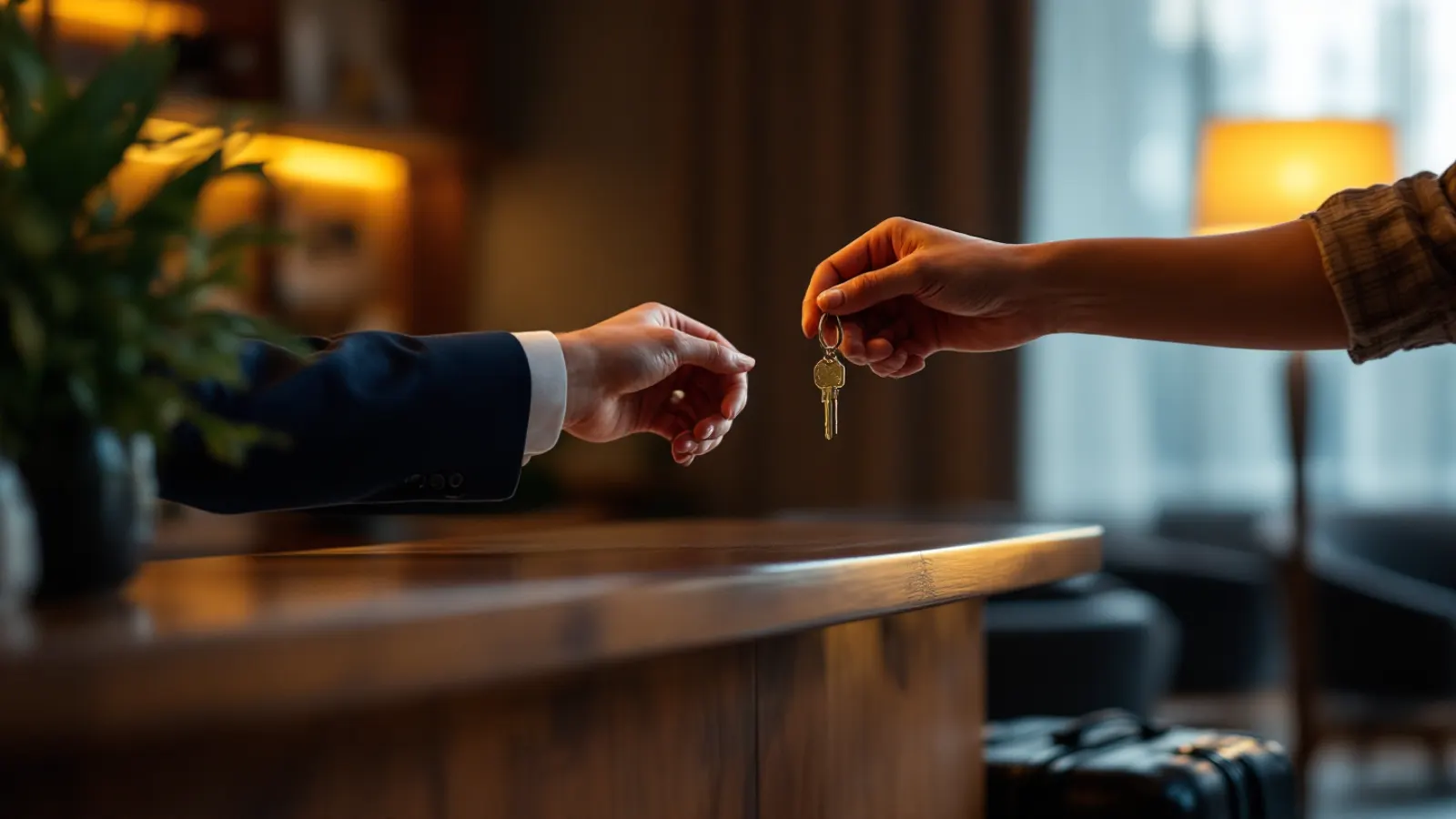
Most hotel guests no longer wonder whether they can check in from their phone. They assume it. Yet many hotels still treat arrival as paperwork at the front desk, with queues, registration cards and ID checks. An online check in hotel guests can choose to use is one of the simplest ways to close the gap between what guests expect and what a hotel delivers, and to give the front desk back to hospitality.
Why guests now expect digital services
According to John Broome, COO & CPO at a company that builds digital guest solutions for hotels, the core problem is interpretation. Some hotels read what guests need and want in a different way than guests themselves describe it. In his view, guests are very clear right now: they expect digital services as standard. Six to ten years ago that was far more mixed. He stresses that it is not just a generational thing. The masses have come to expect that they can do things via their phone.
“They actually are saying they want the option to decide how and when and what method they use to interact with you as a hotel.”
John Broome, 10:14
That does not mean every guest wants to skip reception. Broome expects that many guests will still come to the front desk. What changes is the nature of the desk and the lobby: from an administration center to a place that is really about hospitality. He does not see digital tools as a substitute for the in person experience. In his words, it is not either or, it is both: technology takes over the routine work so staff have time for person to person connection.
What queues and admin cost the guest experience
Broome's starting point is that technology should remove the things that detract from hospitality. Administration, time queuing at the front desk and ID checks are not the reason anyone books a hotel.
“None of that has got anything to do with hospitality. It's getting in the way of it.”
John Broome, 3:22
He illustrates this with two experiences from his own travels. In one small hotel there was almost no visible technology. The staff were expecting him, handed over the key, had a short chat and asked what he wanted to do during his stay. There was no queue. In another hotel, after about seventeen hours of travel with three young children, he waited in line for over twenty minutes. The children were hungry and tired, and all the family wanted was a key, a room and a meal.
The lesson for any hotel is that the queue is not neutral. It sets the mood for the whole stay. A guest who has waited fifteen minutes is, in Broome's experience, not receptive to anything the front desk tries to sell. A pushed offer at that moment can even hurt how the guest thinks about the brand. A related article looks at hotel room status across departments.
How to set up online check in hotel guests actually use
Broome describes check in as one part of a wider communication route through the guest journey after booking. Checking in quickly takes admin off the front desk and drives down costs, but the main goal is to give the hotel options in how it interacts with guests. Based on what he describes, an online check in hotel process that works covers these steps:
- Start the conversation as soon as the booking is made, whether it came through your own website or an OTA.
- Let guests preregister and complete their registration card before they arrive.
- Make payments quick and easy, such as tapping a card or phone at the point of sale in the restaurant or bar.
- Show what the hotel offers beyond the bed, from the restaurant and the spa to early check in. A related article looks at food delivery to hotel rooms.
- Keep the human route open, so guests choose how, when and through which channel they interact.
“Treat them as kind of your guests before they actually arrive at the hotel.”
John Broome, 28:55
Data plays a role as well. Once guests use digital services, a hotel learns what they like and what is important to them. Broome suggests combining that with what staff learn in personal conversations, so suggestions fit the stay. A business traveller has different expectations than a parent travelling with three children.
Timing the offer before and during the stay
A good online check in hotel flow is also a way to sell, but only if the timing is right. Broome compares many hotels to a hidden shop: the goods sit locked in a warehouse at the back, and no guest ever sees them.
Timing decides whether an offer feels like a service or a hard sell. Offering a room upgrade five minutes after someone booked is, according to Broome, probably not the best converting moment. Closer to the stay, a guest may think again about that suite overlooking the water.
In an app, an offer is something a guest can ignore without anyone being offended. Guests can say not now and come back later, on their own terms. Broome calls this a soft sell approach. He sees every touch point as either a plus or a minus for the brand, and rarely something in the middle.
Overcoming the barriers to new hotel technology
Why do so many hotels still lag behind? Broome sees a hangover from earlier waves of technology that promised a lot and failed to deliver, which left a fear that a new project will go the same way. Hotels also run twenty four seven, so there is never a quiet week to switch systems.
His advice is to flip the question and work through each barrier. Decide what you want first, and talk with people in the industry, including suppliers. Modern APIs make it possible to add modular solutions to an existing PMS without replacing core systems. A related article looks at choosing a hotel PMS system. Let technology partners do the work and carry the risk, while the hotel keeps control over sign off and go live. That work can run in parallel with daily operations, so nothing has to stop.
The emotional barrier is, in his view, sometimes more important than the practical one. Accepting that something needs to change takes conversations and time. He estimates that about one in five hotels is leading the way right now, and warns that the gap will widen for those that wait. His advice is to take the first step now, because it is not as difficult or as risky as it probably appears. You can watch the full conversation for his complete view.
Frequently asked questions
Does online check in hotel technology replace the front desk?
Not in John Broome's view. He expects many guests will still walk up to reception, and he sees digital tools as working in tandem with staff, not as a substitute. What changes is the role of the desk: less administration and queuing, more time for real conversations, recommendations and the personal side of hospitality.
When should a hotel send upgrade offers to guests?
Timing matters more than the offer itself. Broome suggests that an upgrade offer five minutes after booking is probably not the best converting moment. Closer to the stay, guests are often more receptive. During check in, especially after a long queue, a pushed offer tends to backfire and can even hurt how the guest sees the brand.
Why are hotels slow to adopt new guest technology?
Broome points to earlier waves of technology that promised a lot and failed to deliver, which left a lasting fear of repeating that experience. Hotels also run twenty four seven, so there is never a quiet week to switch. In his view, the emotional barrier of deciding to change is sometimes even bigger than the practical one.
Do guests still want personal contact at check in?
Many do, according to Broome, but they want to choose. Guests expect the option to decide how, when and through which channel they interact with the hotel. Some will check in on their phone, others will come to the desk. Offering both lets staff spend their time on the guests who want a conversation.
