






















Themed hotel: how to make the concept more than decor
Alon Shkuri · 20 Oct 2026 · 7 MIN READ
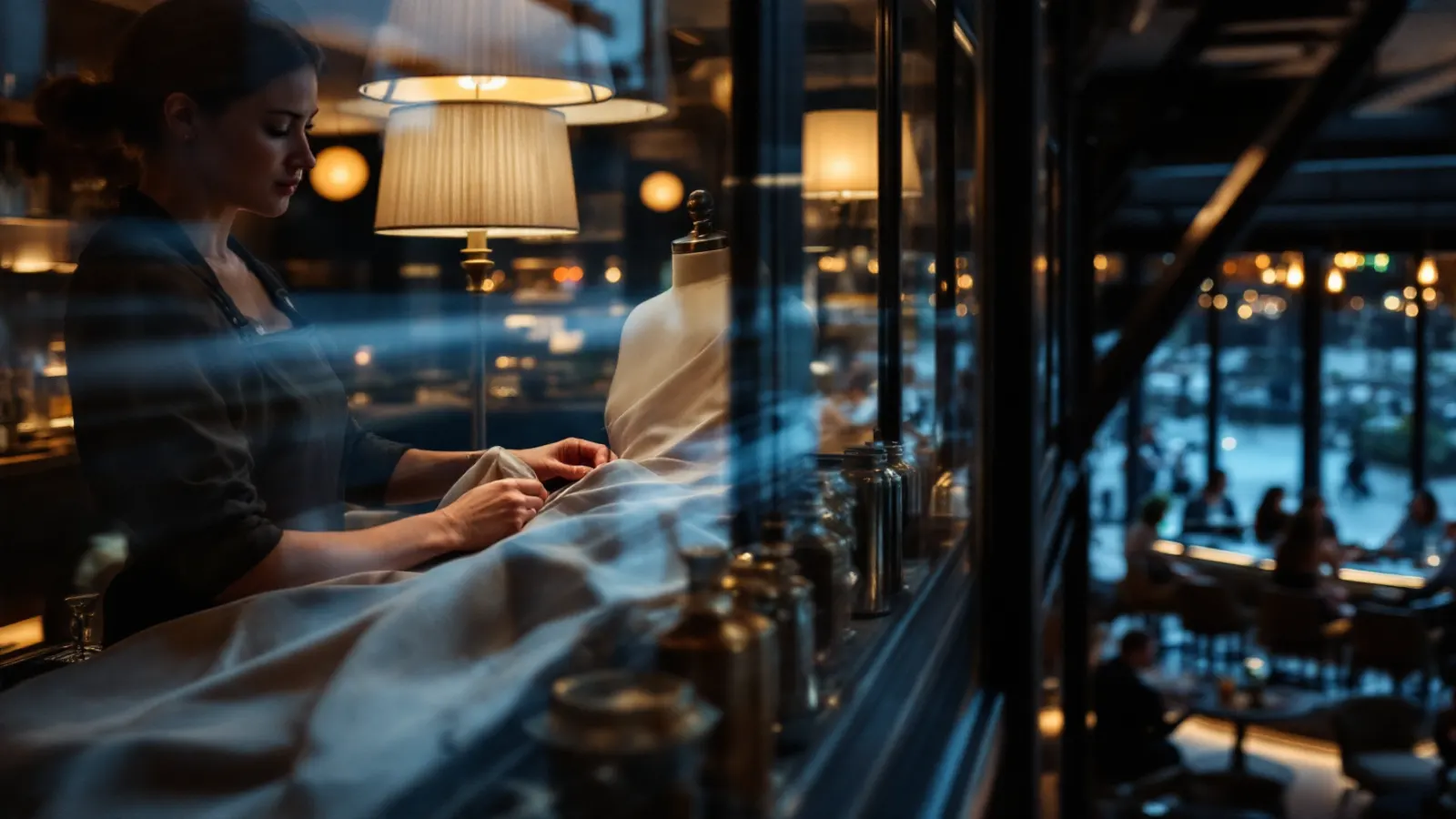
A themed hotel promises guests something a standard hotel does not: a reason to choose it that goes beyond location and price. The hard part is not picking the theme. It is keeping that theme alive every day, in the rooms, the bar, the restaurant and the people, long after the opening party, when renovations are due and budgets are tight.
Maarten van Amerongen, General Manager of the fashion hotel of Westcord, knows both sides of that promise. The hotel, with 258 rooms on the A10 ring road opposite the World Fashion Center, took its name from that location more than 15 years ago. When he became general manager a year before this conversation, he was handed a clear brief. His experience offers practical lessons for any operator who runs a concept hotel, or is thinking about building one.
What sets a themed hotel apart from a regular hotel
In Van Amerongen's view, a strong theme works in two directions at once. On one side it is a burden, because everything has to relate to one idea. On the other side it gives the team a frame that makes decisions easier.
“Aan de andere kant is het ook een ideale manier om je kaders vast te stellen. Dit is het, dit zijn we en binnen die kaders kunnen we werken.”
Maarten van Amerongen, 6:46
(Translated: “On the other hand, it is also an ideal way to set your boundaries. This is it, this is who we are, and within those boundaries we can work.”)
He gives a simple example. Another hotel might decide to open a sports bar. For his property that would clash with everything the concept stands for, so the idea is dropped. Sometimes the team wants to try something and has to conclude that it is not a match. That is the trade-off of a strong theme: fewer options, but a clearer identity. The frame tells staff, partners and guests what the property is, and what it is not.
How a hotel concept fades, and how to bring it back
Concepts rarely disappear in one go. They wear thin. Van Amerongen remembers his early years at the hotel, when he was a supervisor and the property employed a dedicated fashion supervisor. Her only job was to make sure the hotel lived up to its name. During covid much of that was scaled back.
“Toen ik vorig jaar begon werd me ook de opdracht meegegeven: maak het hotel weer fashion.”
Maarten van Amerongen, 3:09
(Translated: “When I started last year, I was also given the assignment: make the hotel fashion again.”)
He describes it as a fine hotel, with a sky bar on the tenth floor and a wellness area two floors below ground, but in his view the real fashion element was missing. He is open about the pace: it could not all be fixed within a year, but real steps were taken. The design ages too: interiors that felt trendy at the opening need a refresh after 15 years.
For operators, the lesson is that a theme needs an owner and a budget line, not only a name on the building. When the role that guards the concept disappears, the concept quietly goes with it. A related article looks at boutique hotel branding.
Make the theme visible through people, not only decor
The most striking step was bringing a couturier into the building. He closed his atelier in the centre of Amsterdam and moved the whole workshop into the hotel. The agreement was that he would not be tucked away in a back room.
“Als je hier in het hotel komt, zijn atelier hangt boven de bar en aan de achterkant is het glas. Dus alle gasten die daar voorbij komen, die zien hem ook daadwerkelijk aan het werk.”
Maarten van Amerongen, 0:02
(Translated: “When you come into the hotel here, his atelier hangs above the bar and the back of it is glass. So all the guests who pass by actually see him at work.”)
According to Van Amerongen, guests love it. They stand with their noses against the window to see what he is making, and the couturier, a sociable person, opens the door and invites them in. Those guests come back. He is also about to give workshops in the hotel, and the team is working on fashion shows to reconnect the property with the fashion world. A related article looks at experiential retail lessons from hospitality.
From this example, a few principles stand out for anyone building a themed hotel:
- Bring in a real practitioner of the theme, not only objects that refer to it.
- Put that work where guests pass, for example above or next to the bar, behind glass.
- Let the practitioner talk to guests, because a conversation turns a glance into a memory.
- Add formats such as workshops or shows that give guests a reason to return.
- Check whether first-time guests actually notice the concept, and fix the routes where they miss it.
That last point matters. Asked which detail first-time guests overlook, Van Amerongen named the in-house couturier himself. If guests do not walk past that corner, they may not see him at all. He says its visibility still needs work.
Keeping the themed hotel experience consistent across the property
A theme also has to coexist with a mixed guest base. Van Amerongen describes a varied crowd: corporate guests linked to the World Fashion Center, drivers who use the car park with 100 spaces, and American groups on their way towards Bruges. The restaurant has to serve all of them, so the menu has one part for guests who simply want a burger and a beer, and another part where the chefs can show their culinary inspiration. A related article covers food delivery to the hotel room.
The sky bar, one of the first cocktail sky bars in Amsterdam when it opened, gives the concept a stage, with a DJ on Friday and Saturday evenings and a view over the city. The team promotes the restaurant at check-in and offers to make a reservation straight away. In his view, the strength of the hotel is that even on a day of heavy rain, guests can use the wellness, have a drink in the sky bar and eat in, with everything under one roof.
Technology supports the service around the concept. After booking, guests receive an automated WhatsApp message. As long as the questions are in the database, the bot answers; when they go beyond it, a receptionist takes over the conversation. He reports that guest feedback has been purely positive, and that it frees reception to focus on guests who are already in the house.
Where a concept hotel goes next
Asked about the next five years, Van Amerongen wants to deepen the theme further. His goal is that when people think of fashion, his hotel is the place they think of. He also expects technology to keep changing fast, and sees flexibility as a strength of hospitality. You can watch the full conversation (in Dutch) for his career path, his view on staffing after covid and his advice for newcomers.
Frequently asked questions
What is a themed hotel?
It is a hotel that builds its identity around one idea, such as fashion, and lets that idea guide design, partners, programming and service. In the experience shared here, the theme also works as a frame: if a plan such as a sports bar does not fit the concept, it is dropped, even when it might work well somewhere else.
How do you keep a hotel concept alive over the years?
Give it an owner and real content. The hotel discussed here once had a fashion supervisor whose only task was to guard the theme, and when that role faded during covid, so did the concept. Bringing in a couturier with a visible atelier, plus workshops and planned fashion shows, is how the team is now restoring it, step by step.
Does a strong theme limit what a hotel can offer?
Partly, yes. The general manager calls the theme both a burden and an ideal way to set boundaries, and some ideas are dropped because they do not fit. At the same time the restaurant still serves a mixed audience, with a simple burger and a beer on the menu next to dishes where the chefs show their own inspiration.
How do you make sure guests notice the concept?
Place it where guests already pass. Here the atelier sits above the bar behind glass, so guests see the couturier at work and are often invited in. Even so, first-time guests who never walk past that corner can miss it completely, which is why visibility remains a point the team keeps working on.
