QR-codes die service toevoegen, niet vervangen
Maurits Franken, medeoprichter van Orderli, legt uit hoe slim bestellen met qr-code de hospitality kan versterken in plaats van weg te automatiseren. Van het redden van onderbezette zaterdagen tot meer fooien en menu's op maat, deze aflevering laat zien hoe technologie teams kan versterken zonder de menselijke touch te verliezen.
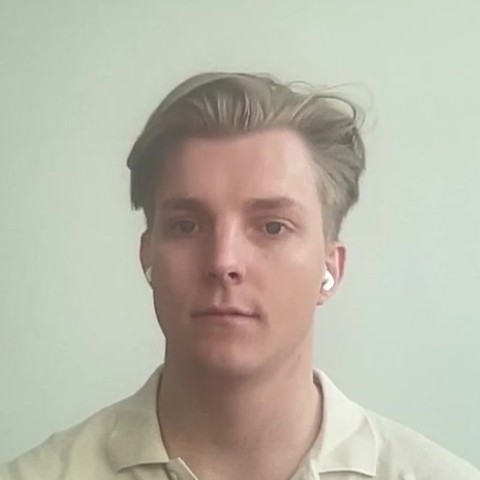 Maurits FrankenCo-founder
When people are raising their hands or asking for service, should be easier than raising your hands.
Transcript
Klik op een tijdstempel om daar te kijken. De opname is in het Engels.
05:27Are there also other use cases that you use it?
18
the Future of HospitalityNice. Nice. So for hotels, you implement this, like, in the restaurant, but also in the room service. Are there also other use cases that you that you use it?
Maurits FrankenYeah. So for example, if we take a flex hotels, we do the room surface, wherein the room surface, they say, hey. Guests have to pay straight away. So you don't have to bring a pin terminal or whatever to the room where you bring the food. Then you have the terraces. On the terraces, people can just order. And they say in the more high end restaurants, hey. We don't want the QR codes there because, hey. That's where they really should have enough staff. They wanna plan for it. So difference per hotel where they wanna use QR and how they want a guest journey to be
the Future of Hospitalityfor those, yeah, for the guys. Yeah. I get it because that's also a point that maybe people think QR codes are not really hospitable. Like, it's not really a human connection. I I guess you heard it before. So how do you make that, like, not just another QR tool, but you make it, like, fuel, as you said. Yeah. So so it is hospitable and not just digital without human touch.
Maurits FrankenWe we noticed that if we implement a QR code and the staff doesn't like it, it won't work. They will tell the guests, hey. Don't order QR code. We really have to work with the staff where the staff sees us as an addition that on the busy Saturday where they normally would have to run their stress out, they can just do their job. They can talk to the people. They can explain. For example, we a lot of the time, we get, yeah, the elderly people, they won't wanna use it. But I love it using it myself, of course. But so the younger the younger guests, they will order QR codes, the older people, have more time for instead of let them letting them wait ten, twenty minutes before the staff arrives.
Maurits FrankenSo it is really for us to sit with the managers of locations to see what is their workflow, how can we implement it, and what is their ideal scenario.
the Future of HospitalitySo it's, like, really custom. They can use it in in the way they want, and they can also, I guess, have, like, best practices. For example, young people are probably more going to use the QR codes. Older people, let's send the stuff first to the older ones and then to the younger ones because they can probably use the QR codes.
Maurits FrankenExactly. We this is quite a modular system where you can say, okay. That region for example, you have a bit of terrace that you can't see well. You say, okay. I'm there. If they sit there, they have to pay straight away. Otherwise, they can order and walk away. So you really try to make this modular as possible so every restaurant can customize it to their flow. And I think that's where QR codes during COVID went a bit wrong because a lot of people try to close as many restaurants as possible. And the general experience with QR codes was I sit in a restaurant, I sit in a restaurant, and I have to pay my Coke every time I order a Coke. And I I think that's where the bad offer taste,
the Future of Hospitalityyeah, game for QR codes. True. True. That didn't sound like a nice experience because I do it like that. I totally agree. And and how does it, like, work for hotel? Like, do they have to put in their menu? Like like, let's say I'm a hotel, and, of course, I have my menu on a card or something. How how do I put it in the in the in the digital flow? Like, how does it work?
Maurits FrankenSo the the the most notorious thing is people updating their stock in the POS and people maintaining their POS. Every every general manager dreads the day that they have to switch to the summer menu or to the winter menu. So you don't wanna maintain the menu at two places. So what we do is we integrate with their POS system, And whatever they change in the POS system, we automatically sync to our system. So for the for the hotels, the only thing they do in Orly is see what kind of upsell or cross sell options there are. And but the menu should come from the POS. You don't wanna maintain a menu in four different places.
Maurits FrankenThey get the tiles drawer for Uber Eats for every solution where you have a tiles drawer menu for each solution.
the Future of HospitalityYou forget to update one of the prices. It's it would be a headache. That sounds like a horror movie indeed. Yeah. So yeah. And can you maybe share, like, a success story of, like, hotel that used orderly? Like, what what did it do? Like, what what are the what are the results?
Maurits FrankenYes. The the I think our biggest successor is Fletcher Hotels. They use us with currently at 40 locations, and we're slowly expanding every month a few extra until we have all 120 of them. I do think they used QR a QR solution before us, so they weren't new to the principles. So the the zero reading was their the previous QR solution and then our QR solution. But this defeat this is really funny because some hotel managers are more classical than other hotel managers, and our biggest wins there is when a hotel manager experienced that Saturday that they had to little staff and Orly could save the day, so to say, a bit. The QR could support the manager.
Maurits FrankenAnd from that moment forward, you see them really anticipating their staff planning also to the QR solution. And those are the biggest wins where you normally see, okay, we maybe do 3,000 to €5,000 for general location. Normal restaurants, euros 3,000 to €5,000 They use our solution a bit. It supports them. But as soon as the restaurant notices, hey. It really helps, and I can blend myself to it, you see the usage go 10 x. And that is at that moment, you know that they're really making a profit on our product, and that's great to see. That's amazing. That's indeed amazing.
the Future of HospitalityAnd I'm kind of curious, like, how do you let's say, have a restaurant in a hotel. Like, what is my let's say that there's, like, a a table there. People are wanting to order. What do I do? Like, do do I let them wait to to use orderly if I have the time to go to them? Or or do I go to them as a person and and take the order? Because I guess that's also orderly is, giving, like, upsells and, like, a specific flow that it can that it can give them the additional things that they can can order. So what is, like, better? To to go there in person or to let orderly do it? Like, do you know what I mean? Yeah.
Maurits FrankenSo the the most recommended thing we have is you want to have a personal connection with every customer, or you cannot provide it. We tried our best with, hey, you order coffee, do you want cake with that? We try to ask all the questions. We tell guests where the toilet is within the restaurant. So they really we try to give them as much information as possible. But to answer your question, the what we recommend mostly is when people come to a restaurant, the the host of the restaurant or the hotel that goes to the table, and the first time they explain, hey. If I'm not around or it's too busy, you can order via the QR codes. Can I take your first drink order?
Maurits FrankenAnd that's the perfect flow because you have the first interaction with the guest. The guest has the feeling, hey. There is someone available. There are people here, and they get an explanation from a human how the QR codes work, and that that's that's by far the best reception we have seen. We have seen it a lot. We're also beach clubs, where the beach clubs, you always have to sign, hey. Wait here to be seated. They wait there to be seated. They get placed by the host. The first drink order gets done by a human. And after that, they can order if you have the QR code freely. And that's I think you have way more human interaction than you would normally have, where normally it is, hey. Nice to hear. How can I help you? It's quite quickly because they have to go to next table,
the Future of HospitalityBut now they can really take time for every table, and I think that's the best flow we have seen. Yeah. That's amazing. So it it's it's it's spaces up more time for the staff to talk about the important things and not just taking orders, which could be also done.
Maurits FrankenAutomatically precisely. Yes.
13:30Is there something exciting coming up that you guys are thinking about just besides what…
33
the Future of HospitalityNice. In regards to, like, future stuff, because what is, the next things that you are building on on orderly? Is there something exciting coming up that you guys are thinking about just besides what you're having at the moment? Or if you can share Yes. I
Maurits FrankenI would you can share everything. The the the funny the the funniest things we're trying out with is some ways, for example, where we ask the guests five questions, and we can recommend by 90% sure what kind of beer they would like. So how can we incorporate that best? How can we build taste profiles for the guests? Because that's the one thing that's normally only the where you go to the regular your regular pup, and the pup owner knows what you like and maybe has a new beer and he would recommend it to you. That feeling of, hey, you're a regular here. We know what you like to eat or to drink.
Maurits FrankenLet me suggest we have a new menu. Let me suggest this as well. I think that's really the way forward without being creepy where we store all kinds of data. So there's a fine line between being creepy and being hospitalically, the full, so to say. But I think that's our main thing that we're exploring, say, how can we because the more you recommend to a guest, of course, the higher ticket size is gonna be, the the more retention guest is gonna have. So I feel like that is a bit lost in a bigger hospitality industry. The local pups still have it. So how can we bring that to the bigger hospitality industry as well, the loyalty kind of vibes?
the Future of HospitalityAnd how do you do that? Like, how how how does it work? Like, how do you know technology wise what does somebody like in a loyalty account? We
Maurits Frankenwe you don't want the guest when they scan a QR code to ask, hey. Do you accept cookies? So we cannot track the guest currently. So currently, you can have questionnaires in there where you say, hey. Do you like what kind of foods are you looking for or what kind of drinks are you looking for? And you can do four basic questions, and then you can say, hey. Have you thought about x, y, and z? And you try, of course, you have you have the house wines. Okay. How can we get them to bigger wines? So what we the the thing we do most is, hey. We have a dish. I order the dish, and we say, hey. This wine pairs greatly with this dish. Was something that Staub would normally also do. And then if they order a glass, hey. I see two people are ordering the glasses. Would you make a bottle of it? It's for you to guy guys together.
the Future of HospitalitySo that's the the thing we're currently doing. And it's kind of interactive, like, that that you can kind of interactive click click and then go on and go on, or do you have to go back all the time to the menu?
Maurits FrankenNo. So it gets more interactive over time, but the last thing we want is McDonald's like pop ups on the terrace. So this the the the it's like being a fine line between being creepy and being helpful. It's a fine line between being having the questionnaires and being too much pop ups because sometimes people just wanna order a beer. And that is you know, when I go to the terrace, I just wanna drink a beer. And I don't need all the service, so
the Future of Hospitalitythat's a really nice thing to play around with in how can we make those guests as exciting as possible. Yeah. True. By the way, does it influence the the tips that the staff is getting? Like, for example, in a restaurant? So, you know, if I go to a restaurant and somebody's coming up, taking the order, I see him a couple of times, you feel more, you know, that you have that feeling I have to give him a tip. But if it's only done by orderly, I guess that has some impact. Right?
Maurits FrankenWe actually get, on average, more tips than the staff when they do it themselves. When you or when you pay straight away at every order, the tips tend to be lower because I I'm not gonna tip give a tip every time I order a beer. But when I use the pay later feature for from Orly or it is more of the food court kind of concept, we tend to get more tips than the general staff, and that is because of the smartest where we say, hey. You have €40. Do you wanna make it 44? So you just we you do the thinking work for the guests and where they normally would pay with cash, and then we say, keep the change.
Maurits FrankenHow do so we calculate what the change will be for cash, and that they have the feeling for, yeah, that's okay. So we we're quite good with the tipping, and that's also a really big incentive for us to keep the staff as happy as possible. What Orly does, we get the tippings and we pay them straight away to the staff every month. So the staff just receives every month. They receive the tipping on their account. They see, hey. I made this much. They then you know, for cashless places, they don't have to see it in their loan stock, how do you say it, your end of month ticket where you see your wages.
Maurits FrankenIt's not included in their wages. Completely around wages. So for them, it's also great. Oh, amazing. Yeah. That's
the Future of Hospitalitysometimes when when you make it easy, and it can be done, of course, digitally with orderly, like, they just click on a button instead of €40, 44, and then click click. Yeah. Okay. No no problem. It's sometimes easier than than asking, like, can I add a tip or something? It's also embarrassing to ask, I guess, as a tough member sometimes.
Maurits FrankenYeah. Everyone knows that moment where you have to pay and the staff is you know, if the service is good, but when the service has been bad and you don't wanna give a tip, there's always that awkward silence where they say, it is it is €41. And then they type it into the machine, and it's always like, you know, I've worked in Australia myself, so you always try to give a tip because you know how hard working it is. But, yeah, if it's, you know, it's kind of adjustment moment if you don't say anything. So with that awkwardness is gone.
the Future of HospitalityTrue. True. That's also a nice incentive for the staff to let orderly take the tips instead of doing it your own. Nice. Yeah. And this podcast is called, of course, the the future hospitality. So I guess that the the younger generations are going to like the the whole digital flow, QR codes. But what what is your vision on if we talk about, first of all, hospitality in in general for hotels? Like, how do you think things will change if you look at the future?
Maurits FrankenThat's a big one. The I think the the for the hotel markets, I myself just just started sometimes to go a day a weekend day away to hotels just to escape and to really have a holiday feeling. Why you see myself also using Airbnb a lot. So I'm really curious. I don't have an answer there if the whole you know, I think Airbnb is great, but having a hotel where you know the quality is good, you don't have to do a crazy check-in. There's just someone at reception. I'm starting to appreciate that way more than being a student and trying to find the cheapest place.
Maurits FrankenYou just wanna have a certain quality. For the hotel market, I think the yeah. Have you ever been to the the people less hotels in Asia where there are no humans involved at all? I do think I so I tried in Asia, I tried the cubicles where you sleep in. I do think they're a great solution for backpackers, but I don't think balls of mentality will go there completely. I think the hotel market, there will always be business travelers, people going for a weekend away that want a certain type of luxury. And when I go to a reception, I wanna have a person where I can ask questions.
Maurits FrankenOf course, there are the keels where you can do a quicker check-in. I do think that's great to reduce wages for staff. So it can be more efficient, but I think there always has to be a person there to yeah. That's ultimately what you pay for. I don't see restaurants being without staff as well. There will always be a person involved. Otherwise, it's just ordering takeaway or delivery in a random park. So that's that's my take. So it it will become more efficient, but there'll always be a human element involved.
the Future of HospitalityYeah. Totally. I hope it will be that way because, otherwise, like you said, it's like all kind of robotic robotic nonhuman interaction. But we never know. You know? Things can happen so fast and demands changes and everything can change. So kind of curious to see because everything is evolving so fast with AI, of course, and all the other stuff that Yeah. Yeah. Kind of kind of crazy.
Maurits FrankenYeah. I I I do think AI can be the perfect thing where normally when the service would be subpar for the same price, the service can be amazing. So if it is implemented right for the hospitality places that implements automation as well, they can be really tight on their price but deliver the highest service. I think that's a great opportunity for restaurants there. Yeah. Efficiency and
the Future of Hospitalitymaking the most out of it. It's for sure what AI can help with. I myself, I have to say, I'm a big believer also of virtual reality. Like, I really believe that people for example, when you order food, of course, you see a picture of something. Right? But when you really can see it, like, I think that really makes a difference. If you if you could really, like, see the food because sometimes, you know, it is. You sit at the table and you want to eat something, then you see, like, the the way it is coming with a nice dish. Yeah. I want I want that one as well.
the Future of HospitalitySo I think that making things more visual, that's also something, like, in general, restaurants and where you go to eat, they have to to make it just instead of just a picture or sometimes even without a picture because a picture sometimes looks also a little bit cheap if you don't do it right. That should be done better in my opinion.
Maurits FrankenThe actually, story. The original founder of Orly, his master key thesis was seafood, and it was a three day three d menu card where you could, like a Snapchat filter, scroll through the menu and see the menu in three d. And then the feedback was like, hey. We need an ordering function in there. We were like, yeah. We're we don't wanna walk to the as well. So we changed he changed his master thesis, and we used parts of that that became orderly eventually. Back then, the technology wasn't there yet. You had to take 1,200 pictures of a dish. As I told you, seven years ago, 1,200 pictures of a dish. Nowadays, you could just scan in the dishes with your iPhone and make it really visual.
Maurits FrankenAnd I do think in visual is also a funny trend we see where in the past pictures were only for pizza places and Chinese restaurants where you were, like, some pictures randomly through the menu. And now we see more and more cocktail places as well that because, as you said, people buy with their eyes, and too long, there haven't been pictures. And we noticed that if you do a picture for everything on the menu, people get overwhelmed. They there's too much pictures. They don't know what they see. But if we do pictures from just your favorites, chef's favorites for the cocktails, it sells like crazy. You can two x the sales of just those cocktails if you put them at the top with a nice picture, and then the rest is just the names. And that's amazing to see how, yeah, the pictures are getting back into hospitality indeed.
the Future of HospitalityWow. That's that's amazing indeed. And I think also because if you have the digital menu, like, when you have, like, a physical menu, you you put all the pictures in there. Like you said, it's, like, too much information overkill. But when it's a digital menu, like, I guess that you can, you know, click on something and kind of even if it's a video button or whatever image button, click on whatever you want to see, and then it's not overwhelming. So digitalizing the menu, I think, in my opinion, that's, like, also one of the great unique selling points that you guys have, in my opinion.
Maurits FrankenYeah. The the funny thing with a digitized menu where people don't think about is, for example, when I have a classic menu, you have restaurants that change out the menus during the day. So I have a lunch menu, dinner menu, and I will switch out the menus throughout the day. What we do with digitalized menus, in the morning, the coffees are at the top. During lunch, it's also coffees and sodas in the lunch menu. And during dinners, we do beer, wines, and dinner. So the the thing that the guest sees is always fitting to what the guests wants to order at that moment. You can really customize it for them.
Maurits FrankenSo that's also fun for digitized menu where for the guests, you don't have to go through the entire menu. We we know by certain certainty. Of course, at night, you can order coffee, but we think you'll probably order wine with your steak instead of coffee. So you don't have to go through that part of the menu.
the Future of HospitalityNice. And it's amazing stuff that AI can help with, of course, to make it more like, to to fix those combinations because, like you said, like, the, like, whole menu, like, 80% is maybe irrelevant and depends on the person and the time and maybe even where they're from. For example, somebody from China going to The Netherlands, he wants to eat something Dutch. But a Dutch guy going to a Dutch place, he wants to eat whatever, maybe something Chinese. So it really depends on the person and the context, and that's what you can really what you guys do at Orlya. I love it when you make it relevant for them. Like, this is what you need to see and not the whole menu because you make it easier for them. Minimalistic Exactly. Right? Nice. And,
Maurits Frankenyeah, the same is for when I when you have a restaurant and you have a two top or four top, the four top probably the family will say, the two top will probably be a date. The two top needs to have a different menu than the four top because the four top probably will need to change children's menu, and the two top, you could probably sell a bottle of champagne. And that's something the staff normally knows to waiting staff, but the main menus haven't been changed for.
the Future of HospitalityYeah. Nice. Nice. I didn't think of it because I didn't work in a restaurant or something. But it's really nice nice thinking. So when is this is this feature already launched at orderly, or when when is it going to to happen that you So the AI already live. It's already live. So the AI
Maurits Frankenwhat we how the AI currently works is we collect today we wait two or three months to until we have collected some data, and then we look, hey. We see that the category coffee is ordered a lot with the category cake, And we link those together, and then the AI is just gonna make random combinations and find out, hey. What combinations work best at what time of day to really get it going. And because you link the categories together, whenever you have a new item, it already knows, okay. These categories will be great together. This is what the past item did. So maybe I start with the testing these items out.
Maurits FrankenI love it. It's fun stuff to play with. I don't know how it works, but I I know how yeah. I know how to set it up, but our AI guys is I normally call them the guys with glasses.
the Future of HospitalityThey can set it up perfectly always. Yeah. Wow. Wow. Nice. So credit to them. Not to you, to them.
Maurits FrankenTo them. I just I just smile and try to sell it.
29:04Is there something else that you want to add?
6
the Future of HospitalityAnd nice time out. So we're we're kind of almost out of time here. Is there something else that you want to add? It can be anything that you can say, for example, I don't know, something that you want to to share with with with listeners.
Maurits FrankenI really I'm really excited for the future of hospitality. I think after COVID, we got a big kick, and we're still a bit recovering from that here and there. But what I see here where I'm from in Rotterdam, where younger guys are opening hospitality places again with really daring concepts, I think that's really cool of what's happening, trying to get our own twist to it, and trying a Portuguese place where not everything is big industry, restaurants where I thought it was going before COVID a bit. And now it's the young guys, the young entrepreneurs seeing opportunities, and I think that's yeah. I really love those kind of places also for the hotels. I think that's a really good movement.
the Future of HospitalityYeah. Amazing. That's more authentic places, more yeah. Making a difference. Nice. Amen to that. I hope it will happen more, and not just in Rotterdam, but every
Maurits Frankenplace. Yeah. Every place, all over all over the world. It would be great.
the Future of HospitalityI agree. So, Maurice, really, thank you for your time. It was really a pleasure to have you, and looking forward to what you're going to do with Orderly.
Maurits FrankenThank you so much for having me.