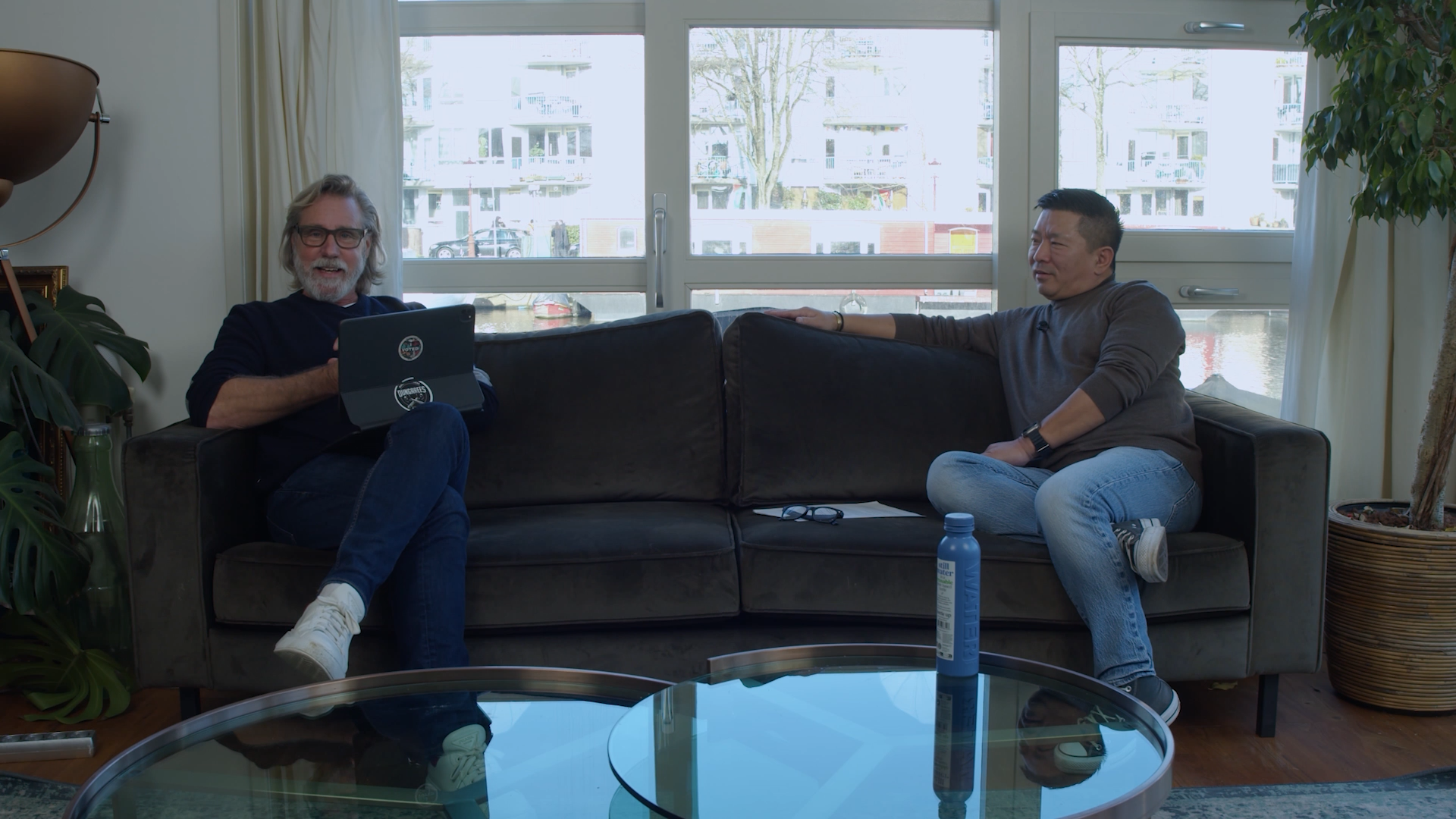
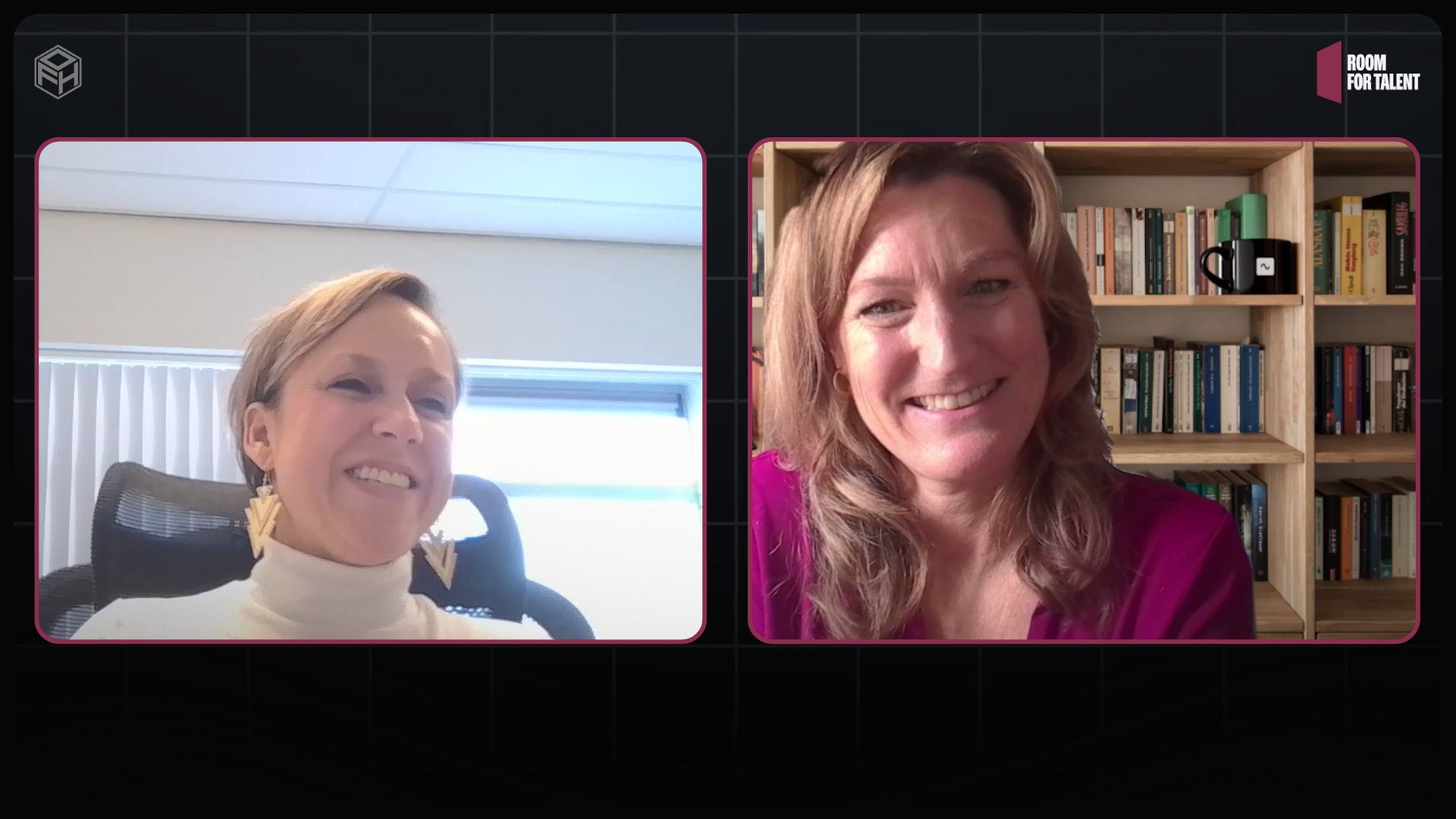
Cindy Kasanmoeseni, Head of HR bei Corendon Hotels & Resorts, erzählt, wie Hotels in einem umkämpften Markt Top-Talente gewinnen und halten können. Vom Abschied von veralteten Einstellungsmethoden bis zur Schaffung einer Kultur, die Mitarbeitende lieben, steckt diese Folge voller bahnbrechender Erkenntnisse für Hospitality-Führungskräfte. Wollen Sie den Kampf um Talente gewinnen? Hören Sie jetzt rein!
CKCindy KasanmoeseniHead of HR Hotels NL
WICHTIGSTE ERKENNTNISSE
01
Nach Persönlichkeit einstellen, nicht nach Lebenslauf
Cindy sagt, der größte Fehler beim Einstellen sei, sich zu sehr auf den Lebenslauf zu konzentrieren, der nur die Vergangenheit zeigt. Kulturelle Passung, Persönlichkeit und Leidenschaft zählen mehr, und Corendon verbindet Assessments mit einer persönlichen Note.
02
Der Spaßfaktor gewinnt
Da jedes Amsterdamer Hotel ähnliche Bezahlung, Entwicklung und Karrierewege bietet, argumentiert Cindy, dass der wahre Unterschied in Kultur und Spaß liegt, ausgedrückt durch Familienwerte, die in ihr Employer Branding eingebettet sind.
03
Menschen verlassen Vorgesetzte, nicht Unternehmen
Cindy nennt Führung als den am meisten unterschätzten Faktor bei der Mitarbeiterbindung und weist darauf hin, dass zwischen 30 und 50 Prozent der Menschen wegen ihres Vorgesetzten kündigen. Gute Führungskräfte geben ihren Mitarbeitenden einen sicheren Raum, um Fehler zu machen und zu wachsen.
“
Ich glaube, das Einzige, was uns von anderen Hotels unterscheidet, ist der Spaßfaktor.
They can go to the next door, to the next hotel, and they can earn more. And of course they get the same chances and of course they can develop. And there is a career path, all of those things. I think the only thing that distinguishes us from other hotels is the fund factor. Welcome to the podcast, The Future of Hospitality, powered by guestjourney.ai. Personalize videos at scale, creating memorable experiences and increasing revenues. Today, our guest is Cindy Cassanmusini, head of human resources at Corendon Hotels and Resorts. Cindy, welcome to our show. Yeah, nice to thank you so much for the invite. Nice by having me. Yeah, OK, I'm glad I pronounce your name right, because that was a challenge for me. All right, before we dive into the questions or into the subjects, I would say, can you tell us the listeners, our audience, a little bit about yourself and what you're doing? Well, my name is Cindy Cassanmusini. I'm Dutch and I'm 47 years old. Just had my birthday. Happy birthday. Yeah, no, a few weeks ago, but I still have to get into the fact that I'm not 46 anymore, so working for about six years for Corendon Hotels and Resorts. It's my first real job within the hospitality. During my student years, I was also in hospitality, just like many other students earning their wage to get to college and university. But my experience reaches more than 20 years in HR. So I have been in different industries and different companies. I worked for a technical wholesaler for more than 10 years. I've been in the laboratory industry, production, retail. And now in hospitality, and I have to say this is by far the best industry I've worked in, because it's never a dull moment. I bet. Yeah. So what makes it the human resources? That's a choice. Why did you make the decision to go for human resources? Yeah, it kind of came by accident because when I finished high school, I didn't know what I wanted to do. So I thought, well, let's buy some time. So I first went to do retail and got my papers over there and because I thought, well, I'm opening up my own business, but then I started working in hospitality. And I thought, well, this is also fun. And I worked a year in the kitchen as a cook, which I thought was really fun, but that I also had to do something else that I had to go back to school. And I worked with a lot of students that were actually in school. So one advice me said, I see you doing human resources. And I was like, well, I don't know. So I went to to check it out. And then I was like, hmm, this could really be my thing. I don't know why, but because it's like a cliche. I love working with people. The fact that I already had a diploma in my pocket, which gave me a head start in that in that in that course was more like, OK, let's go for it. And I never regretted it. So this is where it all started. And also during my studies, I also did a traineeships and I made sure that I had my side jobs also in that industry. So I did some duo jobs with other students in HR department, but also making sure that your traineeship is well paid and doing some extra assignments. So, yeah, it's it was always my thing to do and I still love it every day. I can tell you're radiated. So tell me a bit about more about Corendon. Do I pronounce that right? Corendon Corendon? Yeah, it's Corendon. Yeah, Corendon is something special. That's what we always say. So it's it's a family business. It's it has kind of three parts. It's it's a tour operator. It's an airline and it has their own hotels. And we kind of our our owner is it's Turkish. And also his business partner is Turkish. So we have like a Turkish part of the company and a Dutch part of the company. I work for the Dutch part, which goes overseas also to the Dutch Caribbean. And well, we kind of take all the boxes in in hospitality because we not only offer like the hotels, but we also offer the package deals and of course the airlines. And there's a whole story to it because our owner started somewhere in his own shawarma place, but then he wanted to go and have a daytime job because shawarma, you only eat in evening times. And his sister met somebody in Turkey and she wanted to have like cheap tickets. So she started selling tickets via television to Turkey. Well, and from one led to another. So they started selling package deals to Turkey, which was at the beginning of the year, I don't know, the end of the 1990s. But it really became current in 2000. And we are very entrepreneurial as an organization. If we see opportunity, we just, well, we just grab it and try to get along with it. This is also what happened, why we have an airline because nobody wants to buy an airline, I guess, because that's a lot of money. But when we were selling the package deals to Turkey, we became so successful that too, we didn't want other hotels or airlines to sell seats to us anymore because we were too much competition. So we couldn't fly our our guests to Turkey anymore. So we decided, OK, what do we do? Are we going to stop because we can't sell the package deals anymore? Or are we going to fly them ourselves? So we bought an airline. So we started our own airline. That's the spirit. Yes, that's the entrepreneurial spirit. I know we do. And the same kind of happened with hotels because it's not that we had like in the in the past, really the idea, OK, let's start a hotel chain. You start with one and then you think, OK, there's another opportunity. Let's do another one before you know what you have like for eight hotels. And what we're doing serious business in the hotel industry. I take some guts to do all that. And I'm glad to see it so successful as well. And you are in the middle of it as a human resource manager, director. What was it exactly? Head of HR. So I'm responsible for the Dutch hotels for the Dutch hotels. OK, so let me dive into the subjects that I want to touch with you. What is the biggest mistake that companies make when hiring talent in hospitality? I think that the biggest mistake that you can make is that you still are too focused on the resume. It's kind of traditional and you see some shifts that people are not using it really anymore, but using the resume or just looking at what's on it, what somebody has done, the age, you know, it's all those aspects that really don't count really anymore. I think it overlooks the cultural fit, the personality, the passion that somebody has for the industry. I think that these things are way more important when hiring staff than what the resume tells you, because it's what's on the resume. It's all in the past. How do you do it? Well, we're kind of on the verge of switching that. To be quite honest, our corporate recruiters still does a lot by, of course, still scanning the resumes. But it's more important what kind of personality somebody has. We also use these assessments in the process, which gives us more like the tells us more about what somebody can do in the future. If somebody is like a real leader or and we compare it in a benchmark. It's so this is something that we use, but still the personal touch. And also just to see what somebody's up to. I mean, I think in the long run, if somebody is really passionate and eager and motivated to come and work for you, it goes a lot longer than than somebody has on the resume and tell that they can do anything. So I think that that this is still the biggest mistake that we can make. We have to look more at the person than that we do at what they did in the in the past. Yeah, I agree with that. I think you get a lot more when you look at the person, what their potential is that they bring. And even age, for example, is still I hear around me that people say that they still are being discriminated because they're too old or something. And I was like, yeah, but if you want to work, come with us. We have in our staff, for example, and I think the youngest one is 16, but the eldest one is 76. And I love it. Yeah, because if else he has to stay at home with his wife because they were both like enjoying the pension, but he still enjoys working because he said, yeah, I'm old, but I'm not that. And you'd be around people. No, I totally get it. I could not even I would not even imagine not being around people anymore. I mean, that is that is I can understand when you get older. It's frustrating to hear when you get discriminated because of your age and you want to be out there. The older you get, you just want to be out there. I totally feel that. Yeah. Beautiful. I'm glad you all you do that. So how can hotels position themselves better as attractive employers? That's funny, because I had this I discussed this topic with with one of the hotel managers. I mean, I think it's all of the boxes that we need to take. Like, of course, that we have to make sure that work-life balance is OK. And we have to make sure that people can develop themselves. Of course, the salary has to be good, you know, all those things. But I think and I said to the hotel manager, I said, if I look at the market and I look at other hotels also in the surroundings of Amsterdam, which has a lot of hotels and everybody is kind of fighting for the same people and I mean, they can go to the next door to the next hotel and they can earn more. And of course, they get the same chances and of course they can develop. And there is a career path, all of those things. I said, I think the only thing that distinguish us from other hotels is the fun factor. And it's fun factor. You got a fun factor. OK, yeah. And it has to be a good story, which you can tell at home, because everybody is offering the same things, you know. And what distinguishes your culture and how much fun that you can have. Because if you ask anybody in any hotel and especially young people, I think if you ask them, why do you want to work here? All of these these things that I just mentioned will check the boxes. And of course, they will. But it has to be a cultural thing. We have to we have to match. We always say in Korrenden fun, you become part of our family. And of course, we're your work family. So it's not like a real family, but we have like the family values. If you are having a difficult time, we take care of you. And of course, we also have like family parties and also. But and of course, you can develop with us. We have a career path. And if you have ambitions, we can make sure that you can you can reach them. But that does everybody else. So what makes us unique is our culture. And this is how we also put that into our employee branding. How we are as an employer and these family values will translate to our our employee branding. I love it. I can feel I can sense that's where your success, your huge success is coming from. This is the personal touch from the inside out. That is where it's coming from. Everyone talks about guest experience. How important is it? Is the employee experience, in your opinion? Yeah, it's essential, of course. I think it's it's so important. And this is all where it's I think it's also there. Yeah, these are these quotes that if you make sure that your people are happy, they make sure that your guests are happy. I think Mr. Branson said it once. But I think everybody quoted it or what was the other way around. But that's really important. So if you make sure that from even before they start with you, your employees, even with the recruitment process, the whole journey within our company has to be good, that whole experience. And we start with the basics that we start within our company with getting them acquainted with our DNA, what we think is important, because we defined our DNA from what we want as a guest experience. When our guests come in, what do they need experience? And then we translate it to our employee experience, what they need for that. And it's in the DNA. And we translate it also to our audio collage, our environment, what do we need to make sure that they feel safe? And also the cultural leadership that they need for that. So it really has to fit all that to make sure that the employees experience is really good. Because I think there's two in that that yeah, we always get around like happy wife, happy life. And it also applies, I think, to to your employees. I believe that too. Is it something because the founder is from Turkish origin, Turkish Dutch origin? Do I get that right? Well, originally Turkish, but I think he came to the Netherlands when he was six. So he's really Dutch. Right. I asked that because what I think I'm hearing is that the founders or the founder brought in their Turkish heritage, their family values into the company. Is that correct, do you think? Their family values, the Turkish from the Turkish culture. Yeah. I think there is a healthy adaption of that. I mean, the Turkish people really value family life. This is also what you can see because I always said it's a family company. I mean, we have our CEO, but our managing director is his son. And his the sister of the of our founder is also the CEO of the tour operator in the airline. And they really try to bring everything together. So this is also why we came up with our family. Sometimes it's literal and mostly it's figuratively, but it's really important for us. Family is life. Yeah. No, I sense it. I get it. And I think that's indeed, like I said before, I think that is part of the success factor of Correndum. What do you think is the most overlooked factor in retaining top hospitality talent? I think leadership, sorry, because I was thinking about about what I will answer to this question. And then it's all coming down to one thing and that is leadership. Because and I looked it up because I wasn't because in my mind was that 30 percent of people will leave because of the manager, but apparently these numbers are even higher. So if you want to, yeah, I was like, oh, my God, it's really high. So it's somewhere between 30 and 50. And it was more like people don't leave the company. People leave their manager or their boss or bosses kind of. So if you have like good leadership within your organization, which makes people feel comfortable, that they can make mistakes, that they can grow, that they are mentored. I think that's the biggest key to success by retaining your stuff. Because this is so how do you call it? This weighs a lot. I mean, you can check. I can give more salary if somebody is not happy with that. And that will last for a month. And you can give people like tips and tricks and tools and whatever they need to do their job, but it all comes down to one thing. And that's the manager or their leader. And if that's not good, yeah, then people will leave because then all the other things also fail. I mean, we want good feedback and we want growth opportunities. So but that also has to be facilitated by the leader. And I mean, and that's also something that we need to understand. There are managers and there are leaders, I always say. And leaders make sure that they facilitate their stuff so that that they are given the feedback that they need, that they're given the trust, the safe space to make mistakes, because this is where the growth is. And this is where if people feel safe, that they want to stay and develop further. And it all comes down to leaders, leaders. Right. So the next one in that is happy employees, create happy guests. That's the same. Can you share a moment where this prove to be true? Yeah, of course. I was because I was thinking, where do I see this, but I see it all the time. I hope I like to believe that we have a lot of happy employees. But to have a concrete example is, for example, in one of our hotels, we have this guest relations desk in the lobby part where there's always a guest relations officer or the guest relations manager behind the desk to answer questions, maybe handle a complaint. But what they do really well, and it's always in the little things, they're always smiling from ear to ear. They really love their job, you know. And when I just see them, they just start smiling and glowing all over. And it just contagious, you know. But even when it's very busy and it can be very busy because it's a hotel near the airport where people can really can't queue up. And nobody likes to be in line, let's be honest. And what they do is they just stand up, come by with the trolley, with a little drink and a little cookie and everything just to make you comfortable in that line. So you see people coming tired from the buses with suitcases in line. And then they stand there and there and you see the tiredness. And then this beautiful lady with a beautiful comes and say, would you like a drink? And then everything flourishes, you know. And then it's like, oh, yeah, it just rocks off. The little things. But that's what we are all people. We're all human. We're all have feelings. And that's what we're all tired. And we just want that little thing to be recognized, to be seen. We recognize that. That's what I'm hearing. The recognition, the attention, you know, just being value. Just to everybody wants to feel welcomed. And that's what we try to do. So if you come in that you feel like we want you to be there. And then we make it as easy for you because you still have to be in line. We can't solve that for you. Just hopefully our receptionist work a little bit harder, but they also want to give the attention to the one who's at the desk. So we'll just take care of you when you're in line there. And then you see that when we are happy that the guests are also happy. And it just I always say, just give it a smile, you know, the guests. And sometimes because if the guest comes in, nobody wants like, yeah, somebody who has a bad day, you know, that's not my concern. So if we're in hospitality and it's all about attention and smiles. So yeah, and from my own point of view, because yeah, I fully agree. And I'm so glad that Corendon is doing this. They understand it. But from a traveler point of view, the first thing you do when you walk into a hotel isn't it and when there is a line, you look to the to the front desk and you look at the people and without wanting it, but you have an opinion about the person behind the desk. If it's if he or he is not smiling, if he or he has a bad day. And I don't want to see that. And that that that sounds selfish. But as a guest, when you arrive, you want to have you want to see that smile. You want to be feel welcome. And that is exactly what. Yeah, nice, nice, nice one. I like that. What is, in your opinion, the key to effective talent development in hotels? First, recognizing your talents. So that means that you have to invest time in people to know who are your stars and who are your people who need more development or other attention. But it also starts, of course, with training, mentorship, all these things that make sure that the safe environment to make mistakes. Like I just said, and one thing to add to that, because I talk about this a lot with people in the business, but also with schools in the in the surroundings is I think also making a generation proof because we can develop a lot. And of course, we can do a lot of mentoring and coaching. But what I notice now is because we have like these five generations on the floor that everybody needs their own kind of approach with that. So I think if you want to be effective in the long run, you have to also consider the one who is in front of you because like I just said, we have still some baby boomers on the floor and not that they need like the real development. But if we teach them something new, which is still normal in our business, they need another approach than like the Gen Z, who wants to have like direct feedback when something is not done well. So kind of also we need to I just call generation proof, but we need to adapt also to the generations on the floor to make sure that the talent development is also effective. Right. Also interesting. Five generations, you said on the floor, five generations. Yeah, because no, not yet, but we of course, of the baby boomers, we have like the Gen X and we have the millennials and the Gen Zs and Generation Alpha is also already visiting our hotels and asking for little traineeships already. So we have to also be prepared for what's coming to us. Yeah, because that whole landscape is changing indeed. We talked about that. It's the expectations and the approach. It's all changing. It's not the same as it was 30, 40 years ago. It's a way different. No, no, it's definitely different. Yes. How do you see the future of human resources in hospitality involving? Well, I think what I see in my own department, which I'm also working on with my own team, is that we have to, well, we have to, but we are moving away from the traditional hiring and all the administration. I always tell my team how can we make things easier and how can we make it better, digitalize it, to become more efficient. But OK, that's like I assume that all about everybody is dealing with that kind of thing. But I also, for this year, I had like these three focus points, which I also see as the key changes for the future. And I think that these focus points are, of course, AI, how we can integrate that in a good way into our department. So more tech driven, data driven, but also how can we let AI work for our department so that we can also make it in the long run in hospitality? Because I think we are just scratching the surface with AI and also within the hospitality. It's not like an already stated team that AI is frequently used already within everything that we do. I mean, we're not in finance or something. And there's also the other thing, sustainability, of course, with the energy transition, sustainability transition. That I think that we need to align that with what we're doing in the HR department. So I always say with every plan that we do in every team that we have, if it's recruitment, onboarding, performance management, how can we make that more sustainable? On one side, how can we make it more green? But on the other side, how can we make it more sustainable to the future that we're not doing it for just one year, but that we can do it for five years? And there's also the well-being, the vitality of our staff. I mean, this is just a general focus point that I think as long as I'm in HR, that that's my main priority, the well-being of our team members. Right. And do you think you mentioned modern technology like AI? Do you think there we we're now balancing towards more tech probably on the back end? And you say we want to embrace it, but it's just we're scratching the surface. And there is a new generation coming in that is probably working with AI all the time already. So how do you balance that? That was probably my last question about this subject. How do you balance that? But you were thinking about it, but how do you feel about that? Well, I think that I would talk to my learning and development manager about this subject because I think that we need to as a as a company, but also as an industry, have to stand up and really think about it, how we're going to do it. Because if we're not going to do it now, then we'll be at the end of the line just seeing how everybody else is dealing with it. So and I want to start I have we have this implementation plan, how you want to do it? And it starts with getting people aware of just by starting asking the question, what is AI? What can artificial intelligence really do for us? By making some examples that people are going to think about their own job and how we can make it not even faster, but more smart. And this is how we, like you already said, we need to embrace it because if we are going to wait, then we will be you'll be out. You have to have behind. So no, honestly, I believe that I fully agree. Last thing, do you have any advice for people who want to enter the hospitality industry? Yes, do it because this is like the best industry ever. Because if you ask people, what do you do in your free time? Everybody loves eating, loves to go to hotels, loves traveling, go to the movies, go to theater. That's all hospitality and people need to understand it's not just a side job when you are studying. You can have your complete career here and be fully developed to whatever ambitions that you have dreams come true in hospitality. Wonderful. Cindy, thank you so much. It was lovely talking to you. Thank you for sharing your insights and your energy and your enthusiasm. Yeah, you're radiating it. I love it. Thank you so much. Thank you for having me. It was a real pleasure. Thank you.
NEWSLETTER
Bleiben Sie auf dem Laufenden
Jeden zweiten Dienstag senden wir Ihnen die neueste Folge, die zentrale Debatte darin und die eine Zahl, die Sie sich merken sollten. Zwei Minuten Lesezeit, kein Spam.










 EPISODE · 33 MIN