Cybersecurity and AI: a double-edged dilemma
AI transforms cybersecurity, boosting defenses while enabling sophisticated attacks. This session explores how businesses can harness AI responsibly to protect data, build trust, and stay resilient.
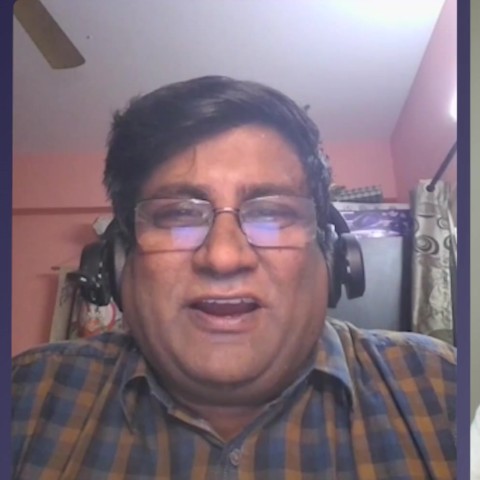 Dr. Ram KumarCyber Security & Risk Leader
Nobody goes to a hotel expecting that their data would be stolen or exfiltrated.
Transcript
Click a timecode to watch from that moment.
05:02What is your take on AI and its impact on cybersecurity?
15
the Future of HospitalityWonderful. So when we AI is a buzzword nowadays. We hear it everywhere. But when I speak to people, a lot of people don't even know what it really is. So that's why we are going to talk about it a lot. What is your take on AI and its impact on cybersecurity? And especially in the hospitality sector because that's what we are really interested in.
Dr. Ram KumarYeah. So today, AI is a buzzword everywhere. I think from the time GenAI, especially the chat GBT burst into the scene in late twenty twenty two, it has become very popular. And, of course, the scenario has changed a lot in to in today's world. A lot of apps have come into play. But one thing we need to understand as far as security is concerned, AI has been a double edged sword. It can work as a protector, can enhance cybersecurity, and also it can act as a weaponization of AI to target systems. So that way, AI has become both a boon and a curse for security world.
Dr. Ram KumarIt can be a tool. It can be a medium, and as soon as it can be a target for cyber attacks. Right? So, importantly, as far as the benefits are concerned, it can help definitely in speedier threat detection, network protection. You can also configure for anti phishing measures. You can do behavioral analysis of the patterns and defend against common cybercrimes. And, of course, weaponization has led to, you know, very easily people can run phishing campaigns today because it will be AI technology can be harnessed or leveraged to draft flawless emails. Right? It's not easy to detect as well. And, of course, malware mutation, the polymer trick malware, and all is becoming very common today.
Dr. Ram KumarAnd it can also easily exploit software vulnerabilities. Right? And importantly, when I look at the threat map from Gemini, one is the usage security, AI usage, how it is being used. Because lot of scope for leaking sensitive information. Alright? Information disclosure can happen. The second thing could be on jailbreaking. Right? The third could be on shadow AI applications. Today, a lot of AI apps are available out there. So without proper evaluation from security and privacy aspects, if people are using it very freely, it could lead to security threats and risks. On the second level, you do have problems with application security of AI. Right? So Mhmm. If it is not properly secured, the agent AI, you know, applications, it can lead to indirect prompt injection attacks. So prompt engineering can be, you know, modified.
Dr. Ram KumarAnd data leakage and the exfiltration of data can happen. And, of course, insecure plug in design also is a major attack with that. On the third level, the final level is the AI platform security. Right? So the foundational model and data for use for training, this could be targeted for data poisoning. So if your data is not having integrity, it is what we call as a data poisoning attack, then the results can be disastrous. Right? So and also model theft also can happen. So we have got examples. I think few months back, one of the popular generic platforms was supposed to question, can you give example of, you know, black people or something?
Dr. Ram KumarAnd the AI tool gave a picture of a a person colored person with Nazi, you know, uniform. So that was never there. So so that led to a lot of outrage and concerns. People protested. There were a lot of trolling happened. So all these anomalies, you know, we'll have to be careful on the ethics and the responsible usage of AI. Right? It's very closely it's closely intertwined with the ethics and responsible AI. Security and privacy is very much closely intertwined with these areas as well. So that's my take on AI security. But before I conclude on this aspect, one thing we all need to remember is security of AI and security for AI. Right? AI for security are two different things. It's not the one and the same. So that's something we need to keep in mind when we approach AI.
Dr. Ram KumarYeah.
the Future of HospitalityAlright. Thank you so much. That's that's three important points indeed. About jobs, and again, especially hospitality sector, would do you think that AI will replace jobs?
Dr. Ram KumarYeah. See, AI can replace jobs that are repetitive, monotonous, and it can be automated. Right? Every report industry survey reports. I was looking at a Goldman Sachs report. It said about 300,000,000 full time jobs can be replaced in in US and Europe, and can also lead to productivity boom. Right? There are also university studies like University of Pennsylvania and even OpenAI also did a research. They say that even educated white collar workers who are earning goods salaries, significant salary packages, they are likely to be impacted by the workforce automation. So already we had heard about folks I mean, experts talking about coding will become extinct. You don't need programmers.
Dr. Ram KumarCoding can be automated using AI tools. Right? Mhmm. Even corpse also talks about it refers to a MIT Boston University report saying that 2,000,000 manufacturing workers will be impacted in a few years. Right? So Uh-huh. Every other thing is survey is talking about this. Specifically, if you are looking into hospitality sector, though I don't belong to that sector, but from what I hear is very, you know, regular jobs like the receptionist, customer service of the representatives, these job categories are in their major threat. Yeah. It could actually perform these jobs. Right? And even salespeople also. Right? So all these things can be impacted in a big way. The only option is people should not panic. Rather, they should upscale and leverage AI. So the people who don't know AI and keep away from AI could be in trouble. People who have learned AI and know how to use it, they will survive or move away from a role where I really doubt whether AI will not impact any role in the future. It's it's going to be the way forward.
the Future of HospitalitySo everybody in the hospitality sector, no matter what you do in the hospitality sector, you need to be part of this transition. That's what I'm hearing.
Dr. Ram KumarYes. Especially the monotonous roles, you know, which doesn't need too much of human intervention, which an automated tool can do. They are in the.
the Future of HospitalityA good synergy. A synergy. That that that that is what we need to create. Wonderful. So the unmost underrated aspect of cybersecurity, what do you think that is?
Dr. Ram KumarOf course, the human aspect. I would say the human aspect is very under, you know, underrated because human aspect is considered as the weakest link in the cybersecurity chain. Right? So people are easily, you know, manipulated by by social engineers. So today, the age of AI, it's all the more easy. Again, social engineering happens in multiple ways, not just over email, through a normal phishing email. Today, have spear phishing, voice phishing, voice cloning, deep fakes. Deep fakes are a reality. People have lost money big big time. Right? Big win. And, of course, you do have business email compromise. So all of these are fed by human gullibility, human greed, or it could also exploit our good nature, willingness to help. Or just out of curiosity, you go and click on some link and that link can download a malware or a ransomware.
Dr. Ram KumarRight? So all these things are human element is always, you know, vulnerable. Because no matter how much training you do, there is always a chance of, you know, somebody getting negligent or a bit careless. And one such incident is enough to bring down the whole house. Of course. The worst scenario.
14:39Do you have any advice for people who want to enter the cybersecurity career market?
7
the Future of HospitalityOne yeah. One little link, and then it's it's it's it's it's a mess. I get that. Yeah. Right. Yeah. Yeah. Alright. Do you have any advice for people who want to enter the cybersecurity career market?
Dr. Ram KumarYeah. So, primarily, you should have a passion and interest because this is a domain. You if you want to thrive and do well, it's not just you read a book or complete a course and get a degree. It's a lifelong learning because it's very dynamic and vibrant. Like, things keep changing. So you should have that aptitude aptitude to learn and learn and relearn all the time. So it is really a career choice.
the Future of HospitalityIt's not just to go this for a job because Yeah. I was having a talk with someone else just recently, and the the the the the new generation is predominantly not necessarily interested in a career, but in jobs. And that was a little bit different when we were younger. So that's a challenge. Right? Yeah. The Gen Zers have a different mindset,
Dr. Ram Kumarbut I think if they have ideas to do their own stuff, start up from those of becoming entrepreneurs, they need to have a deep dive understanding of cybersecurity and different aspects before you strike out on your own. I'm not saying you shouldn't do that. You should always become, you know, entrepreneur and and stand on your own feet. But strong grounding in this domain is very important. So, of course, you need to build a lot of skills. You need to understand how networks network works, infrastructure works, right, and all aspects of cybersecurity. You have multiple domains within cybersecurity. It doesn't start and end with ethical hacking and print testing.
Dr. Ram KumarOf course, people have a very wrong notion that cybersecurity is all about ethical hacking and print testing. You do have different domains like application security, risk management, governance risk and compliance, security operations center. Right? You have IoT security, have security architecture, security engineering. Even within security architecture and engineering, we do have multiple domains like data loss prevention, identity access management. And today, we are talking about cloud security in a very big way. IoT security in a big way. OT is a different animal altogether. Operational technology, which is very common in manufacturing companies. Right? You have multiple areas to, you know, look at and expert build your expertise as you would want. So keep an open eye. And it's very important to have a a analytical mind and problem solving capability. You have to build those skills.
Dr. Ram KumarAnd a degree in, you know, computer science would definitely help, but it's not a strict requirement. Of course, today, lot of new age courses have have emerged. It was still over there granting degrees, specialization in cybersecurity or cloud. That is also helping. And do some certifications that will quickly help you to gain skills develop skills and understand the domain better. For freshers, you can always look at CompTIA has got security plus or network plus or even you can look at c h from easy concept, certified ethical hacker. So that's a basic certification today to make you stand out when you have your CVs, you know, shared across to your network.
Dr. Ram KumarAnd, of course, hackathons, capture the flag, CTF events are a great way to hone your skills. And importantly, internship stands with always help you to gain that real world experience with exposure to projects. And to to conclude, one major thing is the exposure you get by attending industry events and conferences helps you a lot. You'll get a peek into what's going on in the industry, what's our other key trends, and network with industry leaders, industry experts, and peers. So that could always give you that exposure, and you never know who could actually give you a job. So that's my advice to youngsters looking to, you know, get a foothold in cybersecurity domain.
19:15Is the security certifications or is it the skills or is it the combination?
19
the Future of HospitalityA very good one. So what's more important do you think? Is the security certifications or is it the skills or is it the combination?
Dr. Ram KumarBoth. It depends on where you are in your career. Suppose you are a mid career professional, have one or two major certifications, and, of course, skill is skills are very important. But when you are young, you need to have a right balance or right mix of security certifications and skills. It's you cannot have one and say, I don't need the other. Because if you are looking to transition or break into cybersecurity, your credentialing also is very important in the early years. Right? Because what happens is when you do certifications, you are proactively learning a new domain. Suppose you specialize in penetration testing and you want to know how you can become a SOC analyst. Right? Security operations center analyst.
Dr. Ram KumarWe can always do a certification in that. It will give you a quick, you know, peek into that domain, develop the necessary skills. And, of course, hands on experience will always help by way of any projects or anything. And you stand out from the crowd when you apply for jobs. Okay. I have the certification. It looks great on my CV. And, of course, you command premium salaries when you're a certified candidate. And it shows that you are committed to this domain. You put the effort going beyond your routine work. You are putting that effort and focus to get upscale. And, of course, you become part of an elite club. When you do major certifications, it gives you a lot of confidence.
Dr. Ram KumarRight? When Fortinet, one of the leading OEMs, they published a report earlier this year, the industry survey report. That report also talks about how candidates with certification stand out. Of course, the skills are very important side by side. So both should go hand in hand. In fact, we have a set of hiring managers who don't believe much in certifications, but they prefer hands on experience. Right? Hands on skills. But in my humble opinion, I would always say have both. But you should not lose out because you don't have a certification. Somebody's denying your job. Because today's, you know, scenario, especially in recessionary times, when the investors apply for jobs, They're not able to make it to the interview table or the interview call because all the systems are automated. You have the applicant tracking system. Right? ATS.
Dr. Ram KumarSo the ATS system always has keywords incorporated. That's why they are being configured. So if you don't have the right keywords in your CV, then you your CV doesn't make the cut. Your resume doesn't make the cut. Right? So it's very unfortunate for a job which repairs pressure, and they ask for certifications. And because these people didn't have the search, it gets filtered out. Around, say, 800 people apply for a job, and humanly impossible for any recruiter or hiring manager to look at each CV. And we all know how much time they spend on each CV, seven seconds or less. Unless Mhmm. They have the correct keywords with these certifications, the letter four letter acronyms, don't even get filtered and pushed to the review of the hiring manager.
Dr. Ram KumarSo that way, it does looks great on your CV, great for you in credentialing, and shows your commitment and you gain real, you know, knowledge and skills about that area, exposure about that area. So you have to do both hand in hand. Both do both hand in hand. Right? That's my take on this.
the Future of HospitalityYeah. And I totally understand it. One other thing is how will cybersecurity evolve from now on? Let's say 2025 and on.
Dr. Ram KumarYeah. So, you know, AI has come in a big way. AI powered attacks will will continue to happen in new ways and means get more sophisticated. Of course, you have solutions also, which is AI power. So we'll have to see how this evolves. Then there is a major risk on the supply chain. Supply chain risks are, like, getting worse. And, of course, with the support of, you know, AI, social engineering attacks are very difficult to detect. And zero trust is going to go in a big way. In the sense, it's going to be adopted in a big way. And cloud risks are increasing. At the same time, the downtime because of disruptions, outage cloud outage is a worrying factor.
Dr. Ram KumarSo that could force companies to go back to on prem model. Earlier, before cloud was adopted, you know, people are having their own data centers. So I'm not saying it's gonna change completely drastically, but there are always chances that could go that way. And, of course, the regulations are getting increasingly increasingly stringent both on security requirements and privacy requirements, and that's only going to get more tighter. Right? Yep. And we currently are we are facing for the last few years a huge shortage of cybersecurity skill to talent. Right? So that will continue. Yeah. Yeah. Sad part is companies are also unrealistic and sometimes greedy. People who know stuff are not drafting the JD, but the JD is being drafted by nonprofessional, say, HR. I'm not accusing them in some cases. So what they do is they marry both.
Dr. Ram KumarThey they want a blend of a professional who is both a manager and a engineer. You never do it. If you are in managerial role, you'll not have any hands on experience. I mean, I mean, 90%. There can always be exceptions. But when you look for both the skills, it's going to be getting difficult. The same time, from the candidate's point of view, the candidate has built some expertise, and he or she knows that they are smart. They are also acting pricy. They ask astronomical salaries. Okay? That's a problem today. And no company can afford to give such huge hikes. You know what happened in the COVID pandemic times?
Dr. Ram KumarThere was a great resignation moment where people are getting hired for crazy salaries. They made two x, 2.5 x, but that was not sustainable. The bubble burst and many people were left with their jobs. And last one one and a half, two years, there has been a a layoff has been going on different companies, different industry sectors. And if their economy doesn't revive, it's only going to get worse. I think both the parties, employers, and the job seekers have to find a middle ground and be realistic on what they offer and what they can, you know, hire. So this is something I think I should make a call out, actually.
Dr. Ram KumarAnd, of course, hybrid work is another trend that is going to be in work for some more time. And I talk about hybrid work. Obviously, the security risks in your work remotely is going to be there as well. So these are some of my, you know, pointers for what's going to be the trends and challenges in the coming year as well. Right.
the Future of HospitalityAmazing. Yeah. I have another last question for you, and that is from the best what would you advise people who want to enter this market? That's or the in in the hospitality center. That's what I mean. Sorry.
Dr. Ram KumarIn the sense yeah. So today, if you are seeing in the hospitality sector, traditionally, it has not been very cybersecurity savvy. That's why I'm asking. So we had big brands. I know I don't want to name the brand, but the that global hospitality chain major.
the Future of HospitalityThat's not the yeah.
Dr. Ram KumarYeah. Repetitively, have been targeted, and that's a very sad thing. And they seem never to realize importance of cybersecurity. But finally, now they are here in India and Bangalore. They're setting up a global capability center, and I hope that's going to bolster their cybersecurity posture in the coming months and years. So I think hospitality sector is something it's very, you know, lucrative for hackers to do a cyber attack and breach their database for the sensitive information on guests and their personal information. Right? Nobody goes to a hotel expecting that their data would be stolen or exfiltrated. It's a very unfortunate thing. You do business in strict confidence.
Dr. Ram KumarAnd one day, it all of them is out there in the dark web. It's very unsettling. You you don't go It is unsettling. Publish your credit card data or stuff available in the dark world. That's very sad. I think that it needs hospitality sector should definitely, you know, level up and ensure that they are at par with other industry sectors when it comes to protecting data and privacy of their information and customer information.
the Future of HospitalityCustomer information. Thank you so much. We My pleasure. Learned a lot, and I think we all learned a lot. It's it's it's it's I appreciate Thank you so much. I'd like to end it here. I'm thanking you for for joining us on the podcast, the future of hospitality. And, we see each other in person sometime at a event or a talk because I would love to hear more from you.
Dr. Ram KumarThank you, Arin, Arin, and thank you for all your, you know, hospitality on this nice topic. I really appreciate it. See you then. Bye bye. See you later. See you later. Thank you.