High-Tech High-Touch For Boutique Hotels
Hotel innovation, for Sander Allegro, means hospitality with intention. The founder of Allegro INN ovations explains how tech, curiosity and collaboration future-proof boutique hotels, and shares simple fixes that lift guest satisfaction. He also looks at why education and AI will shift back-of-house work so staff can focus on true human connection.
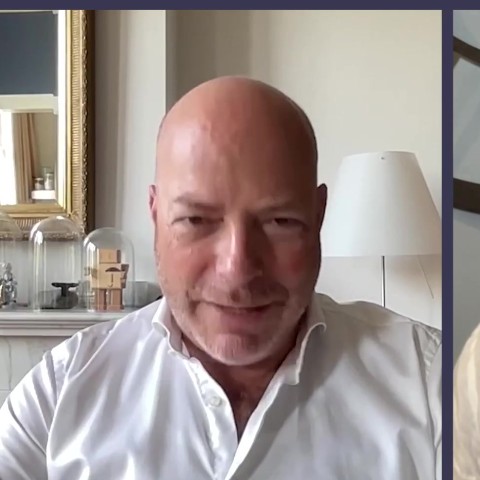 Sander AllegroOwner
Ask Sander about this conversation
A short answer from what was said in this episode, with the exact words and the minute.
KEY TAKEAWAYS
Plan by looking forward
Treat strategic hospitality as forward planning: identify forces driving change, anticipate needs of guests, team and owners, and build budgets with future scenarios rather than tweaking last year’s numbers.
Balance high tech and touch
Use technology to remove administrative noise so staff focus on meaningful personal welcomes. Apply tech at front for solution-driven stays and keep it behind the scenes for experience-driven boutique hospitality.
Lead through curiosity and presence
Earn leadership by listening and working alongside teams. Do mini traineeships across departments, build informal networks and trust with senior staff so authority grows from curiosity rather than rank.
Hospitality is about combining high tech and high touch and finding a balance.
Transcript
Click a timecode to watch from that moment.
00:00Introduction and Guest Background
7
Host introduces Sander Allegro, highlighting his early start as a general manager and his extensive experience in strategic hospitality.
SanderIf it disturb, nothing will happen.
the Future of HospitalityAnd if I say you think that's not good, just say what we can do.
SanderYeah, that's not big.
the Future of HospitalityOkay, I'm to start. Three, two and one. Welcome to our podcast, The Future of Hospitality. I am your host, Arjen Eikeleboom. And today's guest became a general manager at just 21 years old. Since then, he spent 25 plus years redefining what strategic hospitality means, not just in hotels, but across business, education, and even social enterprises. Later in this episode, we'll hear why he believes collaboration is the key to the future of boutique hospitality. Sander Allegro, founder at Innovation in Amsterdam. Welcome to our show.
SanderThank you, Aryan.
the Future of HospitalityWonderful. Innovations. Can you explain a little bit what is innovations?
SanderWell, innovations is my consultancy practice that I've had for more than 25 years. I don't call it a company because it's a one man operation and I think it should never exaggerate if you're operating something of such a small size. I do work together with a lot of people, but I don't employ them. So that's why it's a practice. And what I do is that I help organizations to better implement the principles of hospitality in a strategic way in their operations, in their way of thinking, in their policies. And I try to encourage and choose and inspire them to apply those principles.
01:26Defining Strategic Hospitality
26
Sander explains strategic hospitality as hospitality with intention, focusing on anticipating future needs of all stakeholders.
the Future of HospitalityWonderful. Okay, we're gonna find out what drove you and why you are at the top of your best in this particular industry. But first, what does strategic hospitality mean to you? In one sentence or a few sentences?
SanderWell, would say that strategic hospitality is hospitality with intention. It's future-proofed in the sense that you have thought about the consequences of future developments on all the stakeholders that are involved in the process of hospitality. So strategic hospitality is about anticipating future needs, anticipating future developments. It's about anticipating future needs not only of guests, but also of shareholders, of team members. your environment at large. So I believe that that is what is key. it is a special challenge in our industry because at the core of hospitality, the hotel operations go on seven days a week, 24 hours a day, 365 a year. So taking time out to look at what's coming towards you, what the future has in store for you is not something that many hoteliers have time for or take time for.
the Future of HospitalityRight, and if they don't, they're going to miss out.
SanderThat's always a risk.
the Future of HospitalityIf a boutique hotel wants to future prove itself tomorrow, what's the very first step they should take?
SanderI think the very most important step is try to get some understanding of what are the major forces driving change in the future. And that may be a big sentence, but it's about understanding what developments will have the biggest impact on you. We have a sort of inborn tendency when we try to make a plan for the future, let's say a new budget for next year. The first thing we take out is today's budget. And we amend it a bit based on what we feel what we've seen and think we future-proofed it But basically if you build your future plans based upon what you have behind you It's like driving a car using your rear-view mirror, which is a great way if you're driving backwards But a very dangerous way if you're driving forward So if you want to future-proof yourself, you got to look forward You got to look through the front window and try to anticipate like you would do in traffic. You're not just looking at the first
the Future of HospitalityMm-hmm.
Sanderfive yards in front of you. You're looking at, if you can, at least half a mile in front, so you can anticipate whatever is coming. And maybe you learn about the weather before you leave on your trip, or you look at traffic announcements, and you take in that type of information in order to build your itinerary. And that's exactly what you do when you put your proof your hotel.
the Future of HospitalityYeah, anticipate. Hmm, interesting. I want to go to a few quick questions. Coffee meeting or a breakfast meeting? What kind of person are you?
SanderI'm afraid the sound is breaking up, so I missed that question.
the Future of Hospitalitysorry. What would you prefer? A coffee meeting or a breakfast meeting?
SanderI still cannot hear you.
the Future of HospitalityYou don't hear me at all. You're worth my whole money.
SanderI'm going to check if my internet is in full swing.
the Future of HospitalityYeah, here too. Okay.
SanderNow I understand you, but just when I something, I both options. I only coffee.
the Future of HospitalityOkay, let's go back. Okay, I was just thinking for a few quick questions. A few quick questions from here before we go to your early days in hospitality, why and how. But first, coffee meeting or breakfast meeting?
SanderNo, go ahead. We'll just try again. Breakfast meeting.
the Future of HospitalityAnd why?
SanderWell, I'm pretty sharp early in the morning. I like to seize the day and to do that. to make the most out of your day, to start early in the morning is a great way to get the day started and it leaves you plenty of opportunity for the rest of the day.
the Future of HospitalityAnother quick question, most outdated practice in hotels?
SanderI'm about to say redoing the registration at check-in where everybody has provided all their information beforehand through your channels and then pretending you've never heard of that person before and let them fill out all kind of paperwork that simulates a post office from Eastern Europe in the 50s. For me that's really...
the Future of HospitalityHow should it be done? How should it look like at every hotel? How should it look like to check in?
SanderWell, I don't think it's for every hotel, but what I advocate is if you have all the information and if you're working wisely with the very scarce means of having actual human labour, then make sure that you put it where it adds value. So everything that is administrative can be dealt with in a technological way. So if you have all the information beforehand, then the person who receives the guests and welcomes the guests can concentrate purely on making that welcome an absolute, unforgettable good experience. And don't waste that very precious time and attention of that very precious team member on letting them redo stuff that you should have arranged and organized differently by better using your systems.
the Future of HospitalityI'm so glad you said it, it's about a personal connection.
SanderOf course.
07:12Early Career and Leadership Lessons
14
Sander shares his fascination with hotels from a young age and how curiosity and listening shaped his leadership as a young manager.
the Future of HospitalityRight. Your personal story. You had a fascination with hotels at very young age. What sparked that curiosity?
SanderYeah, that's a good question. I think I like the vibe in a hotel. We didn't go to hotels that often, but at least once a year. And I was also fascinated by everything that took place there, whatever was going on behind the scenes, as long as I could see things, because obviously I was not invited behind the scenes. But I liked the atmosphere, the place where there was a certain optimism, where people were nice to each other, where... There was lot of laughter and joy and it spoke to me. It was an environment where I felt this is where I feel an energy that I like. At least that's how I see it now. I'm not sure if I would put it in that words as my 12 year old self.
the Future of HospitalityYou were 12 year old. you, what you, you said we didn't go to hotels, but you had a fascination for hotels at that age. Can you define that a little bit more? sorry. didn't.
SanderNo, we went to hotels, but we didn't stay there for an extended period of time. We would go on holiday and either go camping or rent a house, but on the way over we would sleep in hotels. Occasionally for smaller holidays we would stay a few days in hotels. That sparked that interest. I remember we were going to the south of France and we went camping, but we went to the seaside, the beach in Cannes.
the Future of HospitalityRight.
Sanderand I was fascinated by the Carlton Hotel and I have pictures from different ages that I posed in front of that hotel for some reason I was fascinated by it and when I was 19 I actually worked there so that was quite an interesting occurrence.
the Future of HospitalityAnd you became a GM at 21. So that is a very young age to become a general manager. Looking back, what shaped your leadership in those early years?
SanderWell, maybe I should play it down a little bit. I replaced the GM. I was more a resident manager. The hotel was on the island of Bonaire, the Dutch Caribbean, and all the staff functions like HR and finance were taken care of by a head office on the island. But I was responsible for the daily operations. And there was quite a challenge because I was extremely young and extremely unexperienced. And I was from a completely different part of the world than the majority of the people there.
the Future of HospitalityOkay, still.
SanderAnd at 21, I knew very little. But luckily I realized that I couldn't know everything. And I think that forced me to learn to listen and to trust people who were older and more experienced than me. And if I look back upon it, it was certainly not a way I would frame it then, is that I learned to lead via curiosity rather than authority. And one of the things I did, which was, well, more coincidence than I well thought I did, but it turned out to prove its value, is that I did mini traineeships in all departments. So I joined housekeeping for two days, made beds, cleaned bathrooms. I went with the maintenance people and tried to repair a sink, I did a good job in any way. That way I gained trust and people saw, he's not just coming here to tell us what to do, he's really interested in what we're doing. And that gave me some support. And I also discovered the power of an informal network because the actual leader in the company was the lady who was the executive housekeeper. And she was named Mimi. And Mimi called me mister all the time. And I said, but you cannot call me mister. that you could be my mother, please use my first name. And she said, okay, I will call you by your first name if you'll call me mama. But I said, I already have a mama, she'll be jealous. And she said, I'll be your big black mama. And that's how I had coffee with her every day. And she would tell me where the problems were in the organizations, not by telling on other people or bringing them into trouble, but just by telling me you should watch this or make sure you check that. And she really helped me through that.
the Future of HospitalityOOF my god.
Sandertime and unfortunately she's no longer with us, she passed away a long time ago but I learned from that that real power in organizations is not to be found at the top but it's throughout the organization. If you want to get things done you got to work with the system and you got to acknowledge those people and work with them.
the Future of HospitalityTotally agree. And I have to add to that curiosity definitely did not kill the cat in this particular case. Driven by curiosity. like it. You walked away from being in general management. You started your own company or while you don't, it's a one man show, didn't call it a company, but why did you decide to start working for yourself?
SanderWell, I had been working for a consultancy company for almost 10 years, or maybe a little shorter, seven or eight years. And I started there as a junior consultant. And at some point, I was asked if I wanted to be the general manager of that organization. But there were other people in the organization who had actually applied for the job, and I had not. And I wasn't aware of that process. But because of that process, things didn't go as planned and there was a lot of resistance from the person and the people who actually did apply for the job that I was appointed not having shown any interest before. So that created quite a tension in that small organization and I decided to deal with it. But then our board of director or board of the non-executive board all of a sudden, so I forgot something, as a compromise they decided I would be vice So not the overall, but there would be a president who would only work like half a day a week, but that would sort of appease everyone and it would make it acceptable. And then after half a year or after a year, the non-executive board said, okay, from next week you will just be the president or the executive director. don't remember the name, managing director probably. And they didn't consult me, they didn't consult anybody else. And I thought, well, this happened once, I'm not going to do this twice. So much to their big surprise, I said, I declined the offer and I decided to quit. And well, that was quite a move. There were some other things going on my life at the time. I really had a need for change. And I decided, well, to take a few months off and to think about what my next move was going to be. And within two weeks, I received all kinds of calls from former companies, companies I had done projects for and said, well, I heard you're no longer working there. We'd like to engage you in this project. Can you do that? And I said, well, I'm going to find a way to do that. So literally, I bike to the Chamber of Commerce and said, well, I want to register my company. And that's what I did. And that's how it all started. But what I've done throughout my career is that I've always had one or two days a week part of a bigger organization and I think that's extremely important because if you do everything yourself you risk becoming your own measure of things. So if you don't get the pushback which everybody needs from time to time or confirmation for that matter from people around you, you will never sharpen yourself. You need other minds to sharpen yourself and it helps to be part of a bigger organization. It helps you in better understanding processes, in learning different perspectives. So I've always found that throughout my career to have at least one or two days a week to be part of a bigger organization and therefore to be part of a team, which also speaks to me.
15:34Role at Quality Lodgings and Industry Collaboration
10
Discussion about Sander's role as chair of Quality Lodgings and the importance of networking and strategic support for independent hotels.
the Future of HospitalitySo that's why you became a chair also of Quality Logistics.
SanderYeah, that's what I currently do and what I've been doing for the past five and a half years.
the Future of HospitalityOkay, tell me a little bit more about that. What is that? What is quality logins and you are a chair? What does that entail?
SanderQuality Lodgings is an organisation that brings together a wonderful group of hoteliers, first and foremost. But towards the market, they're not presented as hoteliers, but as hotels. It's a collection of independent hotels who all have a fantastic offer in terms of a high-end hospitality product in a fantastic environment, a bedazzling building offering the best hospitality and also a very good culinary offer at the same time. And these hotels have very strong names within their own vicinity, but it's hard for them to actually reach audiences on a bit of a larger scale. And what we support them in is putting them out there, bringing them as part of a collection towards the market, but also offering them support in terms of procurement benefits that we offer and not at the least We also bring them together. They were a network, so they also find each other because they understand each other's problems. If you have 35 rooms, you don't have a dedicated IT person, you don't have a dedicated HR person, you don't have somebody who's in charge of building and maintenance and repair all the time. So you need to find your way and having people around you who are in a similar situation that you can consult is a very important part of that. And when it comes to my role, which was your second question,
the Future of HospitalitySo it.
SanderI help in the development of the strategic direction. Don't let anybody be fooled. have a wonderful job title as chair, but Pauline is our managing director. She's there on a daily basis with the team, working very hard and passionate and with great results to move forward. And I assist her and support her and the team in the area of strategy development, strategic liaisons that we enter into. But since we're a small team, also occasionally make the coffee and do the dishes. So that's what you do in a small company.
the Future of HospitalityYeah, absolutely. How do you define strategic hospitality? What does it look like outside hotels? Because you're not just working in the hotel industry, but also outside of it. So how do you define?
SanderYeah, like we talked about earlier, strategy means that you prepare yourself for the future and you think about the best way to get there. So there are different strategies of getting to a certain goal. Making money is never a goal. For me, that's a result. But your objective or your goal could be that you want to be the biggest or that you want to be the smartest or that you want to be whatever you want to be in 20 countries or... you want to be the most liked, you can have a whole set of goals. But there are always different ways of getting there. So choosing the path that you want to follow and staying there and finding the right way to keep on that path and to stay there or to reevaluate if needed if you're still going in the right direction. That's what strategy is about. Because the road to success is never one straight road. There are different options that you can take into account.
the Future of HospitalityWhatever you're, yeah.
SanderAnd it's not only about choosing one because that's direction, but then strategies, how am I going to get there? It's like playing chess. If you want to, I'm not a big chess player, so I'm making this up as we go. But if you are preparing for a move, a great chess player can think like four, five, six, or even if you're a world champion, probably 20 moves ahead. And that's what strategy is about. Everybody wants to win, but how are you going to do it? And how are you going to respond? to the changes in chess, it's your opponent, but in real life it's all the changes in life. How are you going to react to that and stay focused on what your goal is?
19:41Technology's Role in Hospitality
35
Sander emphasizes balancing high tech and high touch, using technology to enhance efficiency while preserving personal connection.
the Future of HospitalityGood. Then we have a few tools and one of them is advanced technology. What in your opinion, what role does technology play in balancing efficiency with human touch?
SanderWell, I've always used the catchphrase, hospitality is about combining high tech and high touch and finding a balance. yes, so high tech then represents technology and high touch, the more human side of it. It was not developed by me, but by John Nacebitt, who wrote a book on that in the year 1999. It's about balancing those two components. And I believe in hospitality.
the Future of HospitalityHigh-tech high touch, like that.
Sanderwe have such a strong belief, and I'm one of the people who believe that, that the personal contact is important, that we make the mistake of thinking that because it's so central and so important and so instrumental to successful hospitality, that everything has been done through human beings. And I think what we need to do is very carefully reevaluate every step of the way and say, okay, where does the human aspect add real value and where... does it not? And if you come to the conclusion that it doesn't, then that's exactly where you put technology. Previously, we told about the arrival experience, having to do admin. That's something you can cut out. And there's a lot of other tasks that you can cut out and make sure that the people who work for you actually can do what they do best, and that is relate to other people. So when it comes to technology, everything behind the scenes And it depends on the type of hospitality. Sometimes you can bring it forward. If you're working in a mid-segment or budget hotel, you can bring as much technology in there as you want. But if you're in a five-star hotel at an airport, I would definitely offer people the option to check in with their phone or with other technology. Because they're not there for the arrival experience. They're there because they their bloody flight and they just want a solution.
the Future of HospitalityNo, it's just moving through.
Sandertake on it is we like to talk about experience. I think what the whole concept of the experience economy by Pine and Gilmore to Harvard scholars is a great concept. But for me, experience is one end of continuum. You either offer a solution or an experience. So if you just want to grab a sandwich, that's more a solution. You're hungry, you're on the go, you want something. If you want a wonderful dinner with your partner, you go to a gourmet restaurant. You want an experience. The same is true for hotels. somewhere along that continuum, you got to find your spot. And the more you lean towards a solution, the more room there is to bring technology to the front. And when it comes to experience, I feel that in many ways, technology should be in the back, unless you're concept is about technology, obviously then they can bring it as forwardly seen as you want.
the Future of HospitalityI like the way how you explain that. High tech, high touch. Love that phrase. Can you share maybe a consulting case of yours where a small change completely shifted the guest satisfaction that was measurable?
Sanderyeah, one of the things that come to mind is in a completely different industry where, even two things come to mind. I did a project for, a group of dentist practices, dental practices and dental practices. They, they employ at that time, they employed about a hundred dentists. They didn't really employ them because they were self-employed, but they offered them the opportunity to have their practice in their properties. But we engineered together with the guy who initiated it, who is extremely bright entrepreneur. We developed a whole process from two sides. So from the efficiency side, from the dentistry side, but also from the guest perspective. And I call it guest, although it would be called patient. And one of the things that came out very strongly is that If people have a dental problem, they need help, they want help. And in the Netherlands, we have a tendency to, if you call somebody for help and you're not in a true emergency, they will not help you if it's during the weekend or in the evening or anything. But people actually have problems and with dental work, you pay for it yourself. Only a few people have insurance for that. Most people pay it out of their pocket.
the Future of HospitalityYou can wait.
SanderSo in these practices, the rule is when anybody calls, they have a problem. Even if they're not a registered patient, we help them. Because that's at the core of what you want to do. You want to help other people who are in distress or you want to prevent them from being in distress. So if anybody calls, they will do their utmost to help you the same day. whether that's on Monday morning or on Christmas Eve, a person in pain is a person in pain that should be helped. One of the results that we had from that policy is that we learned that we got a massive amount of new patients that came to us via an emergency procedure. So they were so happy that they found somebody who helped them. They said, this is the type of response that I have. So it was not the intention to let it work that way, but it was an outcome of having a very open policy.
the Future of HospitalitySo simple, but so effective.
SanderAnd there's another one that comes to mind. a company, a housing company, a development company that developed mid-segment and high-end condominiums and apartments, the situation was such that people would buy their apartment before the building project had started. They wanted to be involved in the project and in the process of building. But for the building company, the last thing they wanted to see was a customer, because they would disturb the process, which is a general thing. The guest is always disturbing the process. That's in any, here you have something prepared and they want something else. But that's what makes our lives so interesting. But in the building situation, so they...
the Future of HospitalityYeah. Funny how that is. Yes, I like this.
Sanderdid not want the buyers, the prospective owners who felt they already owned it to be involved. So there was always a fight. They wanted to see things and then they wanted to ask and the builders weren't ready for it. And then there was another thing. At the time, they finally got the key. They were told that within 48 hours, they had to fill out a list of anything that was wrong with the apartment. If they did not report it within 48 hours, It would not be considered reported and it would not be done. So here's the situation. You have waited a year or maybe two years for your apartment to be ready. You finally got your house. It looks beautiful, but the process forces you not to look at how beautiful is this. The only thing you do is go around and see what's wrong with this. Where can I find anything missing or default or anything?
the Future of HospitalityWhat is not good? Yeah.
SanderWe changed that. We said, OK, you have two weeks instead of two days. But we turn around the process. Not you, but somebody from the company, the building company, the project development company, will come to your house. And he or she, mostly he, will be available for 10 hours for you, or eight hours, to look with you to see if they can find anything that's wrong, and whatever they can change on the spot, they will do. So instead of. Having to do it yourself, you get a handyman for a full day that if there are no things that are really wrong with your house, you can ask him to hang a painting on the wall or to help you install the washer dryer, whatever. And that changed the whole concept of how people looked at the quality of that building. At the same process, we organized visits to the apartment differently. Not during the week when the builders were there, but in weekends with specially assigned security people that make sure that everybody wear a helmet and stuff and they could answer all the questions that were differently trained from the people who actually did the building and because of that the actual review score of that developer went up from a 7.2 to an 8.9 which is unheard of in that sector so it's that type of smaller things that can really make a difference by understanding the needs of the person
the Future of HospitalityI love it. It's two great examples. you made it sound so simple, but it's indeed what in hospitality is so important. It's pretty much important in any, any industry when you have a, have a, have a consumer or well, there's always a, another party and it's about, Hey, I want to be involved. It's about me because I'm spending money on it and this is going to be mine. And I want to
SanderIt is.
the Future of Hospitalitybe part of that process. And that is exactly what is in a hospitality. What a lot of people can learn from what you just said. Sorry, I'm just making it mixed up in my head. All right. We talked about the technology is a tool. are things we can replace at the front end in our communication, our...
SanderHahaha.
the Future of Hospitalityin the hotel's operations, sorry.
SanderNo, I don't think so. I've been in the industry so long that I vividly remember the internet revolution. I was so lucky to be assigned to Mike Olson, an American scholar and professor who was doing an assignment for the International Hotel Association to write a report about the future of hospitality. It was called Leaping into the New Millennium. In the 90s that was the big thing we were going into.
the Future of HospitalityY2K.
SanderYes, and he had research assistants all over the world. And I was his assistant in the Netherlands, being linked to Hotel School The Hague. And I caught his attention because he asked me to find something. And I said, do you mind if I add some extra questions to it? Because I'm interested to know that. And I also asked him, why did you ask that question? Wouldn't it be better to do something like that? And he said, I never get that question. Because in most countries, if you're the professor and the other is the junior, they don't interfere with any thoughts of the professor, they just follow suit. And he called the Dutch the yes-but people, because we always know it better. But he liked it, and so he picked me as his assistant. So we traveled the world, and we put people in groups, hotel executives from the major chains in India and South Africa, literally everywhere.
the Future of HospitalityYeah, but yeah, but my god
SanderI did, he did a real hot shot, so I did second class people in his view, but there were still hot shots in my view. And I learned so much and we talked about technology and you could see in those beginning years that some picked up on it and some had no idea what was hitting them. And on these conferences of the International Hotel Association, which I started to frequent and be part of, there was lots of speakers on what internet was going to bring and you saw all these executives who were then my current age, mid-50s, sort of nodding their head like this is not going to happen and go away, all these young people with these stupid ideas. And things only started to develop when a gentleman from Intercontinental, I remember his name, John Cale, he was also in his 50s, he was vice president of systems at Intercontinental hotels.
the Future of Hospitalitymy God.
SanderAnd he started talking about the Internet and all of a sudden everybody was upright because now it was a peer who was talking about it and it caught everybody's attention. I wouldn't say he changed the world, but he played a role in that conference at the time. And we knew everything was going to change, but nobody understood what it was. And Mike Olsen wrote a report and if you look at it now, it's incredible because he... predicted everything and one of the things he said hotels are going to lose control over their inventory of rooms in distribution and what he basically Forecasted was the rise of the booking.com's and the other LTA's Now forward to today we're at the brink of another revolution We've had the internet revolution and we're now in the artificial intelligence and probably I frame it the wrong way and there's a better term for it And it's gonna bring about a lot of change
the Future of HospitalityYeah. I always use the term advanced technology because I don't know where. Yeah, go ahead.
SanderAdvanced technology. We'll settle for that. the thing is with this type of development is that it's a change of paradigm. So everybody goes back to zero. And those who are young and have not invested a lot in the current paradigm can move easily. And those who have been in the industry for a long time have a lot to lose. if they acknowledge there is a new paradigm out there. So the first inclination is let's keep it the way it is because then I can keep... then my knowledge is valid and I'm still needed. So when I look at what's happening now, we're very much going through a paradigm change and it can be scary if you feel that you've got a lot to lose. And it's a wonderful time if you're a curious person and happy to... be part of it. And it sounds like I read a lot of books and it's not that many that I read, but some stick with me. And there's a book called Blur. And it really was an eye opener for me from a strategy point of view, because what it basically says is we were always trained before making a decision to get a clear picture and make a decision based upon we've got all the facts lined up and spread out and it's clear. Things are going so fast and so difficult to track that you've got to trust more on a more blurry view. Of course you need facts, but if you wait until you understand everything, you're too late. And you can compare it like landing a plane in fog. If you have a radar, you've got to trust on the radar. Maybe you have no visibility, but you can still land the plane safely. And I think that's the same, or I'd rather use a takeoff process because that's going up and forward.
the Future of HospitalityYeah, because there will be a news thing.
SanderThat's the same thing here. You've got to trust and make decisions and understand what's going on, but also be ready to take a risk and decide based on sometimes incomplete information, but then go from the best way of assessing what the situation is.
the Future of Hospitalityand a bit of gut feeling in this case, I think that plays an important
SanderYeah, I was going to say, but at the same time, I thought everything is so data driven now that it's very important to also be data driven. But if you really want to make a difference, then sometimes also throw in some gut feeling, not to replace the data, but in addition to the data. If the data offer you two choices, then go with the gut feeling. Don't just use your gut feeling to make any choice, but use the data to get to a good choice and then go from there.
the Future of HospitalityNo. Yeah. Yeah. The tomb. No, no, no. Yeah. What role would you think that education will play in shaping hospitality's future? Now we're talking about it.
36:14Education and Future of Hospitality
13
Sander highlights the importance of involving digital-native students in shaping hospitality's future and adapting education methods.
SanderWhen I think about education, I think about the main characters in it, which are the students. And they are the future of our industry. So they will shape us. if we're wise, we give them a lot of room because they come. We are all digital immigrants and they are digital natives. So things that are still, although we work with it on a daily basis, is an acquired skill. To them it's also acquired but from a very young age. So I think we should involve them more. I'm a very big fan of having a sort of shadow, non-executive boards of young people. Although sometimes I don't even think you should have them, a shadow board, can invite them on the board in some situations. And make them part of the process. I have the... a wonderful opportunity to interact with them on a regular basis, being guest lecturers in two wonderful institutes in Lisbon and in Amsterdam. And I prepare as much as I can, the same way I would do for a group of executives, because I want to catch their attention and it's difficult because it's a new type of thinking and a new type of people in a way. But I learn so much from them and their questions and the projects that we do together.
the Future of HospitalityMm-hmm.
SanderIt's amazing for me to see, there's a course I've now run for five years, I make adjustments every year, but if I compare the work that was delivered five years ago and the work that's delivered now with the help of Chet GPT, with video technology, they have to develop a concept. It's incredible how much advanced it is and what they can do with very limited means. So I think education is extremely important. At the same time, education hasn't changed that much. since the time I was in college. You still lock a group of young people up in a big room with a lecturer and I feel it's really time to change that paradigm as well.
the Future of HospitalityYeah, well, we talked about it before we started it past, but I can mention it now there's going to be a series on this podcast channel, roundtables with students, lecturers and people from the industry to bring them together. Let's talk and talk about pain points and most importantly, their vision. yeah, like you just said, and I think this is for me, you cleared up. One important thing is that we are so used to Well, not you and me, but a lot of people too, how things are right now. And they don't like it to be changed, especially as you get older. But the younger generation, and I mean the generation that is now graduating or about to graduate in the next few years, there is no history to that. For them, this is what we are, that's what's happening is the future. There is nothing else. So you just, you just explained it perfectly. Thank you for that. It's 2035, 10 years from now, a guest walks into a boutique hotel.
SanderYeah.
the Future of HospitalityWhat's different?
SanderThat's a good question. think that's one of the parts of this very big industry that will not show that much change in the front of house. In the heart of the house, which is a better name for the back of the house, you will see completely different things. Because I believe that the way the whole process of orientation and reservations are currently made is going to change completely. I do believe in the scenario that we will all have some kind of personal AI assistant that will know our preferences, will know our budgets, that will have our credit card details, that we send out to make a selection based upon the criteria that we have, book something for us, negotiate with the hotel, share anything that might be important to us in terms of special requirements. Also, unexpressed wishes that people don't... usually share when they reserve, like they would really love a view over the water if they can or whatever without having to pay extra. It can be all kinds of things or a special type of pillow or being far away or close to the elevator, all kinds of minor things that people don't share but in the end are a part of the equation of quality. So I think that will be all known, it will be matched, will be read, it will be somehow prepared. there will be lot more done before the guest arrives. And when the guest arrives, it can be all about that personal welcome that has made this industry so special since humanity began, I think. So front of house, I won't expect many changes. Back of house, completely different. For a boutique hotel.
the Future of HospitalityI like it. Yeah, and the completely difference. Yeah, yeah, yeah. But because, that is thanks to modern technology or advanced technology, hotels will have more information, like you said, about your desires, your preferences, et cetera, which you do not always share, but they will be known because of AI. Let's just call it by name, which then means that in the future, AI or modern advanced technology can only make the experience more personal because you know so much more.
Sanderdefinitely. That's a good example of high tech, touch. I mean, if I really know what drives you, what makes you tick, what you really disliked in previous visits to any hotel, what really helps you to have a wonderful experience. If that can somehow be translated and passed on to a new hospitality experience that spells out a number of things on how you want to be addressed, on how you want to... your room temperature to be. This could be small things that a boutique hotel currently can do, but if you have an automated system it can be done automatically. These are all small things and I believe that in the end you will only be happy because of that personal touch, but they will have all the time to do that because all the other things, the noise if you want, is cancelled out. So you can really concentrate on making it really really good.
the Future of HospitalityThe future of hospitality looks bright. Sander, Sander. I like it, geweldig. Sander Allegro, thank you for being on our show.
SanderI think it does, yes. It's here to stay. It was an honor. Thank you so much, Aryeh.
the Future of HospitalityAnd to our viewers, if you enjoyed today's insight, follow us on LinkedIn, Instagram, TikTok, and thefutureofhospitality.org. The Future of Hospitality is about building communities, not just properties. And I think that is exactly what you just talked about. I love it.
SanderThank you... "
Read the article about this episode →