


















Your hotel’s secret weapon: the city
Gabriella Gomes Branco reveals how Maps Untold helps hotels boost guest experience with hyper-personalized city tips. By connecting travelers to the right local spots, her tech turns great stays into unforgettable trips, and guests into loyal fans. Your city might just be your biggest asset.
But we do believe that the best experience don't have to be the popular experiences.
Transcript
Click a timecode to watch from that moment.
00:31Can you tell us a bit more about yourself and how this journey started?
10
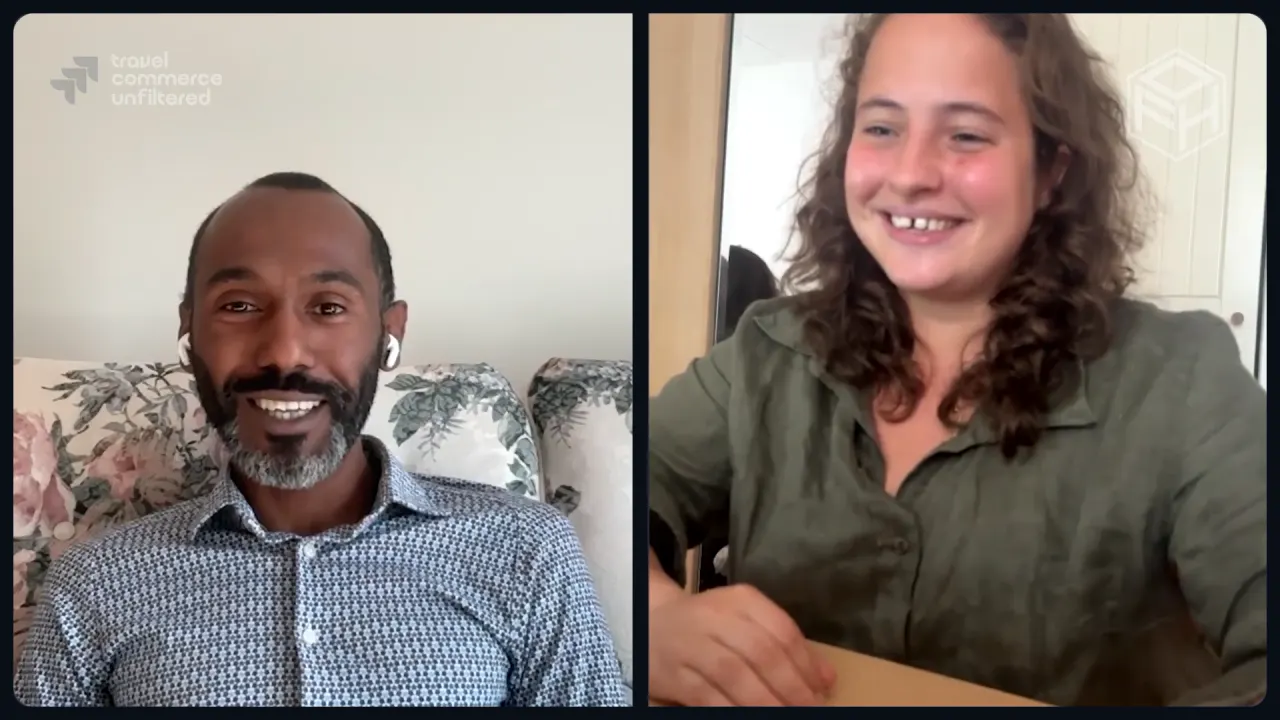
the Future of HospitalityWelcome to the future of hospitality. I'm Alonj Kuri, and today I'm joined by someone who's not just building tech, but reshaping how we explore cities. Gabriela Gomez Brenko, founder of Maps on Toth, is on a mission to make every city trip personal, local, and unforgettable. Gabriela, I can call you Gabi, I think. Great to have here. Can you tell us a bit more about yourself and how this journey started?
Gabriella Gomes BrancoYes, of course. I'm Gabi. I'm from The Netherlands and '26 years old. And together with my co founder, Dennis, for Raffenstein, we are creating Merchant Tools. And like Alon already said, we are really trying to reshape the future of hospitality by providing local tips in the area of a hotel or a museum. And we do this by a digital city guide that we created. And what we try at Maps and Told is to have one data point and give you the beautiful experience.
the Future of HospitalityNice. Nice. That's what everybody wants, a beautiful experience. And and I'm kind of curious, like, how did you start this this whole journey of of Maps on Tool? Because I found your LinkedIn. You don't have, like, a hospitality background, same as me. So how how did it how did it come to mind, like, to to start this journey?
Gabriella Gomes BrancoYeah. So my background is more technical. But in 2019, so almost in my first year of university, I went to Saint Petersburg in in Russia, and it was a really awesome experience with other students that I met there. But one night, we wanted to go out. And, of course, Russia, we wanted to see something of of the scene there. So we googled go out. And and we came into a club, and it was an okay ish club, but, like, they were overdressed or we were underdressed, one of those two things. And, yeah, we were drinking, and after that, we got the bill. And, yeah, like I said, I was still a student, and it was €8 per beer. Right now, that's like a normal price, but back then, it was crazy.
Gabriella Gomes BrancoSo I was like, okay. How can it be that that I know what what what these these people want, and I know the group. So how can I have searched better to get a club that was maybe a little bit more chill, a little bit more on the vibe, and also a little bit cheaper? And then I came back in The Netherlands, and I spoke with Dennis, like I said, my co founder, and we say, okay, we need to fix this because this problem happens a lot. And then I rolled into the hospitality. And during my studies, I always combined, like, the technical aspect that I did. I did data science together with hospitality because I really truly believe that there's a lot of opportunities with the data, especially in hospitality because there's so much data. They can refuse images.
Gabriella Gomes BrancoTrue.
the Future of HospitalityNice. Nice story. I think it's also a nice part of being like, we are all customers of in hospitality because everybody went to a hotel and went to a city trip, so we all know how it is to be a a customer, a guest of the hotel. So that's a nice story that you told, and I I can really relate to it because I also had those not an €8 beer when I was a student, but had some kind of look alike stories. And what what do you think, like, do city guides feel at this moment? Like, what is the difference between how you do it and what is, like, the challenge with nowadays City Guide?
Gabriella Gomes BrancoYes. So that's a really good question. There are some you have, like, a digital city guides that are, for example, lists, like the top 10 best cafes in Lisbon. And those are really generalized, right? So there are just 10 hotspots and what you also see is that because they're in that list, those hotspots also become really, really popular and it becomes different. So yeah, is it a hidden gem or is it not needed gem? So that's one thing. Another site, lot a lot of people search like, okay, I want to search a restaurant, and then you get, like, 500 restaurants. So which restaurant is still the best restaurant to go with? Right?
Gabriella Gomes BrancoAlso because if you go to unknown city, you don't have like a reference base, so you don't know if restaurant a is better for you than restaurant b. So, yeah, where do you start? And that's where MaestroTool comes in, right? We ask a question right now. We ask, for example, what's your favorite restaurant or your favorite coffee bar? And based on that, we really understand the digital fingerprint of those locations, and we try to put that on the unknown city. We will also give you a reference because we know your favorite restaurant. We can say, okay, it matches because it has the same coffee style or maybe the same relax vibe.
Gabriella Gomes BrancoAnd based on that, you can understand what you're getting. Right? And we also only show the best five. So you don't have information
05:16Where do I need to start?
8
the Future of Hospitalityoverloads like, okay. Where do I need to start? Yeah. Yeah. That's super nice. So, basically, let's say, I'm a guest, and you ask me, like, what is my favorite restaurant in my place where I live. Right? And then based on the data, you you build the the the flow. Yeah.
Gabriella Gomes BrancoYeah. We really want to make it really easy so that you don't have to answer a whole questionnaire with hundreds of questions before you get your first restaurant. We try to make it like privacy friendly. But we're also working with questions such as who's your favorite celebrity or what's your favorite movie or what are your hobbies. And based on one question, we just try to, yeah, scope it on the on the city where you are. Nice. And how how do you, like kind of curious. Like, let's say, okay. My favorite actor is, I don't know, Robert De Niro. How do you how do you use that data?
Gabriella Gomes BrancoYeah. So of course, there are multiple aspects of Robert De Niro, right? He is an actor, but he is also other things. He's played in a lot of movies. So maybe he loves his personae in one of his movies. And we try to just figure out, okay, what aspect of Robbenero do you like? And in some way, can we plot that on the city? A good example is, for example, let's say, Ronaldo. Okay. What did Ronaldo do, for example, in Madrid? And then you can't really have to Ronaldo experience in that way. So we're still trying, and it's quite unconventional, but but we like having one question that tells something about you to really provide something cool for you. Yeah. That's really cool. That's
the Future of Hospitalitythat's really cool. Even though that you ask it as a guest, I think it's cool that you think, like, why do they ask it? Is it, like, blended into the results? So that's really nice. And I totally agree with you that nowadays, the the top 10 list is not always the best 10. It's just they promoted themselves as the best 10, and that's a big problem, I think. Yeah. So and another thing I wanted to ask you, like, do you think because I saw something on LinkedIn that that you said, but I I probably I know the answer, anyway, I wanted to ask, like, do you think that a bad city experience can also hurt a great hotel?
Gabriella Gomes BrancoYeah. I I do have a strong opinion on this one. Maybe good to say I did my master thesis also on this effect, right, And it's just for restaurant. But I do see it in the easy trip as a sandwich, like I always say, and the sandwich, no tells maybe the bread. And everything in between the breads are the local experiences. And even though these local experience are outside of the hotel, it does have a bad reputation on the whole city experience. So you have to have a really good breadth of hotel, but if it's in between or not, it isn't the positive experience. And I can maybe also give, like, a little bit of an anecdote. I once asked a friend how was Milan?
Gabriella Gomes BrancoAnd she said, yeah. It was really, really bad. And I asked, okay. Why? Yeah. The first three days were beautiful, but on the last day, we went to a restaurant and that guy was really annoying and the food was not good. And I said, okay. Just that one experience. You don't like Milan anymore. And she's like, yeah. Yeah. That's true. So it does really we we as people really often highlight also the bad things. So
the Future of Hospitalityyou really want to optimize not only the hotel, but also what happens outside of the hotel. Yeah. That's a really good point. I never thought of it like that, but I think it's important because if you are a hotel and you want the guest to return, he's not returning to your hotel. He's just returning to the city. So he has to like the city and the whole experience. And if he doesn't like it, like you said, the restaurant, then somehow you also lost a potential guest because they didn't like Milan.
Gabriella Gomes BrancoYeah. Yeah. Of course, with that. And, also, it also if people are saying go to Milan and go to this hotel because they also provided really interesting recommendations, what to do, it also helps with with with the loyalty and and the campaigning for your hotel in that way. Yeah. Totally. Totally true.
09:04Can you give some is it, like, Netherlands based or also outside of The Netherlands?
8
the Future of HospitalityWith which hotels do you currently work? Like, which hotels use Maps and Tools at the moment? Can you give some is it, like, Netherlands based or also outside of The Netherlands?
Gabriella Gomes BrancoSo currently, we are really Netherlands based. We did really extensive pilot in in Eidhof, so a lot of of our hotels are in Eidhof. For example, Hotel Puma is a really nice one. And we did that first really locally because we really wanted to have the feedback of the hotels, right? Okay. What do people think of it? What does the staff think of it? What does it improve in your hotel? And funnily enough, we were there like a few days ago, and they said, people come to the front office to say how cool they find it and that they also want to use it in their hometown.
Gabriella Gomes BrancoAnd the staff really likes it because they can explain it and have a little bit more interaction in that way and personalize it. It's really nice to hear those, yeah, feedback positive feedback from the hotels in that way. But we're all currently looking outside of of Eidos, of course, and even outside of the the borders of The Netherlands. We're so really want to have hotels all over Europe.
the Future of HospitalityCool. And and can you maybe I forgot to ask, but explain how how does it actually work? Like, how because I know that they have to scan something. How does it work, So the digital
Gabriella Gomes Brancowe at Maps and Tools really believe in in synergy, right, with the industry. We don't want to be an other voice in the guest journey that the guest is having because a guest already has a lot of touch points with certain software systems. Think of PMS systems, think of guest messaging systems, name it all. So we don't want it to be an extra app that someone needs to download. We, as Maps and Told, integrate in the software that those helpists are already using. So for example, you have a guest app, we can add our module in it, and then people can use it, and they really have the feeling that they're, yeah, in a guest experience of the hotel because they're not going to another platform.
Gabriella Gomes BrancoMaps and Talt is just like, yeah, white labeled module that can be in the hotel software. Super nice. So then which is the current guest journey, basically? Yeah. And it makes it also for PMS and guest app systems really nice because the hotels don't have to update it themselves. It's always personalized, it's always up to date because you often also see that hotels do have a list of curated things. And there's like one restaurant that was already closed three years and before going there, like the name has changed, it's a whole different time. So how how can that be? And we try to really take that out of the heads of the hotel. We do take the preference of the hotel with us. Right? If they really want to show vegan or green sustainable locations, we can really scope that also in our AI.
the Future of HospitalityBut we make it also personalized, which is really nice for the guys. Yeah. Amazing. And how does locals hotel staff, how do they like, what do they find of the the solution? Can I did you what feedback did you get from them?
Gabriella Gomes BrancoYeah. So yeah. A lot of positive feedback. Right? So it really also helps question that often front of office managers or front of office staff gets, okay. Where can I go? And they can just say, okay. We have this amazing tool that can really help you, etcetera. And and it's important. Right? Because if you have, like, a front office staff who is, like, a girl of 20 years old and there's a couple of of fifties, there is a little bit of a mismatch in in in that way. Right? Because she will say, go to this club and they just want to chill restaurant. Does they also say that they learn a little bit about the guests because the guests sometimes need a little bit of explanation how they can use the tool. And they also say, okay. They are searching for nature. Okay. Would they I can tell a little bit more. So it also enhances the interactiveness
12:50Is it at the front desk and also inside the app?
13
the Future of Hospitalitywith the guests in in that way. Nice. Nice. And how do guests interact with it? Is it at the at the front desk and also inside the app? Like, how do they get to know your solution?
Gabriella Gomes BrancoYeah. It really depends on the guest journey, right? Every guest journey in the hotel is different. We have like we are also life in some hostels where we have they have a really living room for all the people that are backpacking. So there we have a really big QR code, but we also are often in the pre arrival e mail. So if someone is still home, that they can already see, okay, what can I do in the destination? Also, of course, mobile keys are really up and coming and trending in the current industry, and often those have also have like an app. But often when they close the door and they're going outside, they can just check, okay, where can I go?
Gabriella Gomes BrancoSo it really depends,
the Future of Hospitalityguess, on the guest journey. And the guest, like, it's not the data is not like guests. Like, how how should I ask it? Let's say I'm a guest, and I go to Hotel Hilton in Amsterdam, just for example. I fill in my questionnaire. I like Ronaldo, although I like Messi, but okay. Let's say Ronaldo. Let's keep it Ronaldo for now. I stay my favorite restaurant, and then I go to another hotel next month in Lisbon, also in Hilton or, I don't know, Marriott. It doesn't understand that it's Yeah. Me.
Gabriella Gomes BrancoNo. The the reason why we do that is because we do see really privacy concern with consumers. And also why we really want to do it is because sometimes you like you said, maybe you go to Amsterdam with your partner, whereas you go to Istanbul with your friends. There's a totally different view, right? I do different things with my friends than I do, for example, with my parents or with my co founder, for example. So we really believe in a Netflix ID. And the Netflix ID in our case is I had one time that my niece was watching all Disney or not Disney, but like animated things on my Netflix.
Gabriella Gomes BrancoAnd for half a year, I got only animated content for children, where I was like, I'm not interested in that. And that's why we try to separate those guest journeys for each other. So every trip is like a new you, basically, because it depends on,
the Future of Hospitalityyeah, with who you're going, how you what do you want to do, etcetera, etcetera. Yeah. Super nice. Yeah. And okay. Like, you also I saw something on LinkedIn that you and Dennis talked about that it can also tackle, like, overtourism. Can you can you maybe elaborate a little bit more on that one?
Gabriella Gomes BrancoYeah. Of course. Yeah. Overtourism is like a hot topic as well. Right? So how can we overcome that, especially in Amsterdam, but also in Rome? So what we see is, like I said, those top 10 lists. Right? They really motivate people to go to the same place, same place, same places, whereas we believe there are multiple places that can be interesting for multiple people. So first of all, we try to really diversify those journeys between in the city that not everybody goes to breakfast place A, but just to the right breakfast place. And in that way, you can already a little bit diversify the traffic.
Gabriella Gomes BrancoWe also want to really see if we can make it in a way that if it's something is really busy, it's a little bit less promoted, whereas something is maybe a little bit more open, we can promote it a little bit more like, okay, there are more seats here or it's a little bit quieter or the queue is less. We're trying to incorporate those features in the upcoming time, so we can really help for some municipalities to have that effect. But for us, to be honest, the users always prior neuron, right? So really what's focused that you the best experience. But we do believe that the best experience don't have to be the popular experiences.
the Future of HospitalityThat's a that's a really nice quote. That's fair, not the most popular. Nice. So you also know, like, if a place is, like, overcrowded, can can you see that? How do you know that that kind of data?
Gabriella Gomes BrancoCurrently, we're we're looking into that, right? There are different things, but you also really need to concern like about privacy, etcetera. So we're still tapping into that how we could do that the best way. We've really now focused more on the first part. Like I said, the best experience is not always a popular experience. We really focus first on that. We do want to incorporate you have in The Netherlands, for example, really nice initiatives that can measure the the business in some streets. So trying always to find partners in in that way to to make it more better. Yeah. Nice.
the Future of HospitalityI think that, of course, that there are some places that are just the best. So Yeah. You you you know, you you cannot they will always be, like, overcrowded, and you cannot but it's nice that you can diversify it. And I love it that, you know, like you said, a hidden gem. Like, what makes the hidden gem that it's hidden? You know? That that's the Yeah. The whole part of the hidden gem. And if you go to the top 10, it's not really hidden. So you have to find out, like, what is a nice So experience for me. So I really like
Gabriella Gomes BrancoYeah. And, of course, the top 10 can maybe be the the right top 10 for you, but maybe for 90% not. Right? So we try to focus on that. Yeah. True. True.
18:10Can you explain more about it?
23
the Future of HospitalityAnd I I know that your customers your your business model, I know that the hotel doesn't pay for it. Right? Yep. Can you explain more about about it?
Gabriella Gomes BrancoYeah. Our software is totally free for our partners and for the hotels because our business model is on the local side. So everything that's on the platform, we really want to integrate in our system. And what we mean with that is make it really easy for guests to resurrect the table in the restaurant, buy tickets for the museum or buy tickets for events or name it. We do that by integrating reservation software systems in our back end or ticketing systems. And those ticketing or reservations, we ask a commission for that because we make it, of course, really easy. We really connect the guests with the right restaurants or with the right museums, etcetera.
Gabriella Gomes BrancoSo it's more of a local spin off. And we really focus on not that people are buying themselves up high, right, that they are getting higher recommendations because then we are kind of doing what everyone is doing. I'm not going to make mistakes, but yes. But we really do we understand that the local business needs to have value from it. So we only charge if there's bought something or an outward link or maybe someone navigated to that. Based on that, we we earn our commissions, which we share also share, for example, with our partners.
the Future of HospitalityNice. And are there also some so it's about restaurants, museums, etcetera. Are there also places that you do not earn anything from, but you just want to have it on the map?
Gabriella Gomes BrancoSo everything is always on the map. Right? We show everything because our guest is always first. But the places that pay, they can integrate their reservation system. They can also upload a little bit more photos. They can connect their Instagram. They have a little bit more interesting features that can maybe persuade the guest a little bit more. But if there's a non customer that has 100% match, they will always will be shown the 100 match. We are also looking into special deals because we really understand what you're trying to do based on your question that you answered. So based on that, we know, okay, if we, for example, enter Ronaldo, let's keep with that. And we know that, for example, somebody is selling Ronaldo shirts and you can get a coupon for that or either you can go to a Portuguese restaurant in Madrid and they give you a special deal. We can really nicely also connect that and make a little bit of a super fund from that guest for your restaurant.
the Future of HospitalitySo there are multiple ways to really give value back to the local businesses. So you also, like, let's say, I go to a restaurant, do you also, like, collect feedback from that guest? Like, how was it?
Gabriella Gomes BrancoCurrently, not. But we're trying to build that feature. We were currently really we just got our funding in December, early December, and we're currently really rolling out features that people are asking a lot about. So our first feature that we just launched was a map in our software. Even though our name is Maps and Tools, we didn't have a map for two years. So that was kind of a little bit imbalanced, but we now have a map. But we really always have are gathering a lot of feedback with users, but also from our partners, from the hotels. And based on that, we try to, yeah, launch these features. So it is a feature to get the feedback back. Nice. Because how many users do you have? Like Now around two two thousand per month. But to be honest, the season is going to start in April, so we we really think we can forex it right now. Yeah. Yeah. Super nice.
Gabriella Gomes BrancoAnd that's also the goal. We really want to have at the end of the year, 250,000 users per month. So it's quite growth, but we do believe in the partnerships that we have in the milestone and, of course, our awesome team that we were really going to get that. Yeah. Yeah. It sounds like an amazing idea, so I'm pretty sure that
the Future of Hospitalityso and and I'm kind of curious, like, where do you think to take this next Maps on Total? I'm I'm a kind of a features guy. Like, can you give me some more, like, what is what is next? Okay. You build the map instead of Maps on Total's kind of Maps on Steam, but now now we have the map. Like, what's what's next with the Maps on Total? So
Gabriella Gomes Brancowe're really looking into features about the questions that we set, for example, the celebrity question, the hobbies question or just open suggestions that you can do. So that's one of the features that will come up soon. We're also looking at integrating more content from the site for the hotels. So think of Instagram, like I said, also maybe TikToks, a little bit more Gen C, Gen X vibes in that way. And on the partnership side, we just launched our API and JavaScript SDK, so partners can now integrate it in their in their systems, but also integrating like a dashboard where the hotels can see how much people are using, but also what is their motivation, what are they doing outside of the hotel.
Gabriella Gomes BrancoSo a lot of features, but this is also for different for different user groups. Right? But for the user, one of the biggest things is personalizing it in more different ways.
the Future of HospitalityYeah. I I totally get that. Yeah. And based on the data that you now have, do you see that, like, some things work better than other things? For example, these restaurants with these, I don't know, pictures or whatever. Can you do you see, like, do you have some kind of insights that you see that this works better?
Gabriella Gomes BrancoYes. We do have small insights, right? So I don't think we can make it generalized. We do our work always on interesting things that we find in our data. But one of the biggest things in our photos, for example, especially for restaurants, are pictures with people in it. That's one of the most best performing things. And especially when it's the owner in one way or the other, it brings some vibe for us people that would be, Oh, that's interesting to click on. We also see of course that special deals, for example, cook special cook deals that are for the house that really helps in a way. And we do see that a lot of people that are in hotels go to restaurants, which is, of course, kind of kind of obvious. They also really want to do activities and find some culture.
Gabriella Gomes BrancoSo that's really interesting to see.
the Future of HospitalityTrue. True. Nice. And if you if we look at the future, because this podcast is called the future hospitality Yeah. How do you think, like of course, everything is scaling so fast with AI, and everything is going to be personalized more and more data, and everything is going to be connected. Like, how do you see, like, let's say, twenty, thirty, in five years from now? In five years think, like, the personalized city trip will look like, like, outside of Maps Control just in general?
Gabriella Gomes BrancoI think really, really hyper personalized. And what I mean with that is not only that the route that you're taking in the city is personalized, so the hotspots that you're visiting, but also what you're experiencing and what you're learning about that, location. So for example, even in the museum, the information, how you perceive the information is based on your personality instead of generic things. That the restaurant already knows who you are and already maybe has really special menu specifically for you that they can do sort of everything is your own story in that way and that everybody is having their own story in that city.
Gabriella Gomes BrancoBut of course, with the local flavor because that's the most important thing. That's why you travel, to see other local flavors in that way.
the Future of HospitalityYeah. But it sounds like a great experience indeed. I think as well that hyper personalization is is indeed the future. But I think also the challenge is, like, the the data part. Right? Like, how can we make it private as well? Because if everything is so connected, etcetera, then
Gabriella Gomes BrancoYeah. I think I think that that's, of course, something we need to see as as an industry right now, like how can we connect the data, but also not get the Netflix problem, like I said, that you say things over and over again. But I do see a lot of working together currently in hospitality industry. And I think that's really, really nice and something you don't see in other industries. And I think by working together and step by step and everybody doing their own game, where they are investing that we can go there. Because I do think the problem is not necessarily data because we do have a lot of data. We have Internet.
Gabriella Gomes BrancoAnd on the Internet, there's a lot of data. I think it's just finding the right pieces and connecting your IPs, and we will come really far. Yeah. Because I think that's something that the hotel doesn't do that much.
the Future of HospitalityThe hotels have a lot of data, but they don't really use the data. Right? Don't don't maximize the data they have because they have so much data. For what I know, they don't do that much with data.
Gabriella Gomes BrancoYeah. I think I think if you you asked that question two years ago to me, I would say, yeah, definitely. And and they're still not ready to do that. But I do see a shift in in certainly, like, in in more tech savvy hotel chains or or independent hotels that they are understanding, oh, I do have a lot of data and I can find maybe patterns in that data, and then I can make yeah. Make a loyalty program or bring people back. So I'm already really happy that the hoteliers are finding, like, the first mid degree things. Oh, okay. Maybe this is interesting, and we can do campaigns on it. So I'm really curious what will happen. Like, we are in March, but I do see a lot of changes this year, and I'm really curious how it's like in one year. And then in 2020 or 2030, then those will be already different, I guess, because we're already taking little steps, and I think that's awesome currently of the hospitality industry. Yeah. Nice. Every year now is, ten years.
Gabriella Gomes BrancoLike, it goes so It's, amazing to see. Yeah. Yeah. I I do and I do think we were a little bit behind as an industry, but I don't know what happened, what is in the waters of ITB or what is in the waters of IntroRabbit. Something's, yeah, connected or so. So it's pretty awesome to see the speed right now. And of course, AI chatbots also really helped, right, that they can see, oh, woah, AI can do a lot of of of things, and that they also understand, okay, but AI can also help on other fronts.
28:57Do you have something else that you want to share?
4
the Future of HospitalitySo yeah. Somehow somehow, it's also a positive thing that that the industry is, a little bit slow paced because that way, they get in when everything works and not too early because then it can also, you know, ruin it. Yeah. Yeah. So, yeah, kind of I I'm also super curious to see, like, what will happen in the next year years. Mhmm. So, Gabby, we're almost out of time. Do you have something else that you want to share? It can be a story. It can be I don't know. Something whatever you want about whatever you want. Even about Cristiano Ronaldo. Whatever you want.
Gabriella Gomes BrancoI'm Portuguese, so Cristiano Ronaldo is is kind of the only footballer I really need to like. No. No. I I think, like I said, I'm I just feel the the atmosphere right now in the hospitality. When I'm at, like, those events with with hoteliers or with partners, I do feel like everybody is like, okay. This year will be big. So I'm really just curious what will happen. I think it will be a little bit of a roller coaster, but also really exciting. Right? Like For sure. Which tech will really go up and which tech will maybe go down, I guess. I I hope nothing will go down, but I'm just excited in in in that way. And I really love that that industry is really working, like I said, together, and and it's already a little bit you know you kind of community. You know, like, everybody knows everybody, but also seeing those collaborations
the Future of Hospitalityis really awesome. Yeah. I totally agree. So, yeah, Gabby, thanks for your time. Thanks for explaining more about Metfontot. I'm really excited about this one, and I hope you I speak to the end of the year, you could say you have, like, 250 k users per month, at least. At least. At least. Yeah. So thanks again, and that's it.
Gabriella Gomes BrancoThanks. Thank you also for having me.