






















Van Berlijn naar Tsjaad: de reis van een hospitalityleider
Wat vraagt aanpassingsvermogen in hospitalityleiderschap? Hoe verhoudt het runnen van een luxe hotel in Berlijn zich tot het managen van een hotel in Tsjaad onder extreme omstandigheden? Philip Ibrahim neemt ons mee door zijn loopbaan en reflecteert op lessen over aanpassingsvermogen en het belang van luisteren. Deze aflevering onderzoekt wat het echt betekent om te leiden in de hospitality.
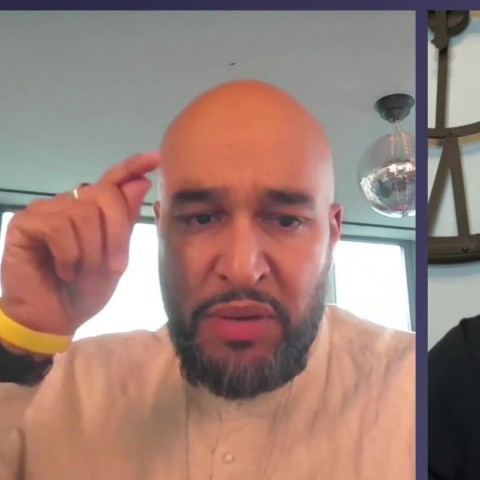 Philip IbrahimGeneral Manager
All of a sudden, everything you learned is worth nothing if you don't have Wi Fi.
Transcript
Klik op een tijdstempel om daar te kijken. De opname is in het Engels.
01:31Why did you start in hospitality in the first place, and how did you start?
8
the Future of HospitalityI like it. Absolutely. I agree with you. So tell me about your, your career and in in hospitality. Why did you start in hospitality in the first place, and how did you start?
Philip IbrahimI like I like the opening questions because it always gives you a bit of, you know, flashback. You have to go back into time and think about whys and and purposes and stuff. So I I can I can tell you, I don't come from a family with a huge hospitality background, I thought? So it it is really something I did the German the German high school, and afterwards everybody wants you to to study. I'm from the South Of Germany, from an area called, Swabia, around Stuttgart, for most of the audience probably known by the two famous, car companies, Porsche and, Mercedes Benz. This is where I'm from.
Philip IbrahimThis is the area where I'm born, raised, grown up. And after this school, everybody wanted me to go studying, but I felt like I'm gonna be probably studying a long time and doing everything else, but really focusing on learning and rowing. And then I said probably something more handworking handworking is more for me was not the most, let's say, easy to lead kind of guy. You know? I was always somebody who had his own head and and giving me a lot of freedom results in me using a lot of freedom, which nowadays is a good asset. But probably when you're 18 years old, can they react in in in not the most, career driven options? And then and I did, the the civil service, which was used in Germany back then for a year, and I decided to do that in a youth hostel, which was really the start of my hospitality career because I felt like after a year serving people, delivering food, giving them check ins, cleaning house, cleaning the back ends, doing gardener works, I felt like, yeah. I like it. There's nothing that I don't I disguise as stuff. It's it's good to make people happy, and and making them leave with a good time and a smile is something I could really, build up on. And then I started investigating how is that going? How can you be become somebody? And I realized, being running a hotel is something in the in the reach.
Philip IbrahimAnd I did a thing called, Ausbildung or apprenticeship in German. It's a three year specialist trainings that you do in one property, and I was very, very lucky to find a property with a mentor who is working can still call a friend and mentor today. It's, over, over twenty five years already. He has been my first general manager. He showed me a lot of things. And then I did my hospital with him, in Sindelfingen close to Mercedes Benz factory. And afterwards, I, stayed with Accor. This was a Novotel back then, and I stayed with the chain of Accor for, another fifteen years. So I was doing sales all over Germany. I love to travel and explore. I didn't wanna stay still.
Philip IbrahimAnd after that, I I moved to Berlin, as a sales guy for the first time in 2007. I realized that maybe if you wanna be a GM, you need to go away from the strategic approach, a bit more into the operational, aspect. And I moved to Africa to chat, which is a very, very hard it was a very hard Oh, that's a different total
the Future of Hospitalitydifferent area.
Philip IbrahimEspecially when you're a high flyer and you think you can do everything. All of a sudden, everything you learned is worth nothing if you don't have Wi Fi. You have no power, no electricity, or no gas, or there is a bullets flying. It was really a Another world. Another world, and it made me as well realize that, staying true to who you are, staying humble was and is something that is really driving me around. I'll try to to to be close to where I come from. And I went back to Germany, and I finished with Accor. I went back to Accor. I was one year sleeping in another bed. I was working for Kempinski, which was a great experience for one year. Then I went back to Accor. They took me back in, and I did the the last round up to the first GM position in twenty fourteen or '15 here in Berlin. And then I was five years with Merkur, and five and a half years ago, I joined the Social Lab, or back then the student hotel. And probably a fun fact, I as I said before, I'm not from a classical hospitality family.
Philip IbrahimBut when I started my I was my hospital, my traineeship, my the the mother of my stepfather, she approached me and said, well, do you know that your my father, had a hotel somewhere? I said, I've never heard this story. He never told me that. Said, no. We're we we had a hotel back then, but we felt like we wanted you to explore your own way. So it is in your blood. It's in your genes. Yeah. You can discuss because, you know, stepfather, but they made me. They brought me up. So there's these those things that made me made me come. And my my my my biological father, my father, he always was having restaurants, but I was never so keen on the restaurant side. Back then, now it's more part of what I do. But so whenever wherever I look around, there were people who were already, dealing with hospitality
06:39Why did you go there, and what exactly was it that you were doing there?
9
the Future of Hospitalityin the broader scope. And so probably you could say I'm fulfilling a generational process there. I don't know. Very I see it. I see it. I like it. I like it. Oh, wow. So let me let me ask you because you mentioned, Chad, in Africa. I mean, I don't want to just ignore that. Why did you go there, and what exactly was it that you were doing there?
Philip IbrahimYeah. Look. The thing is, as I said, I was a bit a high flyer, you know, coming from Germany, knowing that you're successful. You make I make good money. I I had a good income. I was very good at my job being, a hotel sales specialist, whatever. And I felt like I can I can do everything wherever I want? I have a German pass, but you know how you are when you're young. And probably it's as well important to keep it that way because it gives you, it gives you some sort of easiness with situations. And then I I was in a moment at Accor where I said, wanted to be in one property, not in the regional structure or in a in a strategic structure. I wanna be responsible for one property so that I can really put my thumb on and say, that's what I stand for. That's what I prove. And back then in 02/2007, Accor as a change chain was not, incapable of providing this talent development that we could do today. It was a different you know, more talents probably as well available.
Philip IbrahimAnd I said, wanna work in one hotel. I don't care where. So give me one challenge. I'll go there. I'll do it. It sounds like a dream for an employer today. Back then, it was not resonating that well. So the the let's put it that way. The the the the bridge was not built between strategic and operation. So it was a moment where I opened myself to my my own network, and I told friends in all the online platforms that were growing and emerging back then. I said, hey. When you hear something come up, then I'll I'll do it. And then my friend Christian so shout out to Christian Hushka in English. He he called me up and say, hey. I'm looking for a successor here in in Chad. And I said, what?
Philip IbrahimHe said, in Chad. I said, I've never ever heard of that. Even though being from African heritage, I did not know that country, and it's a big country. I googled, and I hung up on him and said, are you fucking out of your mind? Never, never ever am I gonna do that. And then I gave it a I went home, and I said, hey. Look. What what kind of guy are you when you say I take every challenge? And the first challenge that is thrown at you, you run home and say, no. I'm not doing this. I'm not doing this. That's that I could not deal with it. So I called him back up, and I said, okay. Let's talk business. What what is this about? So we had a proper chat, and I told him, hell no. I'm not gonna go there. This is a country with back then, sixteen years of, civil war. First, in the year without a civil war when he was there. I said, lord, what am I doing there? But then I said, okay. Now it's a interesting thing, and, learning wise, in those twelve months, I probably learned more of life and What did you do? I was the director of sales and marketing of the only five star property of that country.
Philip IbrahimHey. So it was a Kempinski hotel, and it was owned by a famous Libyan guy called Muammar al Gaddafi. So he was the owner of Are you kidding me? Yeah. Wow. It today, it sounds like, you know, off of a book, but it was really his hotel. He had his own security team there. It was in a country where we're the only hotel that is a real proper hotel with a build and constructed, you know, compound and everything. And I was responsible for the full sales marketing that included reservations, conference sales conference sales, and a ton of other revenue centers. It was really it was a great experience for me, and, and I would today with the kid, I would not do it again, but, back then, it was the right decision, to do. And it's
the Future of Hospitalityan amazing story already. And what I heard you say earlier was humble. The word humble. He used the word humble. So this experience, I can only imagine, that played a big part of that humbleness that you are feeling.
Philip IbrahimYeah. You know, I mean, I've read of, orphanages. I've seen, social shelters in Germany. And, you know, when you're in school, you encounter that that being the social part of growing in a western country, it's not like you don't see it, you don't know it, but you don't feel it. Let's put it that way. And the first the the the first time being in Chad and we said, let's let's bake it. Let's do a food donation to the the orphanage there in Angelina, which is the capital. We went there with the team, the managers, and we gave the food, and we baked the cake. You know, I'm not sure. Have you ever seen can you imagine a kid having a cake sweetness for the first time? You know, all this what we experience with our kids when they're like one, two years, you give them the first ice cream. You see that in a seven year old, eight year old, sometimes they have never ever tasted something like this.
Philip IbrahimYou stand there with 40 degrees sun burning and these kids being so thankful. I cannot, I I cannot reproduce this in stories. This is something you need to experience and feel. And that's the the the the sad parts of that. Or the other story is if you hire people and you want them to serve on a five star level, you need to train them. You need to train them in Germany as well, but you need to train them in Africa differently. And then you realize these are people that have never eaten. I'm I'm exaggerating, but they have not really eaten with different knife and fork for diff several courses. But yet, they're forced to understand when you take the plate, you need to bring new cutlery.
Philip IbrahimThese kind of things that are probably embedded in how we've grown up are not there. They're inexistent. They don't get it. They they don't understand the reason behind it. And that made me realize that, like, I I don't wanna be so, super picturesque. But if you're if you talk about the door and you always use the same key, you're lucky when it when it works. But sometimes you need to change the key. You cannot change the door, but working in a place where you need to try different keys until you find a matching one that gave you some some sort of, humbleness or as well more easiness when it comes to those kind of situations today. Wow. Amazing story. One more question about that because you said they didn't know,
13:01Are you still in touch with some of them, or have you stayed in touch with some of them?
8
the Future of Hospitalitysweetness. They never eaten like that. So my question is, what was the response? Or do you no. Let me ask you. Are you still in touch with some of them, or have you stayed in touch with some of them?
Philip IbrahimSo, yeah, the downside on an orphanage is once they're 18, they cannot stay. One of the things I learned when they reach a certain age, they need to be out of that place to make more space for smaller kids that need familiar buildings and like this this they live in a house with one mother as they call it. And then you have these kids, they're ranging from, I don't know, zero to 17. And once they have a certain age, they need to move out of their orphanages. And, yes, they can stay in contact, but they need to what they learn is to make their own life. And when I asked them, hey. How can you the country like this, how can you follow that up? And they said, we cannot. You clearly cannot follow that up. So there there is a cert they accept a certain amount of failure as we do because they cannot handle everything. So, I was there 02/2009.
Philip IbrahimIt's, let's say, it's a fifteen, sixteen years, stretch. Those little kids there, they're now in the middle of whatever they do. I've not traveled back to chat ever since, so I do I cannot say that No. Anybody I follow closely with. I have to say social media was growing back then, and I and I I I'm in contact with a lot of the team members I worked with because, obviously, you had more time together with them than with any social aspects you have. But there is a couple of people that I still see, and I still see living there and doing their life, and I still have contacts with a lot of the colleagues I worked there. And I'm always grateful for what they taught me and as well what I what I was able to learn, back then. Actually, there was one guy I did I did sponsor a basketball, team Yeah. Like Kempinski and Jimena, and the guy called Ruben, I tried to get a hold because I still follow him. So sometimes I try to get a hold of him, but he's now in The States and doing social works.
Philip IbrahimAnd, that's quite interesting to see the guy who was be doing the social work back then still following his passion. Yeah. I love it. Love it. Love it. I love it. Let's move fast forward to
the Future of Hospitalityback to Germany. What did you do when you got back?
Philip IbrahimYeah. And the funny thing is when I when I left there when I left there, it was a there was a moment where I, where I was asked, what are you gonna do? I said, I don't have a job yet. I'm gonna go back and see what I wanna do. And then I was taken in by my old mentor, Thomas, that I mentioned earlier, as his number two in Berlin, at the Novotel Berlin Amtiergarten, which was, as a as a it was the first hotel I opened as a sales manager back in a in a strategic task force in 02/2004. I was the GM from 02/10 to 02/14. I did the the second man, so the the executive assistant, the number two, for four years. And last month last week, they closed. So Oh. Circling of hotel is as well something that that there will be a new hotel most likely at one point, but now, no hotel moved out of that. So I really was in the full loop of this, hotel concept, so to say.
Philip IbrahimWhen I came back as a number two there and ACCOR provides a huge and a a great, learning program called IHMP, international hotel manager program. They do it more on a national level and on an international level. And I applied for the international, training, which was one year with three times two weeks workshops in France, in Paris, maybe in France, a French company. That's clear. And then after that, you really have a lot of tools on how to be a good and great leader in this industry. And I applied for that, and I I was, granted access, so to say, and I was lucky enough to work with 30 highly professional colleagues, international colleagues in this work group, and then it it was like a a contest where you pitched for a hotel concept in Singapore.
Philip IbrahimAnd that's what we did, where we learned a lot. And, after that, I was promote promoted. I applied for a GM position quickly, and then I I was, I got it. I received it and was doing the Merkur, in the Invalidienstraze. And then Alright. Yeah. Interesting. I would say 99% of those guys from IHMP still somehow have their phone numbers. So they're spread everywhere from Brazil to Morocco, my good friend in Turkey. So that that's that's a network that you cannot buy. I promise you. This guy is this is something I bet. Bet. Amazing.
17:41Why did you start it, and what is it exactly?
14
the Future of HospitalitySo, tell me more about the social hub because Yeah. That is something I I I'm very interested in. Why did you start it, and what is it exactly?
Philip IbrahimYeah. There was a moment sometimes these moments in life, probably you can relate. They come when you feel like, hey. Hey, you need to change something maybe. I I went through a through some sort of a body transformation. I had a belly surgery, lost a lot of kilos, which was needed as well. I was a big guy, over a hundred eighty kilo at one point. And then when I did that, I had good friends, and that's probably one of those advices, having, a social network of friends and colleagues who who give you feedback, who give you the option to grow. And he asked me, his name is Dirk, and he's running the the Uber Uber, not the Uber arena, the smaller location next to the Uber arena in Berlin, the Uber Eats Hall, Uber Hall, whatever.
Philip IbrahimAnd Dirk said to me, hey, man. You squeezed out everything of Mercure. You squeezed the brand. You squeezed the possibilities. You did a lot of things, but now you lost weight. Maybe it's time for you to explore yourself, do something new, and then just try out. And and how and he said, what do you wanna do? And I said, okay. I would do lifestyle. I would do an opening, and I would do a brand, appearance, or I say, a market appearance of a new brand. These are were the three things that I was looking into. And then, the the social hub or the student hotel back then was recruiting already over a year, and I have had this, the job offer three times on my desk already, and I declined it from several agencies. And the third one, a Dutch guy, he said, hey. Do you know anybody? He was a good guy. I said, no. But maybe let me look at it. Probably it's easy. And I looked at it, I'm like, that sounds super amazing.
Philip IbrahimA hotel for students, for an extended stay, coworkers, m and e, a big restaurant, and a huge area to explore your own ideas and, in a brand that is not known on the German market, and it's a new build. So if you take all the three box that I would do, it ticked all three boxes. So I cannot run away from something I defined myself.
the Future of HospitalityAnd and then I said, okay. Let's There's the Swiss army knife I was talking about.
Philip IbrahimYeah. But, David, I remember at the first interview with, Joost van Beek, who is still our COO today at Sounds like a Dutch name to me. The Dutch company. Studenotel is a Dutch company found by a Scottish, Scottish entrepreneur. And, so that is the level of internationality we we have in. And then we had an interview. We we liked each other. We still do he's a he's an Ajax fan. I mean, okay, that Obviously. Something that we had to do. So but the besides that, we had a great time. We we made up a good call. There was another guy that I know from Accor, who I worked with before, was, back then the executive board member who was responsible for operations.
Philip IbrahimSo we hired, we agreed, and I started at the Social Hub or the Student Hotel back then. I opened the hotel in October 2019. It's a new build, and it's a concept with 575 keys, where 285 are built for students, and that means they stay for half a year or a year with us. So the full concept of hospitality is probably, a three sixty vision three three three sixty degree vision. They're not coming and going. They're coming to stay. So you need to build a community. You need to solve problems on a different scale, and probably you need to as well find team members who are a bit more, you know, they cannot just go and it's gone because the same people will be still there when you come off holiday.
Philip IbrahimAnd then and that was really something I liked, and then and that's why I did it, and I could I could say it was the was the the most interesting and best ride I had in my life because we started from, I think, 12 hotels. Now we're nearly 20, opening the next one. So two years of it were COVID, and that probably changed as well the perspective. Back then, we had a development line that was as well focusing on Germany. But currently there is nothing planned in Germany, and that to answer the question that you might say, Lars, because I said I will leave the social hub after five and a half years. Yeah. I remember you saying that one.
Philip IbrahimAnd, the reason for that is that I'm probably, I'm, you know, I'm ready to explore something new and different again, because the options at the Social Hub with one hotel in Germany, and I'm pretty sure in the next five years or three years, for now nothing is planned, and and I'm staying here because my son is here. Right. That that option, is not coming, and I did not see I I was I think I was hired as well to represent German a German cluster of hotels that that was an option for that. We don't have this option at the moment, which is nobody's fault, but it's just, it is as it is. And so I said, maybe a good moment for me again to reflect and to see if I can do something new in order to,
the Future of Hospitalityyeah, to open another part of the knife in your So and what is that other part of the knife? Because I feel that that knife is getting bigger and growing, and it's just you you've keep, finding more options and opportunities. You're on a journey. So
Philip Ibrahimwhat is that? The point is sometimes, you know, I I forget that, well, how do you say that? I wanna the hospitality is my home. So if people ask me why do I thrive? Why is it why is it working? I said the problem the the it's not a problem. The good thing is it's not work for me. I work in my hobby. I wanted to be a basketball player all my life. I wanted to be in the NBA and make a lot of money, but, unfortunately, I loved eating, partying, and not working out so much as I as I should have. So even though this is my my number one hobby, that ship has sailed. You know? So I had to acknowledge that.
Philip IbrahimBut I was lucky enough to find something where I really feel like it's not work. What I do, I do because I love it. So I I never stand up when I'm I hate what I do. I like There is no goal. There is not really a plan. You just do what I'm what I'm hearing is you do what what you feel that you Yeah. Think you need to do and what makes you feel good. Right? It brings it's joyous things. Yeah. I don't have to think about, hey. What time do I have to leave? Why do I work over hours? What I do, I do for the reason of I know there's a a ton of people that, that, put their trust in me and as well a lot of guests who wanna be, feeling great when they're in Berlin, and that really gives me a good feeling to know that I have this purpose. And then if I look back now at the last twenty years, there were a lot of talents that were along my way that I could learn a lot and that I feel like I could give a lot as well. And that is really something that makes a difference. And then when I reflected on that, I said, I do live in Berlin now since 2007 with one year that I was not here. I always lived in the same area. We call it Quits, in Berlin in in Moabite.
Philip IbrahimAnd there is one particular hotel that I have seen growing since they started constructing, and they have been growing from a 120 key hotel up to a 340 bedroom hotel. And today, they're they're Berlin's largest, or second largest conference hotel after the famous Estrel. So it's a big, big hotel. It's called Moa. It's a a, currently, it's a Mercure Moa. So it's, again, a Mercure brand for now. But unlike I worked before for Accor, I now work for the owner and, the shareholders of the company direct. So there's a big difference when it comes to decision making, and the progress and the growth that this hotel particularly has seen comes from those three masterminds behind it who really want to create, a holistic place. And then they just opened a a coworking as well last year, and that's as well something totally different because it's a proper coworking with an extra entrance and stuff like this. And I really felt like this hotel is close to where I live. It's in that area where I always lived. I know literally the hotels since construction. I've seen the progress from Best Western to Mercure to wherever they go in the future, from three conference rooms up to now, the the second largest event hotel in Berlin.
Philip IbrahimThat's a progress I like if I look back, and I think I could be an asset there. I can put some life into probably a hotel that is everybody says it's a more classic hotel. Yes. A more classic hotel. But I think, it gives me a chance to probably grow when I deal directly with the owners and then can convince them about about ways that might be
26:08Can you lift a veil a little bit of what you think you want to do?
18
the Future of Hospitalityready to lift them on, new heights. And I'm ready. Can you lift a veil a little bit of what you think you want to do? What do you have in mind? Can you just give me a little snippet?
Philip IbrahimYeah. I can. I I I mean, they have an amazing general manager. That's probably for now very important, and he's a great guy. I've known him a long time, and I feel like he has given the team so much options, and he puts so much structure in that in that concept, which grow as well quickly. So quick growth needs clear structures. That's probably a learning that we all know. And he was amazing in that. So I'm a bit more a guy who likes to be out and about. I wanna I wanna have people in. I wanna, you know, change sceneries. I wanna give chance, empower, empower people. Now here, the topic was a lot of POC being African heritage myself.
Philip IbrahimThat was always a topic we do. The Moa is huge as well in my Pink Pillow network that we will might might probably cover a bit later. So they're a big player there as well. So that was a big important point for me as well. And then there's a lot of options which you can still provide a hotel that is a bit closer to the neighborhood, but probably not embedded in the same extent. They have a huge, supermarket in the in the Ground Floor, a huge one. It's, the biggest, Edikard that Berlin has. There's a lot of people coming in with the purpose of purchasing food and, and cooking at home. And some of them might not always be, be aware that there's only one staircase away the possibility of having a great coffee or probably a good time or a chat. So probably bridging the amount of that flow through the hotel and add them a bit more to the flow of what we offer as hotel or hospitality side, that's a bit what I what I want to explore and see what's possible. And that is what hospitality is about.
the Future of HospitalityYeah. It's about connecting human connections. Yep. Emotional experiences. Exactly. I love it. So, I have a question. Everything comes from the heart. Everything comes from, an internal drive. How do you see when we look in the next five years or ten years when it comes to hospitality and advanced technologies? Because we live in an era with a huge development that goes super fast. I cannot even keep up. What do you think this will mean in the way you work or hospitality in general?
Philip IbrahimNot sure if, five years or longer. I don't know the the the next year. Well, next year is It's so best. What I learned is whatever you plan, the the the the the spans get them very, very sure now. So one of the things I know that is important and that was I mean, I'm a super good talker, and I've always been better in talking, and I was always not as good in listening. But I think the key to the future is to explore the possibility of listen a bit better, especially listen and trust to those people who know it better. If I look back at my career, very often there were elderly white gentlemen who thought that this was how it has always been going.
Philip IbrahimAnd all of a sudden, you had a player like Booking who capitalized and and captured 25% of your, revenues with the SNP. And the reason for that is not only that the technology is amazing, it's as well that, some of us, and I I include myself in that, but probably the generation before us did not listen to those who might know better. And I wanna avoid make the same mistake, and, I always think about Homer Simpson putting his hand on the, you know, on the cooking plate, like, aw aw. Like, what I always I always remember, I don't wanna be Homer Simpson in that sense.
Philip IbrahimSo we made the mistake once, so probably now is the time to really listen a bit closer, allocate x y zed percent of your time just to listen to those who can do things better and are better informed. And then maybe there is more newspapers than the hospitality bubble. So maybe it's good to be close to the startup bubble and a startup and the young guns, the entrepreneurs of the world to see what they have in mind, what they thrive, and what the future is. And if I look back in my career, I was always successful because I'm at I I was paying attention at the right moment to somebody who had a good idea, and I helped them grow this idea, not always for my it didn't help me in the beginning, you know? But understanding what they do helped me in the future to understand how I can evolve our offer our business. And I think this listening ability is one of the things we have to explore. And then and and I didn't wanna touch, you know, the the the obviously, I mean, if you today don't have any clue about the power of Chet Chippity or any other AI driven hospitality, pardon me, AI driven technology, then I'm not sure how do you wanna do hospitality in the future. And if I look back in the period of COVID, I don't know how many times I was asked the question, hey. Look. How can I what should I do now with my hotel? What what should I invest in? In a new PMS or a new system security system website?
Philip IbrahimAnd I said, the problem is you need to look at the people you cater to. If you cater to bus bus groups, in in, UK bus groups of an age of 60, I'm not always a 100% sure if you need a snap, Snapchat or TikTok channel. You should be good on Facebook because these are the only this this is the growing age of Facebook. So today, I'm not sure if you need a door opening with, with a whistle. Probably the the iPhone or whatever phone is enough. So let's look at who is your customer today Yes. And how can you make their time better when they're with you? And that listening part is what I mean. But if I look at my own travel behaviors, I do not book anything without consulting Czech, Chippy Tea. So I'm a typical guy when you look at the Google traveler survey. I need 17 to 20 pages to be compared before I do a big holiday.
Philip IbrahimFlights, hotels, apartments, transfers, all this is a huge pile of things. All of a sudden, my decision is, cut in half, cut in one third one third because I'm just asking, look, I wanna go around Easter. I wanna have 25 degrees plus. I don't want wear, pants and a jacket at all. Where can I go? Traveling for a budget of that. Yeah. And
the Future of Hospitalityyou get a list of, what I'll put yeah. Options.
Philip IbrahimYeah. Yeah. That's how it works. And I think this is really a change maker. And as well, if I look in my team, you know, how much how many times did we talk about language barriers? I have amazing people, but they don't speak perfect English. They don't need to, man. You have JGPT. You translate that easily. You have so many tools where this is helping you, making the time of other people easier and at the same time lowering your stress level. You know, you're way easier when you don't have to worry all the time.
the Future of HospitalityTrue. I fully agree. One last thing. One lesson to know what advice would you give to young people who are entering the hospitality market?
Philip IbrahimYeah. First of all, if you're entering the hospitality market, you you made something absolutely smart because, there's one thing that is clear. This is the most awesome industry in the world. There is, there is a couple of reasons for that. A, I'm pretty sure it doesn't matter whether we're on Mars or moo or the moon or wherever or under under the sea. There will always be somebody who has to help you find your room, your way around, or serve your food, or at least tell you how the computer works that produce your food. So I'm pretty sure you have a very solid, decision made for the future. And then I it's something called the the IKEA hack. If you are, if you are working in the hospitality industry and you need to go to IKEA, you can go on a Tuesday at eleven, which is absolutely amazing. It's so quick. You can go in, shop, go out. You don't have to queue long. I mean, even the the they're better today, but you can be so much better, so much more time efficient, than you have been before. And I really think that this is something you could do. You can make your appointment with your hairdresser without taking a holiday because you have to go. You can go to a doctor because you can plan around your life. So these are the things that are really great. So probably it's good to speak a bit more about that than to the fact that you might have to carry plates and stuff like this, which is, absolutely okay.
Philip IbrahimThen, and only then, it may be helpful to set up a proper goal structure. Where do I wanna be in five, ten, fifteen years? And even though it sounds long, the clearer the clearer you write down your own ambitions and goals, the better you can work towards. It doesn't mean that in five years, you need to have a house on the hill or a pool or stuff like this. But if in five years' time, you already know where the possible house could be and who could live with you there, you made a huge progress in your life. So listen, ban your life, have a goal, and then work through it. And then the second advice, have a and I said it earlier, have a good network of people supporting you. Thus, it's either the family or it's the chosen family, which are your friends. And it it's not always that a friend has to, you know, tell, yeah. You're right. Yeah. You're right. No. You need those people who say, come on.
Philip IbrahimIs that really necessary? Come on. Look at yourself. Is that what you want? Hey. You groom up. I don't know how many times I enter a room and people say, hey. When are you going to the barber? Hide all the and then I oh, shit. And then I say, fuck. I was not there for three weeks. So these are the moments that you and the people that you have to keep close to you. So that's the second advice. And third advice is, whatever you do, make sure that you do it with fun. You can't force fun. It's not possible. You can you can you can force yourself at work on a bad day. But if you realize I have five bad days a week and this three weeks, a month, maybe, maybe, and maybe this is not what drives you and makes you happy in what you do.
Philip IbrahimSo a good portion of self reflection might help.
the Future of HospitalityThank you. Amen to that. Philip, thank you so much for being on the podcast. It was great hearing you and listening to you. You're an inspiring man. Honestly, love it. Thank you for being with us. Thank you very much. That was a great pleasure, and thank you for reminding me of so much things. And,
Philip IbrahimI now have the picture of a Swiss, knife army knife in my home. Wonderful.