EPISODE · 51 MIN
Biologisch feindlich: wenn Hoteldesign gegen den Gast arbeitet
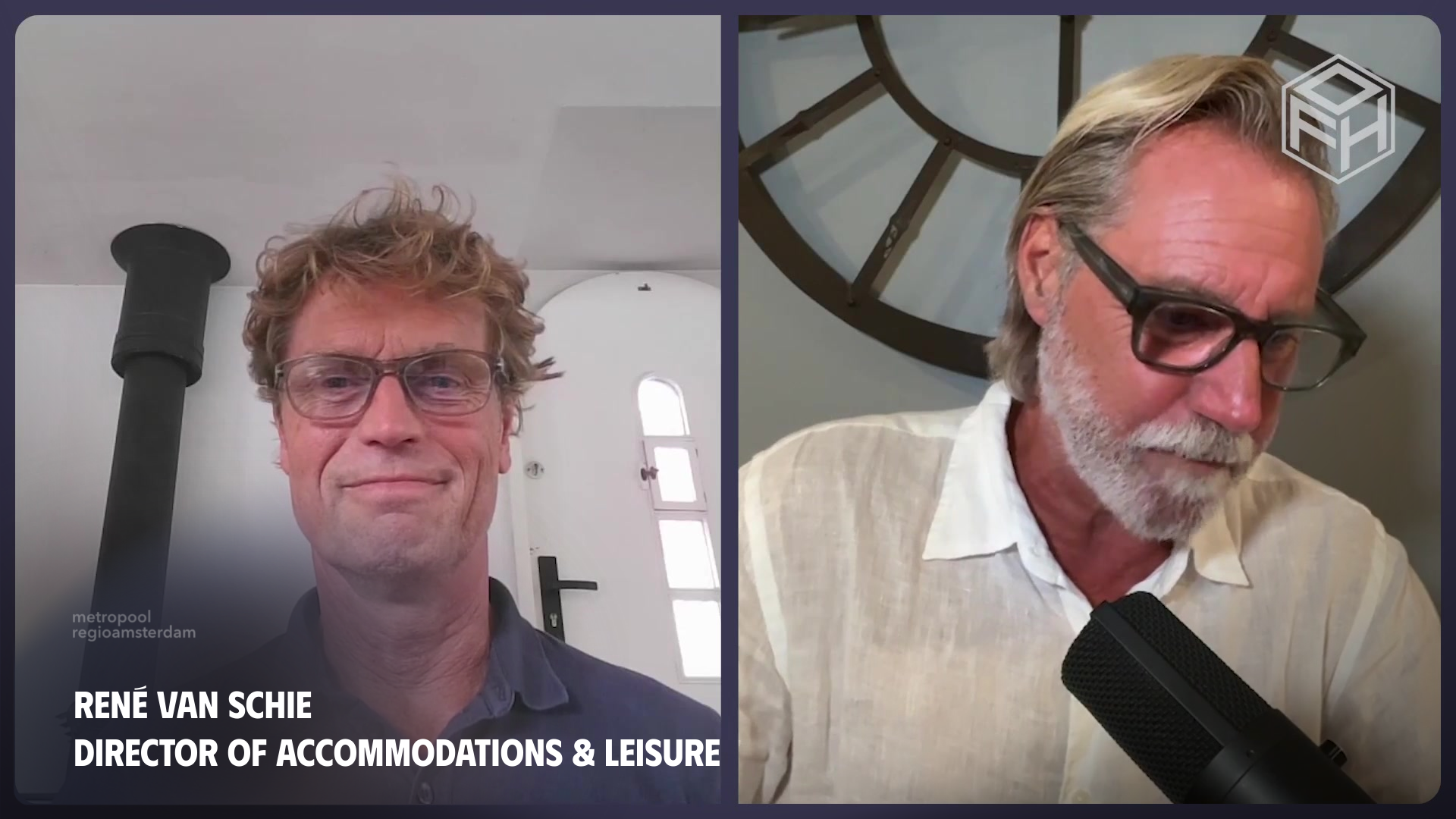
Mentales Wohlbefinden im Hoteldesign beginnt mit einer unbequemen Erkenntnis: Hotels und Flughäfen gestalten für das Auge, während das Nervensystem auf Geräusche, Temperatur und Licht reagiert. In diesem Roundtable zur mentalen Gesundheit in der Hotellerie, Teil von The Sustainable Stay, erkundet Host Arjan Eikelenboom mentales Wohlbefinden durch die Linse von Design und Architektur mit Rod Eggleston von Delta Air Lines, Henri Munyengango von IHG und Keith Dickey von Youmind. Rod und Henri zeigen, wie Flughafenlounges und Hotels für Reisende gestaltet werden, die bereits gestresst ankommen, während Keith argumentiert, dass ein Instagrammable Raum dennoch biologisch feindlich sein kann. Der rote Faden: Gutes Design muss die menschliche Biologie respektieren, mit Kosten und der Rendite des Eigentümers in Einklang stehen und von Menschen umgesetzt werden, die selbst in einem regulierten Zustand sind.
 Henri MunyengangoRegional Director, Design Strategies, Americas, IHG
 Rod EgglestonOnboard Culinary Experience Lead, Delta Air Lines
 Keith DickeyChairman & CEO, Youmind
WICHTIGSTE ERKENNTNISSE
Für die Biologie gestalten, nicht nur für das Foto
Geräusche und thermischer Komfort steuern die Regulation des Nervensystems, daher kann ein schöner, hallender Raum biologisch feindlich sein.
Die kleinen Dinge ruinieren die Nacht
HVAC-Geräusche, ein rotes Standby-Licht oder ein Spalt im Verdunkelungsvorhang wiegen in der ersten Nacht eines Gastes in einer neuen Umgebung am schwersten.
Komfort ist eine Balance
Leise Anlagen, gute Matratzen und Verdunkelung wirken zusammen, abgewogen gegen das Markenversprechen, den Wettbewerb und die Rendite des Eigentümers.
Menschen sind Teil des Designs
Gestresste Mitarbeitende übertragen ihren Stress durch Koregulation auf die Gäste, daher gehören Kultur, Schulung und Hilfsmittel für das Personal zum Erlebnis.
Personalisierung hat eine Datenschutzseite
Sobald Vorlieben zu Gesundheitsdaten werden, etwa Ernährungsbedürfnisse oder Schlafdaten, braucht die Hotellerie einen Rahmen für den Umgang damit.
Sie können keine Räume gestalten, die biologisch feindlich sind.
Transkript
Auf eine Zeitmarke klicken, um ab dort zu sehen. Die Aufnahme ist auf Englisch.
00:00Schön, und biologisch feindlich
5
This is what I mean about biologically combative. Yeah. Right? You've designed an Instagrammable beautiful aesthetic moment that is biologically combative to the human being that's gonna be in that room. Today, we're exploring mental wellness through the lens of design and architecture.
00:18Warum dieses Gespräch persönlich ist
18
My name is Aria Nijkelboom, I'm your host, and this is The Sustainable State, a Future of Hospitality podcast. This conversation is quite personal for me. Over the past years, I've become much more sensitive to noise, light, crowds, and all kinds of sensory input. From the moment we leave home, we're surrounded by traffic, people, screens, sounds, lights, movement, and information. We travel, we work, we enter airports, hotels, restaurants, and meeting spaces, and the process continues. We get used to it.
We learn to function in it. But our environment is constantly asking something from us. And sometimes, after a long day of traveling, you don't need another experience. You just want somewhere that gives you a little peace and quiet. So what role could hospitality play in that? Could the spaces we create actually give something back?
Could design help us feel calmer, more comfortable, and less overwhelmed? That is what I want to explore today. But first, let's quickly introduce everyone on our panel. Rod, Henri, and Keith, welcome to to the future of hospitality. Could you each briefly tell us what you do and why this is an important conversation to you? Rod, Well, good afternoon.
01:34Lernen Sie Rod Eggleston, Henri Munyengango und Keith Dickey kennen
30
you can start. Yeah. Absolutely. Good afternoon, Henri. It's, and Keith and Arianne. It's great to see all of you guys.
It's, this is actually a great opportunity to kind of really explore the mental wellness and how we do things in hospitality. As Ariane mentioned, my name is Rod Eggleston. I currently lead Delta's onboard culinary experience where I have the opportunity to do different things as relates to, designing the culinary experience but in my career journey I've had the opportunity to work with InterContinental Hotels Group as well, leading our design and architecture teams, also doing a lot of brand experience work, Well, I've had the pleasure of understanding exactly what customers need and how they show up and what does it look like for them as they kind of enter in different hospitality spaces along the way. So it's a great pleasure to be here today and I look forward to the conversation. Alright. Hello, everyone.
My name is Henri Munyengango, regional director of design strategies for The Americas region at IHG. I've had the actual opportunity to work, with, Rod in the past. In my current capacity, my role is to really become the brand ambassador for all ISG brands, making sure that we are keeping the swim lane clear for the target guests that we want to have for each one of our brands and also making sure that the guest experience, commercial performance are aligned with our brand growth objectives. Thank you for having Fantastic. me today. You're Hey.
Thank you for having me too, guys. Sorry. There might be a little bit of background noise. Someone's chainsawing around me right now, so hopefully that passes. But, hello. My name is welcome.
Keith. I am the chairman and CEO of Youmind. We produce, neuroacoustics and biological infrastructure to help regulate the nervous system of the guest and or the patient, in the physical environment. Fantastic. And Keith, thank you for being here, and for umine.org being the founding partner of this mental wellness in hospitality series. And Pleasure let as me jump always.
03:44Reisende kommen bereits angespannt an: die Flughafenlounge gestalten
33
straight to Rod. Yes. There we go. Rod, let me start with you because airports are actually a very good example. Once I'm through security, I usually look for a quiet place immediately. Maybe grab a coffee and find a quiet corner near the gate, or if possible, I go to a lounge.
But lounges can obviously still be busy, but they can make an enormous difference. So when you are creating an environment like that, where do you actually begin? What are you trying to create for the person walking into that space? Yeah. That's a great question, Arian. And I think from an airport perspective, from an aviation perspective, I think when we're looking at creating spaces, we have to stop and think about the customer first, right?
When a customer actually reaches the airport, they are already at a level of anxiety. It could be traffic getting to the airport. It could be packing. You make your way through the airport. You're going through security checkpoints to actually get there. So I think when we are talking about design experiences from an aviation perspective, we often have to start from the very beginning.
Like, what is the experience from their ravel into the actual airport? Because we already know and, you know, our consumer insights already tell us that when customers arrive at the airport, they already have a high level of anxiety. It's already there before they do anything else. So I think when we talk about designing spaces like the lounge, etcetera, we have to stop and think about what is it that they're actually experiencing prior to reaching that lounge? And And then when they actually get into the lounge, how do we make sure that that space is actually comforting, inviting so that they can continue to hopefully bring down their levels of anxiety? So I think, some of the things that we look for that we try to do is around lighting.
Lighting is extremely important. It actually sets the mood in a lot of different environments for a lot of the customers as they're traveling through. And then I think also creating a sense of calm as it relates to having, different variations of cocktails, whether it's a cocktail or a mocktail or something that allows you to just totally relax. You know? We just recently, Mhmm. last couple of years, opened our, LAX, Delta One Lounge, JFK L, Delta One Lounge, as well as Seattle and Ballston and a few other locations.
In each of those locations, we were very thoughtful about having a concierge area, a quiet zone, a spa zone, an area where you can actually go and sit and just have those moments acquired. So, I think, and I don't want to be too long winded here, but I think from our perspective, my perspective, from aviation perspective, you have to create those spaces that think about the customer as they enter the airport so that when they actually get to that lounge, they have an opportunity to relax and create those... That zone of in whatever capacity that may be for them.
06:47Die Ankunft im Hotel und Wayfinding
32
Right. And, Harid, what about hotels? This is airport. Can you take me through a hotel project perhaps? What does it... What does...
What is the goal? What does the goal look like from your side? Sure. So I think for us, first, you start with, what is the brand, what is the brand brand promise, and what is that guest experience that we wanna create? So as we all know, and you also mentioned, most of our guests, the minute they, start traveling, that is when you're most vulnerable. You're in a foreign environment.
There is stress level. So one of the things that we actually try to do, it's the arrival experience, because so much of what our guests go through throughout the day, what you wanna make sure instantly when they get to that front door is to make sure there's a level of comfort. There's a level of knowing where they're going. Again, how do you make sure they gain control right away? Because that is the most, moment where guests can connect to the space is being able to arrive to a place where they feel instantly comfortable. They feel like they're regaining control.
They know where to go. So wayfinding becomes very important for us. The guest journey, we spend a lot of time thinking about the guest journey. How does a guest go from the entry locating, the check-in? Are they thirsty? Is there a water station right next to there?
You know? Is there a market if they want a special beverage? Where is the bar located? Again, what is those lines and upside down instantly make them... Even though they're a new space, they instantly feel comfortable because they know Comfortable. where they are.
Exactly. Got you.
08:30Wie ein Hoteldesignprojekt beginnt
23
So how does that start? So when... We we know what we want... What we're trying to create, Mhmm. but how does that actually become a project? Who is evolved?
Who brings what perspective? What different expertise comes into the room? I mean, there's Sure. a lot that comes together. How... Where do we start?
Yes. Rod, So, maybe you get... Or Henri, go ahead. Yeah. historically, for us, it really varies. Right?
So if it's a brand new construction, a new construction, so a lot of times that is a deal that is procured through, our development team, And then we work with the owner to understand what is the brand they wanna create, which again start to formulate what kind of experience we need to, curate for the, guest. But, fundamentally, also, there are layers of where's the location of the hotel. Is that beach property? Is that mountain property? Because all those elements start influencing the level of design that we put into to, again, create that guest experience where the guest, again, feel a moment of excitement, but also coupled with Yeah.
09:39Zuerst Kundeneinblicke: der Ansatz von Delta
29
And if I if I could add on to that. Yeah. If if Arvin, Right. Yeah. if you don't mind if I add on a to that comfort. a little bit, from an aviation perspective and I've had the pleasure obviously of being in being in the airline, you know, segment as well as being in hotel segment and what we have done on the aviation side and what we continue to do, Delta in particular, is very big on the customer experience and listening to the customer itself, right?
So from when we create, like you, I'm working on some projects right now within Delta, we always start with consumer insights. We always start with what is it that the customer actually wants and what do they wanna see? So we do a lot of focus groups. So it's really important to us to really understand the various markets and segments of who our customer actually is, who are our passport holders, what are their demographics around those passport holders. And as we understand that, we then can kinda create the experience that we think and what we're hearing from our consumer insights that the customer actually, you know, want to, experience as a part of the overall journey. And then we take on some of the things that Henri is talking about around those customer segments.
Is it a business market? Is it a leisure market? You know, we got some new routes starting soon to Manila. So one of the things we do is we kind of start these new routes is understand exactly who that customer is that's going to Manila. Yeah. Is it a leisure customer?
Is it a business type of a customer? Or is it or is it a mix of both? And what does it actually mean for the customer in terms of not only the culinary experience, but the onboarding experience? An even better example of that is that we begin blind to reod in the next thirty days. Right? That's a different environment Oh.
within itself. So what are those customs, those norms, those dietary restrictions, etcetera, that makes it important for those customers to make sure that their journey is special and that we're thinking about their mental wellness, as well as their dietary wellness, as well as their onboard experience, as well as their religious and spiritual experience as in making those particular journeys. And we do a lot of that by really understanding exactly what the consumer insights actually telling us. That's a really big part of how we move and, and decide and make decisions from a brand experience at Delta. There is something I've always found interesting about good design, because both both of you say the same thing.
11:58Gutes Design ist Design, das man nie bemerkt
21
It's about, making the guest feel comfortable, at home almost, perhaps. But about good design, the better it works, the less you notice it. It's like a good book or art, when you completely absorb any experiences... Experience, you are not thinking about all the work behind it. So what are the decisions that you make that most guests will never consciously notice? That's a good question and I'm gonna let Henri or Keith talk about that a little bit.
You know, we are working right now on, and the reason I want them to kind of like chime in, Ari, is that I'm in the process of working on some really cool, great things that some of it I can't talk about right now, because Okay. it hasn't hit the meeting yet. So we're still on something of an embargo as it relates to what we can talk about and what we can't talk about. But I will tell you this. When we create experience, we work across the business from, supply chain partners to our brand and marketing partners to our communications partners to our in flights teams, reservations teams. So it's really important that we're not just design experience from just my and my team's perspective, but what does it look like holistically?
How does it, show up with our customer service agents in the airport? How does it show up for our flight attendants and the experience that we want them to deliver as relates to where we're trying to go and what we're trying to do. So I think in answering your question in a roundabout way, it's not a single thing. It's many No. things that goes into that experience to think about what that overall experience should be and how do we make sure that we account for at least 90% to 95% of what that customer is really expecting in that journey. We may not hit the nail in every aspect to hit every customer's need, But how do we get there through our stakeholder involvement, through our focus group detail and where we're trying to go and what we're trying to do?
How do we do that in a way that it is, what's the word I'm looking for? It's expected and it's appreciated Mhmm. by the customer at the end.
14:27Allostatische Last und die Schlafstudie von 2021
73
Look. I mean, I... Guys, I think you guys are super insightful on this line. I mean, the the terms that you guys are hitting on in terms of, like, that guest arriving, whether they're at the airport or whether they're arriving at the hotel, like, that term which is known as allostatic load. I think you obviously know that. Aron talked about this before.
That's the mini micro accumulations of threat throughout your day. It's like filling up a cup of water. Right? And then you arrive at the hotel like that with that stress that's already there in your life. Right? So you're hitting on that point and you guys are absolutely correct.
And the guest experience is... It's it's everything in the world. Right? Like, it's everything to what we're trying to create. But here's the challenge and here's the kind of... I'll I'll play the contrarian a little bit.
The experience that we're creating cannot be biologically combative. Okay? And this... There's a... There there... The concept here is is I'm gonna I'm gonna pull out a study from 2021 done by Robbins.
Okay? And it was on the tourism and hospitality research done. Okay? That's what... Who did it in 2021. They looked at 609 travelers, half of them being business travelers and half of them being luxury travelers.
The first thing they found out was it had no opinion. It had no variation whether you're a business traveler or a luxury traveler. There's no variation on it. And then they looked at trying to understand what caused guest satisfaction and sleep. Right? So they understood sleep, guest satisfaction were tied together, and then they reduced it down to 26 variables that they thought were gonna be the most impactful.
And then they ran regression analysis on those 26 variables. You know what the top three variables were that were going to have the direct and most clear impact on whether that guest had a satisfactory state in sleep? You know what the top three were? Number one, HVAC noise. Number two. Number two was the comfort of the pillows and the sheets.
Number three, noise outside of the hotel. Noise outside of the room. Right? This concept is not understood. You're... We're we're missing the point.
We're designing experiences absent of the biological understanding of what the human being needs in order to rest and recover. Right? These aren't... This is not new. It's the same concept with the understanding of the first night effect. Understanding that concept of allostatic load.
Right? You guys are noting and saying, hey. Well, that guest arriving with allostatic load. Right? We're great about that moment. We know that moment when they check-in.
We're trying to be super cautious to it. Right? We're trying to be super accommodating because we know they're stressed out. But as soon as I turn around and I leave the front desk staff, if I don't know where the elevator bank is and I get lost in the elevator bank, and then I get I get out of the elevator and I don't know whether to go left or right, and then I get into my room and I can't turn on the light switch or I don't know where it's at. Right? I have reaccumulated stress throughout that moment.
Right? And then I go to bed that first night and I try to sleep and I have the biological reality of I'm sleeping in a new environment. And so my left hemisphere stays on and is constantly scanning the environment for audio. And so then when that air conditioning is kicking on and off in that unfamiliar environment, I'm waking up over and over and over again tonight. The experience that I'm trying to create in that hotel the next morning is already off to a rough start because we have biologically not helped the person be in the best position to actually then experience that. So while the experience matters, it cannot be at the expense of the biological reality of the human being.
Yeah.
17:54Die günstigere HVAC und der Preis eines ruhigen Zimmers
27
What a what a great concept, in what you're saying, Keith. And in my time in hotels, twenty four years, you're absolutely right. Right? Mhmm. And I think that's Thank what makes... you.
And I think that's what makes Henri's job is a little bit tougher as well also because Henri is he really is trying to design the experience, right, in the in the right type of a way. But in reality, when you talk about the HVAC system, you know, a lot of hotel owners, franchisees, as they're looking to to build their hotels, because I led hotel openings for seven years with InterContinental Hotels Group. They're looking at the cost of things. So Mhmm. that HVAC system that is a little bit noisier is Yeah. probably, you know, a thousand dollars cheaper than the one...
And I'm making this up at this point, but a thousand dollars cheaper than the one that is, you know, humming quietly when nobody actually hears, which is a is a direct contradiction That's to 200 what... rooms. It's two Yeah. It is a direct contradiction to what Henri is trying to do. Right? He's trying to build everything you just said.
Right? He's trying to make sure we have the right pillows, the right environment, the right mood, the right setting. But all of that kinda becomes a bit of a challenge of an issue, in the sense that, it it it can't happen because we're... It's a cost level that's in there as well also. The the level of the cost of how those operational things come into play makes an impact to the customer because of an expense that's theirs as well. But can So I can I just?
I I Can I? will... Go You ahead.
19:26Verstehen Führungskräfte, was den Schlaf bestimmt?
21
can answer this, Henri, for me, but I just wanna ask you both because you guys have way more knowledge in this industry than I do. I came from the health care world. Right? And how come... How much understanding at the executive and the general manager level of these concepts, of that understanding that HVAC is the number one driver of whether or not this person is gonna get a night sleep. Is these things...
Are these understood or they are they brand new concepts? So I will say it is not a... Not an understood understood unknown fact. I think, when you look at hotel landscape, you have to understand that a new construction versus an asset that is 30 old are gonna have different needs because construction acoustics, like, have changed drastically. Mhmm. And, sometimes to retrofit an existing property to have the right acoustic is sometimes astronomical.
It's not a possibility. However, what we have done is continue to work with those owners to phase whether it's, floor by floor to mitigate some of those things. We do understand how impactful and good night's sleep is. Right? One of the... Every one of our brands definitely has a rollout blackout shade because we also...
Light leakage is the issue for guests, especially if you're a flight attendant or you work a, a night shift that you need to be able to have a good sleep during the day. So all those things that you just mentioned, 100% accurate, and we're doing everything possible to continue to meet those needs. So let me ask you this then.
20:57Rote Lämpchen, Wecker und der Spalt im Vorhang
58
So I I stayed at a hotel in Switzerland a few months ago. It was pretty nice. Five star hotel, fancy with me and my wife and everything. And, yeah, Mhmm. they got blackout curtains. And you try...
You close the blackout curtains, and maybe you get lucky and there's not the gap in the middle, but there's sometimes is. But then you get the blackout light and so little... It's great. And then you got your red light on your TV. You got the red light on the actual phone that's sitting there beside you, and you got an alarm clock that's sitting there with light on you. And those are there.
And I can't turn those off. Right? Yeah. And so it's like Mhmm. we understand it conceptually, but then we're not sleeping in the room and actually experiencing it. And that Mhmm.
guest is experiencing it. And it's, again, it's so much more important because they're in a new environment. And so everything Yep. is substantially more elevated, those first few nights in a new environment. And when we are used to seeing the same hotel, I mean, like, yeah. That red light doesn't bother me anymore.
Sure. But a new person in that room, that red light bothers in that first night. So So that blackout curtain, which is 3 or $400 with the blackout curtains, and you got a tiny little light on a red... On the TV that you can't turn off, it's still causing the same problem. Yeah. You're absolutely right.
Keith, you're hitting True. it. I mean, I don't think, I I I can't I don't think from a hotel perspective, they are spending the night. I don't think executives are spending the night in the hotels. Right? And then I think they're missing it to your point.
So I think your... To Ariane's, podcast within itself, you know, there is a gap when it comes to the mental wellness of those stays. And it's not just from a hotel perspective. It's in many industries. Right? Like, it's in every single thing because you you you have many different, levels of noise or influences that you're not necessarily thinking about, whether it's financial cost, whether it's just really truly understanding exactly what the luxury environment really should be or should not be.
And I think we spend a lot of time understanding who the customer is but not going to the next level. Right? We understand and know that, you know, whether it's gen x or or gen z or whatever the case may be have the buying power right now because of whatever reason that's happening within the industry. But to your point, are we going the next level? Right? Yeah.
They're they're buying more. But is that little gap in the curtain, you know, really being thought about from the Yeah. luxury premium experience in the way that it needs to be thought about? And and how do we go take that to the next level? Right? Like, you know, we talk about sometimes having Instagramable moments.
Right? And sometimes we understand exactly what the Instagramable moment is, but do we go a step further to really define that to be even better than just an Instagramable moment? Yep. That's insightful.
23:49Das Krankenhaus-Paradox
24
Like, the best example I can give you of an environment that is not conducive to the experience that it's trying to create is a hospital. So a hospital is an example of where you're trying to heal. You're trying to recover. And you... So think about the sterileness of the place. The...
There is no acoustics. Everything's bouncing off each other. You've got 35 machines on you beeping at all times. Beep beep beep. There's lights everywhere everywhere. There is no such thing as darkness.
And Oh. so the concept of the environment being a part of healing is actually completely contradictory to the experience that's trying to be created. Now that's an extreme example, but it's... It lives in exactly like you're saying, Rod, the entire... Across industries. Keith, let me ask There's you.
definitely... Go ahead. No. No. No. I'll hit you first.
24:39Hat jemand mit Lieferanten über Licht und Lärm gesprochen?
97
Hey, I was gonna say, I don't I don't necessarily agree that, senior leadership is not staying into some of those hotels. Those executives are staying in those hotels. However, I think there is a... We have to agree that there is a level of awareness even for ourselves. Right? When I I stay in a hotel, a red light on TV does not...
At least subconsciously, does not feel like it it matters to me. I'm able to sleep fine. Right? I think, also, we... There is a level of education and awareness, because we also need to talk to those TV providers. Right?
How can you make sure that that light doesn't exist? That telephone supplier. Like... So I think it's a cohort of all of us really trying to make sure that we understand the impact those Henri, light. have you ever had a conversation with a supplier about the lights? About their lights and their TVs on their...
And and I'm I'm I'm not being combative. Sure. I'm trying Right. to honestly understand. Like, is Mhmm. that is that something you would have a conversation with suppliers about?
To be honest, no. I have not. That's okay. And Because and then that's what also about, like, now... HVAC? Mhmm.
Is there a com... Has Right. everyone ever had a conversation and been like, hey. Are we thinking about the sound and how how... What is the noise and the frequency when that that kicks on versus when it kicks off? Right?
Is that conversation ever had in a sub... Now With that a supplier? one now that one I can say yes. Right? Okay. Because Okay.
that is... That's been had when I was still in the hotel side of the business because you you do think about the level of, you know, watts, etcetera, of the noise Mhmm. level. Mhmm. What is the placement of that AC? Is it more of a central or is it in the window sill, etcetera?
So you do think about those things and you do think about the level of noise that it may or may not input. That being said though, I still believe that it comes back to the financial component in whether or not you... Quite honestly, whether you care or not, Right. Yeah. you know, that, you know, the No. True.
decimal of noise is a little bit higher than than it can or it should be because, I mean, let's be realistic. You know, if it's gonna cost me more to do x, y, and z, then I'm gonna think about that when it comes to who's So gonna write that check. following on on that then, Rob... Or Radha, if if you're aware that sound matters with the HVAC system, who in this... Who in the ecosystem of making that decision is there to help understand, well, this sound at this frequency when it kicks on is different than this this system when it's kicking on. And this make...
Is that person there in your guys' ecosystem currently? I don't think it's the level that you're thinking about from a level Mhmm. of an expert per se. But I do think from a branding, from a design perspective, it is thought about. Right? It is thought about, but there's...
It Maybe is that's thought not about. the expert there. That is Yeah. what you're It's saying. Yeah. it's Yeah.
certainly Yeah. thought about because you... I'm sure that's weighed against... And Henri, please jump in here. I'm I'm sure it's weighed against, to your point you made earlier, the shower experience, the Mhmm. pillow experience, the Right.
lighting experience. Right? Because even though we're talking about the HVAC unit, the shower makes a big difference as well, right? Mhmm. Like Mhmm. that, you know, the shower experience that you receive, that, you know, can make or break your day if you have a big important meeting that next morning, etcetera, along the way.
So I think I think in fairness, we have to say that there's HVAC, there's shower, there's pillows, there's lighting, there's, different things about that room, the television experience. How many channels do we have? Do I have my ESPN? Do I have x, y, and z? So I think you have to weigh all of that, literally equally and just make a decision about, like, what is it, going back to the focus groups and understanding your customer, what is it that the customer truly, truly wants as relates to their experience? And what I don't know, because I've been out of it for a while, where HVAC unit falls on the scale.
You know? Yeah. It's it's generous because it's the number... It's the... It happens to be the number one thing that is causing people to to change it. So it'd be fascinating to me to see where that falls in the scale actually.
Mhmm.
28:47Gästekomfort und Eigentümerrendite im Gleichgewicht
21
So, I think, Bradley, you said it very well. I think what we are kinda dancing around is also there is a performance. There's a level of investment. There's an ROI that each one of our owners is expecting. But to... Similar to what you said, Ron, we do take a guest inside hardly.
So we're constantly seeking feedback. And all those things that you mentioned, yes, we try to find the right balance. Right? Because, what are you citing is a perfect world, and a perfect world sometimes is not viable. So what you have to do is balancing the comfort in multiple ways, right, in multitude of ways. So you have a good HVAC that is coupled with a a good mattress that also is gonna allow you to have a good sleep, a good blackout, because all those things are really in combination to what gives you that respite.
Mhmm. Right? So if you're missing one or one is, inferior quality, I think that's where you see the jump in guest dissatisfied. Right? I... You know, if funds, you know, resources were not a scarcity, then, of course, everything we're talking about, we...
That we should be making, you know, making the best choices possible. And that's why we do, but it's a game of balancing the reality, guest expectation, also the return on investment because all these owners also are in the business, and they need to be able to actually, you know, get a return on the investment. Yeah.
30:17Menschen und Koregulation: Stress der Mitarbeitenden springt auf Gäste über
54
And I think there's a piece here too that we don't wanna leave out as relates to people. Right? We're talking about the design of a guest room and mental wellness along the way but we can't discount the fact either that, our team members who are working, who are checking us in, who are supporting us throughout the experience do have an impact also on our mental wellness. Right? Mhmm. Yeah.
Mhmm. It's Yes. a huge component of it. That's So, a good one. you know, we can get the AC right, we can get the shower right, but if I don't have the right experience, the right level of hospitality and the experience that I'm receiving, they're making me feel welcomed wherever that location may be. That has an impact also on my well well-being as it relates to am I gonna get night rest and be prepared in the way that I wanna be prepared as we kind of move forward.
So I I just wanna bring that up because I think, you know, we tend to forget about the level of culture in our training. Right? Like, we Mhmm. can't leave that part out in what we do and how we show up, in any of our environments. That is that's... That that is in...
Very insightful. Right? Like, in in in my world, I refer to that... We refer to that scientifically as coregulation. Right? Like, just like when your dog can feel your energy, your dog will read your stress.
Right? And Oh, yeah. then your dog... Mhmm. If you're stressed out, your dog will get up and start moving around and start getting antsy and anxious. Right?
Human beings do the exact same thing. So if that front desk staff is checking you in, is already stressed out or anxious, if they went back to their break room and it was a complete disaster back there and they come back in and they're stressed out, they are literally going to transfer some of that stress Oh, yeah. Absolutely. to the actual individual. Mhmm. Right?
And that... Though that's the... Through the totality of it. So even if you had the perfect physical environment and even if you design the perfect experience around it, if your staff who is deploying that experience Mhmm. is not in the right regulated state, They are damaging the actual experience that you're trying to create. So when you're trying to keep your staff in the right frame of mind, it's not about reducing employee turnover or reducing burnout.
Yeah. That's true. But, actually, really, what it's about is is if you want your experience to be the way that you've had that billion dollar experience designed, you have to have the right regulated people in that space. And that's a combination of training. It's a combination of expertise, but it's also giving them, as in your staff, the tools to help support themselves and to keep themselves in a regulated state. Maybe it does make...
Maybe it makes business sense to actually give them a thirty minute on the clock, go out and have a rest and walk around because you're gonna come back and be more restored for the next hour and a half of your shift before it ends, and you're not gonna be annoyed with those three guests that walk in. And that... It's not really understood how much we coregulate off of each other. If you're with your partner and your partner is stressed out and angry, it's very hard for you not to feel that and then to start absorbing that feeling. Mhmm. So, Keith, I have a question for you.
33:21Ruhig auf dem Foto versus ruhig in der Realität
78
What is the difference between something that can look calm on a photo when you make... Before you make a booking and it's something that actually feels calm. What is the difference? Alright. So a good a good example would be... Like, you talk about Instagramable moments, but a good example would Right.
be vaulted ceilings. So these huge vaulted ceilings that are open where you've got a a nice beautiful light and you got a chandelier coming down on, that is an acoustic nightmare. So that is Okay. going... Any sound that's going to go anywhere is gonna reverberate around and echo and come back multiple times. And so you've designed...
This is what I mean about biologically combative. Yeah. Right? You've designed an Instagrammable beautiful aesthetic moment that is biologically combative to the human being that's gonna be in that room. We... It's it's almost flabbergasting to me that we continually do this.
Like, we design because I think it's because visual has always owned the the the primary scent. The primary sense is visual and we we largely designed around the visual. Well, the visual is only one of the five and it's actually not very important. Visuals are not very important in terms of the nervous system, the regulation within it. That's primarily thermal and sound are the two main drivers of those. And when those are I agree.
not thought about No. first and they're thought about after the fact and visual is the number one, you've almost certainly designed a biologically combative environment. No. So, Keith, I I agree with you. I think if we say, take a step back, a design, we use space with several things to create a, an experience. If you want a loud environment that feels busy, you intentionally can create that environment.
If Mhmm. you want a quieter space, there is ability to create those acoustics. I think sometimes what happen is over time, spaces get reintroduced as something else, and therefore, sometimes those opportunities are missed. But, on set, every time you design a space, you have to think about what is the intentional? What is it that the space is gonna be used for? Because we do know, we...
If you're creating a restaurant, you wanna make sure that I... Everyone can have a conversation with them now. Like, you know, there's Mhmm. no loud noise. But now if that space all of a sudden gets, transformed into something else ten years down the road, I don't know that that is an opportunity sometimes that it gets missed. Right?
When... Think about Vegas. Right? Look at all the... What Yeah. big volume.
Right? They do that intentionally. Right? Because they want to create that moment of chaos excitement because Oh. that's Yeah. exactly what they want to do.
So I think sometimes it's just like... Again, design supports the guest experience. I think where we see, again, opportunities is when spaces get repurposed with something else. Right? Do... That's where we have an opportunity to go back and say, okay.
How do we ensure that this now new space is gonna function to support the new functionality? I will say the second thing. I know you mentioned that, you know, sound, and, comfort is, thermal comfort is the two main main thing, but lighting also, I will agree that it is also very important. Have you ever been to a really nice restaurant and, the ambiance looks amazing? You enter. You're like, oh my god.
This is great. But then you get the menu, and you're like, I can't read this. That... Mhmm. From that moment, it's like, I cannot enjoy that experience because they even... I'm not even Yeah.
sure what I'm ordering because I'm already frustrated that I can't even read, because, again, those spaces also comes with a price tag. So it's like that whole experience of what you're expecting and what you get are deceiving Mhmm. because it's like, on a picture, it looks great. That's probably why you wanted to book it anyway. But then you get there and the lighting is, you know, nonexistent. Yeah.
37:20Zuerst Biologie oder zuerst Erlebnis
49
Yeah. You're right. I get... That's very insightful. Right? And, like, I, like, I almost I I almost wanna use this term, like, sometimes we should, like, try to design spaces that are, like, the least in the Instagrammable space possible.
Sometimes the mundane... This is a conversation Yes. that Jeremy was saying. Like, sometimes it's actually take the TV out of the room is the right answer. Sometimes the right answer is is actually in certain environments, we should be thinking biology first. In other environments, we should be thinking experience first.
You're after... Like, this... Vegas is a great example. You go to Vegas because you want an experience, and so design around that experience. But if you're in a private, quiet hotel room, potentially, the experience we should be designing around is your sleep and recovery. Everything in that bed should be...
That room should be designed around that, not designed around it being an Instagramable room. Mhmm. So I agree with you, and I think that's why we have so many brands in the world. Right? Because Yeah. each Yeah.
of True. these brands Yeah. do, Yeah. Yeah. It's very very support that need. Right?
You have a six senses. Yeah. You will probably not gonna see a TV in those rooms because that guest is willing to have that central moment. Right? But if we're talking about another one of our brands, potentially, if you take that TV, that's... That crew actually be a guest dissatisfied Mhmm.
Yeah. Yeah. Absolutely. because Yeah. they wanna For be sure. able to watch TV twenty four seven.
Mhmm. Yeah. So it's, like, really finding the balance of what is the brand, what is experience we're creating, and what is that guest is seeking for. Because, again, we're here to serve our guests. We're here to serve our owners, but it... It's the balance of what they want.
Yeah.
38:56Personalisierung, ruhige Etagen und die Frauenetage
39
And I think, you know, in this in this environment that we're in right now, Andre, you're absolutely right. And I think, just to bring up another point around that is personalization. Right? I Mhmm. think that's how we should designing. Right?
Like, if we can... The more we use AI and other technology avenues to really understand the customer Mhmm. and what that what you, Henri, wants. Like, the more I get to know you as the customer, you yourself. I want a TV. I don't.
I want low lighting. I don't. If Right. the more we can do that and get that into the system, we can then design better for you or at least make sure you're in a room or in a seat in an airport or a seat in a restaurant, wherever, that speaks more to how how you wanna be entertained in that particular moment. You don't wanna be in a loud environment. You wanna be in a quiet zone when you're in a restaurant.
You want a quiet room on a quiet floor. You know, back in the day, and I'm not sure if it's still being done or not, but there were hotels used to have women's floor, right, that catered just to women and and the Oh. women's experience. Right? So it used to be one in Minneapolis, actually. I think it was a Crowne Plaza at one point, but one floor was dedicated to just women.
So that whole level of personalization, I think that's where we're going to less That's about good. or in conjunction with or in parallel with how we're designing hotel rooms aesthetically. You know. Mhmm. But I think we're coming closer and more and more so to that whole personalization. Like, what is Well, it that Rod, I...
let me ask... No. Go ahead. I I just No. wanted No. to I was follow-up in there.
on that quickly. Yeah. Go ahead.
40:37Was zuerst geopfert wird, wenn die Realität zuschlägt
34
So, talking about design, and you mentioned it earlier before I forget, when reality kicks in. You were talking about the AC, thousand dollars cheaper, more expensive, 200 rooms. What get compromised first when there is a budget, you create something beautiful and then reality kicks in. So it's budgets, operations, commercial pressure, limited space, limited time. What gets compromised first? I don't think there's a right or wrong answer, as relates Okay.
to that. Honestly, I don't think it is. I think it becomes... From Right. a franchise environment, it comes down to that franchisee. Right?
Like, Yeah. True. I think and and I'm really pleased to jump in here because I've been out of the hotel side for a minute now, but it comes down to that franchisee and what that franchisee is looking to do for that particular market, that particular environment. What are they trying to achieve? Right? If 200 rooms versus a small boutique.
Right? So I think the the thought process is completely different depending upon what we're trying to achieve, for that particular market, that particular customer, and also knowing what your competitors actually have. So if you know your competitors, you know, have really quiet ACs and the best showers in the world and you've done your competitive homework, then you're gonna make sure that your ACs are really even better and you're gonna have even better showers because you want that part of the market share. Right? So you have to really understand your consumer as well as your competitors to decide what are the give and takes when it comes down to it at the end of the day. Yeah.
I would say well said, Rod. I would say first and foremost is what is the brand promise? What is it that Yeah. the brand integrity is important. Right? So what is it that we promise our guest?
And then to everything Raj just said is where are you located? Where is your main competitors? What are they doing? And I think you always wanna make sure that you position yourself ahead of the competition.
42:39Wenn Personalisierung zu privaten Gesundheitsdaten wird
111
On the, I'll just jump in with something. Rod, you were saying about personalization. Right? And this is the movement that you're seeing. Right? Like, obviously, with UMine, we do personalized neuroacoustics.
You do an assessment, then you get your... You get a you get a profile, and that profile is used to build a personalized neuroacoustics that then are with you. This aspect of personalization in service, whether it's it's airports or whether it's hotels, is the way that this needs to move. Right? Because you're... To to Henri's point, you're, like, saying, well, the red light doesn't bother me.
Right? But how do I know that as the hotel that the red light bothers me and it doesn't bother you? Right? And so if I knew that, that maybe makes a difference. Right? But now take that, and here's my challenge to you.
Right? Take that and expand that personalization. And all of a sudden, you're not talking about preferences, you're talking about private health information. You're actually going to move your way into the whether or not a person is stressed out, how well are they sleeping, and now you've got industries that are woefully unprepared from a compliance and privacy and h... Technology perspective, but they absolutely need and are demanding the information and the data to be able to personalize off of it. Right?
And I see this as a a major gap in both in hospitality and air travel. Air travel is the same way. You've got a person that's coming in. You should know everything about that person to help make that experience as best as possible. Well, some of that information is actually information that is related to their health. And how are organizations that are traditionally not in the health care space going to navigate this collection of data that they need in order to personalize the experience?
Because personalization results in not only better satisfaction, but it actually results in less cost because you've got the person using only the aspects of the service that they want. Right? And so that movement, I haven't seen... I think I mentioned this before on, but I haven't seen anyone in the hospitality or the service industry or the airline space have a framework on... And Shaw is the only one. Actually, that's not true.
Shaw Wellness, I talked with them, and they actually have a framework on how they're trying to handle guest information when it bleeds away from preference and it starts to move into this space of prior or protected information. Yeah. I think, I think a lot of companies, do... It's just slow move... It's a slow movement, I think is what it is. Right?
I think it... I think it's there. I truly believe that. I, you know, one of the things that we're doing from a culinary perspective at Delta is around those dietary restrictions, right? Right. Right.
You Yeah. know, being a vegan, being gluten intolerant, those kind of things are more important to our consumers. So really understanding exactly, you know, those dietary preferences is something that we really are focused in on. And so it's just... It... It's happening.
I think it's just not happening to your point. It's just not happening at the pace that maybe it should be happening, but I think it's it's a slow moving train or slow moving ship and turning and making sure that we're really understanding exactly the customer and those customer preferences along the way. So I think it's just gonna take us more time. We're just not quite there yet. I don't think... I don't believe we are.
So when I when when I say this is... So imagine when you opened up your Delta app. You open up your Delta app, and it's got your vegan preferences, and it's potentially also got your, let's say it's got your, what kind of drink you want preferences. Right? But that information... Like, let's say you're celiac.
You're a celiac and you have include... You're gluten intolerant. Right? And you collect that information inside of your Delta app. That is private health information that you have just collected. That is...
Mhmm. You are not... If you guys get hacked and someone then takes that information, you are at risk of a... This... I'm I'm blown away that this is not something someone in somewhere at some... Is going to get massively fined for this.
But it is absolutely private health information that that person is celiac. And if that's living inside of your app and you do not have the proprietary or the the required protocols and processes to be handling that information, you should be fined right now. Right? And... So maybe so maybe you just answered it for us, Keith. Maybe that's why maybe some of it is not there.
Right? That's Right. right. That's You right. Mhmm. know?
That's a... That Yeah. it was why some of it is not there. I don't think we're going to that level of celiac versus not. But but to your point, that's maybe why some of it is not there. I, you know, I I think, you know, from an airline perspective, we look at it not so much from that, but how to make the ease of your experience through your journey, the customer journey through the airport from what we like to call, you know, curb to seat as less stressful as possible.
Mhmm. And you sit in that seat. Mhmm. What are the movies or shows or things that you wanna see that also continue to help minimize your level of stress as you get there? But we try to think about from a personalization standpoint, when you arrive at the airport, what is it that you wanna do? Are you that customer that wants to Zoom straight through because you've done it so many times and you don't wanna be bothered?
You don't wanna talk to anybody? Or are you that customer who don't wanna deal with any level of technology and you want to deal with a person to help manage you through your full process? So I think it's just many different aspects that we have to just think through, and I think it's the same thing from a hotel perspective. It's like, you know, you know, you can check-in now before you even get to the hotel. Right? Like, I can get my room key and use my phone to check-in.
Do I want that level of attention, or do I want to stop at the front desk, make sure I get an upgrade, speak to an actual customer, you know, get me a bottle of water, whatever the case may be. So I think it's I think it's different levels or layers of where we're trying to get to as relates to it. And, you know, it's a lot of things out there as relates to personalization that I'm not sure, Yeah.
48:35Personalisierung ohne Individualisierung
64
I would say for us, personalization doesn't mean to be individual ized. Right? you If you take a public space environment, know. for instance, we make sure that those spaces can accommodate certain function. If you want privacy, you have privacy. If you wanna be in a group sitting, you have a group sitting.
If you go in your room, what we are trying to do now is not just having your traditional bed, desk. That's it. Right? Now we're actually creating zones where if you wanna lounge and work, you can still do that. Right? It's trying to understand how people move through the space, what comfort, what behaviors do they adopt when they are home.
If you wanna watch TV in a room and eat in your bed, what what do you need? Right? So we make sure. If you wanna work out in your room, what do you need? So that's how we're creating individual, attention and experiences without necessarily, like, making it personalized to the you, mister Keith. Does that make sense?
Mhmm. Yeah. I Yeah. get... I I... And I think Mhmm.
you're right. I think there's a... There's... I just... I wore... I I I do believe that in...
Specifically in hospitality and hell... In hotels, you... I have... I would say this cautiously. I have definitely seen situations where I believe information that is beyond a preference is being collected on a guest. And when you start moving into certain levels of collection of data trying to get to personalization, I just...
I I think there's a gap in the understanding of what that actually potentially means and how you have to treat that data. And it's maybe not today, but as we continue to move more and more towards personalization. So what happens when that person starts sharing their Oura ring data? Right? And because you wanna have that Oura ring data because you're gonna know that they're gonna go to the spot. Because they're gonna go to the spot a certain time because they...
And they want to... And you wanna know when my cortisol is about ready to spike. And so I can say this is the time you actually should go to the spot. Right? In theory, that's high levels of personalization and that's actually providing exactly what you want. But that can't really be done right now because then you have to have access to data that you can't handle.
But if you... But yet we wanna continue to move towards that experience, and we think that's the way the industry is going. And so I just see a challenge as we continue to walk down this road that's not really acknowledged right now. That's that's my takeaway on this all. Alright. This is Guys, a great conversate.
Mhmm. we... Yes. It's time. It's time. It's time.
It's flying. I Yeah. mean, Yeah. I have one last question for all three of you.
51:07Eine Sache, über die man morgen anders nachdenken sollte
33
Is there one thing that, you'd like an owner, an operator, or a developer, or designer who's watching this conversation to think about, differently tomorrow, what would it be? So a takeaway. Yeah. For me, it's review that study from Robbins in 2021. Everyone in designers and architects review that. Know that the things that are driving whether or not the guest satisfaction, you can't design biologically combative spaces.
You can't just think about the experience. You have to think about the biology of the human being as well. Yeah. And I... And then for me, I'm gonna bring it back to the people, The culture of the people, the hospitality Mhmm. of Mhmm.
the people that you can design as much as you want to design, but if you don't train to it, if you don't build the culture around your people to deliver to it, then what are you doing? Yep. So you can spend as much money in the world, but if your people don't appreciate, if they can't deliver and you don't give them the opportunity to, help deliver that experience through by by what you're showing them, then you're doing yourself a disservice. Agree. I was saying, hospitality naturally is Gotcha. founded on being able to anticipate the needs of a guest, continue to design spaces that are intuitive, spaces that allow a guest to feel comfortable, feel in charge because that's where we win, all of us.
That's what really, truly what hospitality is. Well Fantastic. said. Thanks, everyone. Rod, Henry, Keith, thank you for, being on the the show today. Thank you for sharing your insights, your knowledge, and your ideas.
And, who knows? See you next time. Alright. Thanks. Thank Thanks, Thank you. Ari.
you, everyone. Thanks for the opportunity. Alright.