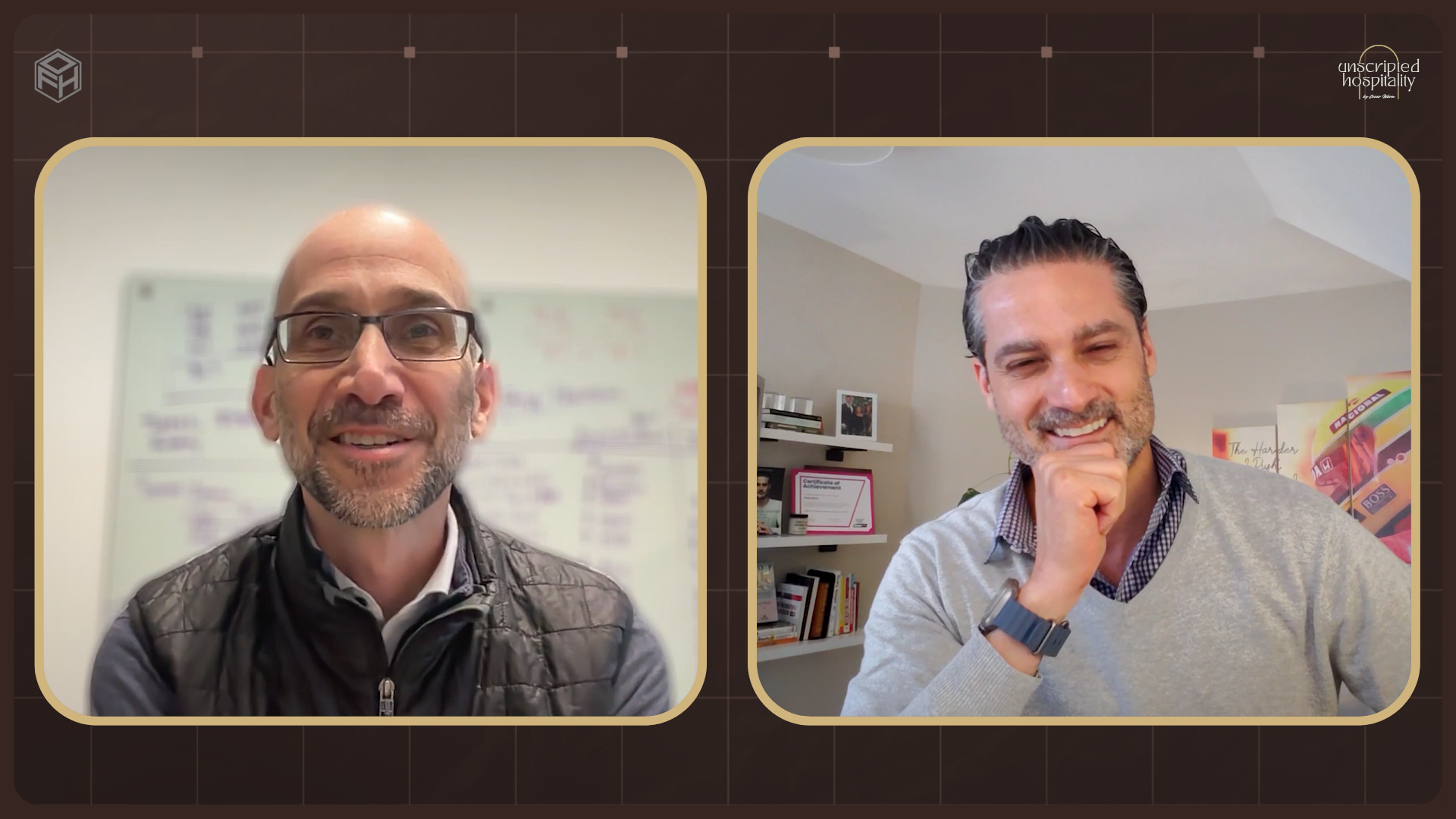
Burnout ist nicht das Problem, fehlende Ausrichtung schon
In dieser Folge definiert David Arraya neu, was Ihre Hotelteams wirklich auslaugt, und es ist nicht die Arbeitslast. Von ego-getriebener Führung bis zu energiebasierter Ausrichtung teilt er einen wirkungsvollen Bauplan für bewusste Gastfreundschaft. Wenn Sie Menschen führen, wird dieses Gespräch Ihr Denken über Kultur, Präsenz und langfristige Leistung verändern.
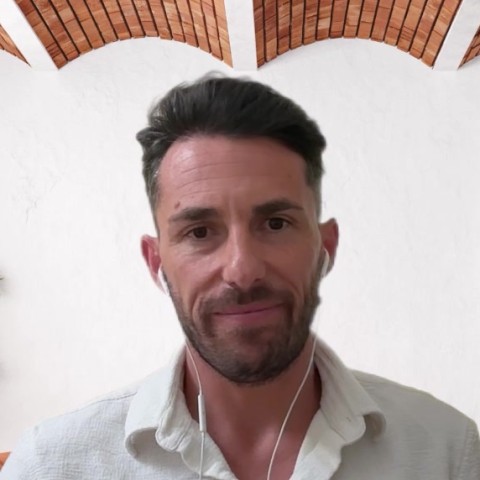
David ArrayaPresident
WICHTIGSTE ERKENNTNISSE
01
Burnout entsteht aus fehlender Ausrichtung
David argumentiert, dass Burnout in Teams daraus entsteht, dass Menschen in Rollen gedrängt werden, die nicht zu ihren natürlichen Stärken passen, sodass sie ständig gegen Widerstand arbeiten. Nicht die Arbeit selbst ist das Problem, sondern die fehlende Ausrichtung.
02
Natürliche Stärken ermöglichen Flow
Innerhalb der eigenen natürlichen Fähigkeiten zu arbeiten bedeutet, ganz ohne Widerstand zu handeln, was den Flow-Zustand leichter erreichbar macht. Wachstum erfordert dennoch, sich durch Wiederholung erworbene Fähigkeiten anzueignen, deshalb kommt es auf die Balance an.
03
Das Framework der bewussten Gastfreundschaft
Davids Methodik ruht auf einem Fundament der Präsenz, drei Säulen aus Authentizität, Absicht und Empathie, einer Integrationsebene und einem Bauplan, das eigene wahre Selbst zu kennen. Er versteht sie als Formel für Glück und Erfolg zu Hause und bei der Arbeit.
“
Wenn man in ein Unternehmen kommt und in einem Team Burnout sieht, liegt das vor allem daran, dass es dort keine gemeinsame Ausrichtung gibt, richtig?
But I also recognize how much I miss leading teams, right? And so, where the future of hospitality is for me is in teamwork. Hey, everybody. Welcome to our podcast, The Future of Hospitality. And today I'm honored. I'm honored to be speaking to someone I deeply admire, someone that probably many of you know, but also, right, David, that hopefully we're going to reach a lot of people that don't know you, because I think you have a lot to offer. And I'll try to make a just introduction here. I know it's not easy with all your accolades and journey, but my name is Cesar Vorum. I work for Alhay and very passionate about hospitality, about helping people, about, you know, life journey, generally speaking. And I think we are very aligned in that regard. And David is the president of Conscious Hospitality Unlimited, where he helps business across really industries, right? Create environments where leadership thrives, people thrive. If your value and really customer experience are really transformed. But also, right, he's advisor to many people, many companies, he's a speaker and then also an author in the making. So I can't wait to hear more about that. But yeah, why did I miss here? Man, I think you hit it on the nail on the head. And I'm so grateful for just being here with you, Cesar. You know, I think that what you're doing is amazing. I think that what you, you know, the voice that you're amplifying for hospitality and how you're leading a new generation of leaders towards enjoying being of hospitality is really amazing, right? So I congratulate you and thank you for having me. Honestly, you mentioned a lot of different things and facets and things that I'm working on right now. But at the end of the day, it's all about the people. So I'm excited to dive into that. And I think the title of this podcast is perfectly fitting for what we will talk about. Awesome. Right on. Thank you. And so I think just to get started, one thing that I'm very, I was being very curious about, you know, you and your journey specifically. When you look back at your life as it is today, right? Did you envision your current life? And if yes or no, how does it compare to whatever vision you may have had? Hmm, big question to start. I like it. No, definitely there are elements that I knew from a very young age that were going to be the way they were going to be, right? There were things that were very natural to me and that I had no doubt in my mind that things were going to happen. Right? Some of those things were to be able to play football at a high level, to be able to upkeep discipline, to be able to play. That was in me. Like that was not something that I chose, right? Because a lot of my friends, a lot of the people I knew had talent but they didn't have that. Right? So that was inside me. This desire to leave Bolivia was something that I was born with and it was cellular in me because my mother passed it on to me. Right? So I knew I was going to leave Bolivia and travel the world. Right? So there were things that I, there was no doubt that were set in my path and I had full clarity. Lots of the in-betweens, it's a complete mess I would say, you know? And I think you learn that way, right? Just making mistakes, falling, hitting once in a while a successful moment then hitting another mistake and that's the journey of what I went through and you can see it all over the world and we can talk about any of those points. That is great. It's interesting that you mentioned, right? Some things almost innate, right? From, you know, desire or vision to leave Bolivia, you know, your talent and then, you know, taking, I guess, optimizing that because I actually listened to, I think it was Jeff Bezos, I think last week and he said, you know, be grateful of your talents or your gifts but don't be proud of them, right? Because, you know, you're given, so you don't necessarily earn it but also don't let it go to waste, optimize that and really kind of then chase, use that talent to, you know, achieve great things and do good or whatever you want to use that for in a positive way that then you can build and be proud of that. I agree. I think, you know, understanding your natural abilities, you call them gifts, right? Is a critical piece of knowing who you are, right? Because when you are in those moments, when you're executing in those moments you're executing with zero resistance, right? Your body is not resisting at all because it's doing what it enjoys naturally, right? So that's when you, because you have least resistance you get more easily into flow, right? And so that's understanding that you need to grow. So being in your natural ability, 100% of the time won't allow you to grow, right? So you have to be able to expand into other abilities that are not natural abilities but are acquired abilities through repetition, right? So it's finding that balance and why it's important for teams and peoples because you have to have the right amount of easy things to do or natural things to do for somebody during the day so they don't burn out, right? So the issue when you go into an organization and you see burnout within a team it's mainly because there's no alignment there, right? It's because people are doing things that they're forced to do in their roles that they're not necessarily naturally gifted at or naturally, the ability is not natural. So the learning curve, you know, has, they've gone through a learning curve but it's still not natural to them. So even when they do do it and they're good at it, they're doing it with resistance. Wow. Yeah. Man, it's, give me, ghost bums here. You know, you're giving a free masterclass already taking my notes here. I'm sure everybody will as well. Yeah, I love the, you know, this really resonated to your point about, you know, your natural talent and gifts really allow you to operate at zero resistance. I never thought about that because to your point then you, you're getting the flow state as you mentioned and, and that's where the magic happens. And, you know, when I reflect on a lot of my own journey, that's, that's so true. And so it's true to your burnout comment where usually when there's burnout, is that there is no alignment because then it's just that, right? That constant resistance alongside is that resistance. And, wow, that, that is powerful. And so I think we, we touched a little bit on, on this. And right before we started the podcast, we're talking about turning points and growth and, you know, career. So, you know, what can you share about that in regards to either a moment that you realize that you had to evolve or change has or is happening and what are the trigger factors on that? Yeah, again, it's a big question. And I'll try to hone it in as much as possible to the current situation. And, and I think to the, to the, yeah, to what we're living in today. Right. I think the fact that you decide to take steps during the journey, right? At any given moment, you're just trying to do the best you can with the information that you have, right? And so that, that is the, what I recognize is, you know, like, if you look at the evolution of my career, I was trying to go towards that thing that I thought was success, right? And that was being a GM first. And then it was being a GM. Oh, it's being a VP. And when it's being a VP, or it's being a CEO. And that's what I was looking at, right? So that was my, and if you look at my career, anytime that somebody was like, Hey, you're closer to being a GM. I jumped like a cheetah, you know? So understanding that at that moment in those moments of my life, right? In my mid twenties and my late twenties and my early thirties, I was still very ego driven, right? I was very egocentric, I should say, right? Where the world revolved around me. And I was just starting to have kids which started opening my eyes to the external, right? But it was all about me. And so understanding that those moments were about me for so long. And now it's a little bit different. So I've gone through, you know, we've gone through similar journeys where we need to face our demons and we need to set things straight for ourselves, right? And I was just looking at this, you know, these cards, these tea cards, right? That show up with the yogi tea. And mine today said, may your head and your heart speak with one voice, right? And it's exactly what I think is happening, right? Like before I was in my head all the time and I was distracted and I wanted to prove and I thought that I had to be great and I had to be strong all the time and I had to have all the answers in the meetings and I had to... I was in my head. I lived in my head. And of course because I lived in my head and my energy was all focused upon my head, my head talked back to me a lot more. The ego talked back a lot more, right? And so between that and then my addiction to technology particularly to my mobile phone coupled with alcohol that was very easily accessible and it created a recipe for disconnection, right? And so through the life journey of being in the right place at the right time and again we can dig into any microscopic event, right? But each one of them had a moment, Miami. Why Miami? Because it taught me the world of lifestyle and I would have never been able to see things like a traditional... like a untraditional hotelier if I hadn't done Miami, right? Or why Lanai in Hawaii? Because I had to be in this tiny island that had 3,000 people on it to understand what a true leader was, right? And how the leader is not the loudest one but is the wisest one, right? So each spot had a thing, right? But leading to a point where like you and I think many people in our age group are going through something like this where there's misalignment, right? Or lack of alignment and so because we haven't been taught to confront our demons and confront ourselves because at the end of the day we are that too, right? We're both sides so it's one and the same. And through the confrontation of that I realized that I wanted to make an impact on human beings and I wanted to help human beings become better and become more aware and become more conscious and recognize that as long as they focus on the moment, spend the time in the present that's all they need to do because everything else starts working out for them, right? And so it's not taking action but it's taking present action, it's taking intentional action. It's making sure that every time you show up you come prepared and you come acknowledging what's happening in front of you, right? And so that was what the conscious hospitality evolution was about but this happened in my head before I even left working for companies and teams. It was just the way that I was seeing what was happening to me from all these inflection points, right? So Hawaii and Hong Kong and Ibiza and Mexico and Bolivia and New York and Miami, you know, all of the and everything in between because everywhere we went we would travel a ton and go and stay at friends' hotels, right? So based on all these points I created this idea or this methodology that basically said as long as you have presence on the bottom you have three pillars which are authenticity first, right? Understanding who you are, intention, doing things on purpose and then empathy bridging it from you to others, right? So it's not about you anymore, it's about how it connects to everything else, right? And then the fourth piece is the integration piece, right? Which is everything is great in a theory but how do you bring it to life? And there's a whole idea behind that, right? On how to integrate. And then at the very top of that I would say it's like a tetahedron, right? It's a square base with like a pyramid essentially and at the very top is the blueprint which is knowing your true self, who you truly are. We talk back about those natural abilities. We talk about also the fears and the beliefs, the limiting beliefs that you have. And so the difference between nature and nurture and how each one of them has created who you are as a human today, right? And so that's the philosophy behind conscious hospitality. And I'll end the question by saying I want to bring this to as many people in the world as possible, right? Because I really believe it's a formula to bring you happiness and success at home and at work and in everything you do, right? It's not about hospitality being hotels. But I also recognize how much I miss leading teams, right? And so where the future of hospitality is for me is in teamwork, in collaboration, in growing together, in expansion, in expansion, right? So we are a being that is created to procreate and expand and continue living and continue. So I want to be able to bring a team together that can do that for other people and then the power multiplies. Yeah, so I'm excited to see the future will hold something very, very soon. But I'm excited to join the team again and to be able to work with people day to day alongside them, spending quality time with them, presence, everything that I mentioned. Yeah, that's so true. And a lot of thoughts now going from my mind. I have a question I want to get back to. But just before, I think you spoke something that probably I would imagine most people in our industry to some degree consider that teamwork, that collaboration as an essential part, right? And I think it's not the primary reason why they got into the hospitality kind of working with people or having those connections, those relations. It's probably I would imagine the top five or so. I would hope so. With that in mind and to your point, you've seen you've been an operator, you know, as a kind of your roles and your companies, you've seen the evolution of hospitality and there will continue to be and I would imagine accelerate even more with AI and technology. And with your point about teamwork and teams, how do you think that either we will evolve or the importance of that aspect as technology continues to grow so quickly, right? And no one knows where it's going to be even like in a few months, right? How is it going so fast? Yeah. So I think I've seen technology used in magnificent ways. I've seen technology used in detrimental ways. I think we see it all the time. I think it's way too big for us to come to a point as a society and put what I believe we need is, you know, social media hygiene and digital hygiene and rules as a society as to what is acceptable, what is not, where to, I believe, far from that right now. But there will be more and more controls I think, right? And I think you, I would say this is a very individual decision in that they need to understand that every human needs to understand they have the ability to decide how they want to use technology because they can turn it off and they can put it in the bedroom next door in the bathroom instead of in next to their nightstand and they can decide when somebody talks to them to put their phone down or not even put it, take it out of their pocket. Human beings can decide that, right? So similarly, we decide what we can consume and what we essentially choose to do on it, right? So I think that to say that technology is terrible or technology is great or is, you know, anything in between needs to be an individual decision, right? And because of that, my hope is that we can educate this next generation and I see it in my kids with hygiene, with an understanding of, hey, these are the limits and this is why we have limits, right? And this is why we think it's good for your evolution that you spend this amount of time on your screen doing this versus this. There's a difference, right? I saw something the other day that said, hey, 30 days of learning AI for your teenager versus playing Roblox is going to mark a difference in the way that they grow and what they end up becoming. No doubt, right? And so second piece I would say is we're humans. We can become super humans if we choose to, right? And super humans, I use that word very carefully because I'm a humanist, right? Like, you know, I'm on the human side 100%, right? And there are people that are on the other side of the scale that are not, you know? And so there is a big line there to blur, right? And so again, an individual decision, right? But how much do you want to integrate technology into your day to day? And AI specifically, you know, how much are they going to do for you? And what is that going to liberate you to do? Because if it's going to liberate you to be a slave to something else, be careful, right? So it's, you know, I think there's so many sides that you can reach this through. But in synthesis to say, my family, my kids, my nephews, give me hope that we can definitely evolve as a society that knows how to utilize it properly and that knows where the limits stand, right? And so I'm going for that for sure. Yeah, that's amazing. Yeah, as you know, we have a daughter as well and this generation gives me a lot of hope. And I know that usually the tendencies to every generation kind of criticize or find flaws with the upcoming generation. And there's always opportunities. But generally speaking, I've been so impressed with their emotional intelligence and the care and support of each other. That is something that gives me great hope and inspiration. And I see that as well with teams, you know, working as a consultant and when you go on the ground with teams, it's usually not the 17, 18, 19, 20 year olds that are frustrated and burnt out. No, they're excited about life. They're excited about what's to come. They're excited about hospitality. They're actually good at it, you know? So there's a lot of hope there for sure. Yeah, yeah. And going back, it's interesting as you're talking about your own journey about the time where you're very egocentric. And I think that I know I've had that same journey for many years. And I know many that also have gone for that. Do you think that that is part of natural growth? Do you think it's, you know, some people don't have to go for that stage because there may be more emotionally developed? Or I don't know, any thoughts there? Yeah, I mean, I think there's so many factors, right? And so one of the things that I, when writing this book, Conscious Hospitality and talking about five topics to dissolve all my learnings, right? It was like, it's so limiting, right? I have to also understand that there's so many different components, right? But I think in general, it goes back to this, right? It's like, I think that the human being goes through a journey and it's a pretty set pattern of what this journey is of knowing, forgetting, and remembering. And I really believe that. I really believe that the lessons we're learning in life when you start really thinking about them and understanding them, is that you knew already before, but you lost yourself trying to prove to other people because when you were born and you came out and you started learning the game of life, the people teaching you, a lot of the people teaching you and teaching all of us taught us with conditions, right? So they said, this is good. This is bad. I will love you if you do this. You will be nice if you do this. You will be good if you do this. You will be bad if you do that. So you start building your idea of what is supposed to be happening based on this feeling that you have. It's bad. Oh, I feel bad. It's good. I feel good. It's bad. I feel bad, right? And so because you learned that, you don't ever want to feel bad because those are the things that are bad. It doesn't necessarily mean that that's what's right for you. It doesn't mean that that's what you really believed when you were born. It means that somebody taught you that. But every time they taught you that, since the first time, it made you feel bad. So it means it's not aligned with who you are as a human, right? And so we go back to then remembering, this is what makes me feel good. This is what makes me feel good. Ooh, this is what makes me feel good. This makes you feel bad. Okay, what instead of like being afraid of it, we start realizing, what is this? Huh, it's not that bad. It wasn't that bad, right? So, but unless you go into this process that you went through, awakening, you can call it awakening. I don't want to get too spiritual because I think it's important to stay practical and grounded on the day-to-day, right? So, but if you don't go through that moment where you start confronting that which you're afraid of and confronting that what makes you feel bad, and actually questioning it, and you just pretend it's not there or you push it off to somebody else because those are the two reactions, right? You either absorb it and it eats at you and you feel terrible, but you still pretend that you're okay on the outside, which is what you did, right? Or you start projecting to the outward with anger, with rage or short temperedness and if somebody, you know, being emotionally reactive triggered when your nervous system is not regulated, all of that comes from that, right? And so I think, yeah, to answer your question, I think it was an evolution of just remembering that this is the way that I have to learn and I have to learn by doing, by being in the moment, by helping people, by being abundant, by following what makes me feel good, following what makes me excited in life, right? And so when I was, when I stopped, and it's not that I don't care, right? That's the interesting piece. Not that I don't care what people think. I very much care what people think, right? But I care that people, what people think of me when there are no conditions. When there are no conditions, right? Like it's like, I don't need anything from you. You don't need anything from me. Okay, great. What do you think? Right? Because I think conditional love and conditional transactions are what lead us to burnout and misalignment and frustration and everything. So when you can go up to your child and speak very openly and very straightforwardly, that's the other thing I was going to say about this generation. They're very straightforward and very blunt. And we sometimes are nervously dysregulated that we get hurt by that, but that's the way they communicate, right? So it's interesting that like, now that's happening to us, right? Because our parents taught us to be hurt by situations, by being ashamed, by feeling guilty, right? So those are the energies that we transmit every day, right? So it's a big question, lots of different angles we can go to. But I think understanding the idea of energy, you know, and how at the end of the day, we're energy because if you can close your eyes and feel your body like you do during your meditations, you can feel the energy that you are. And you can feel when energy is in alignment and you can feel when energy is in misalignment, right? And the more you close your eyes and meditate and find presence and build intentional moments and are mindful, the more you can be attuned to that alignment and how out of that alignment you are, right? And it tells you if you have, if you're reactive in any moment, right? You have any trigger at any moment, you know, uh-oh, something's out of alignment. Not what's wrong with me. No, something's out of alignment. No shame, no guilt, stay cool. So there's a really interesting element within the book that I reference a lot and it's a lot of the work that I do is with the Map of Consciousness by David Hawkins. And this map basically helps people understand energy in a very practical, pragmatic way through tests of calibration using the body to be able to understand where somebody sits frequency-wise, right? So you can be from zero to 800 as a frequency and as a vibration. Lower frequencies being your more contracted and bad-feeling emotions, right? Shame and fear and anger. But as you go up, you go up through different levels of these frequencies that are emotions all the way up to love and unconditional love, which is essentially oneness, right? And so when you break through of conditions and so it's an easy way to calibrate and understand where somebody sits and how to react to that person to be able to actually find that frequency resonance to be able to find a common ground with any individual at any moment in time and to be able to help raise them to a different frequency, which is what you do in your work, right? You find people at a level in their frequency based on the story that you had and then you elevate them and you elevate the heck out of them, right? And then they're never the same because they've experienced frequencies that they hadn't experienced before, right? So that energy transaction that you... that we are all emitting and that we're all pushing forward is, you know, based on this essentially first and foremost based on this alignment that I was talking about. Wow. Man, it's like... I hope you don't... I hope you don't stop on the first book. You have... What is the word? Whenever you have a collection of books or I don't know... Yeah, yeah, yeah, yeah. Like with different tomes and different... Oh yeah, man. Yeah, yeah. You have a lot to share. Thank you. Thank you. Yeah, no, I mean, I honestly... it's funny because like I knew I was going to write a book at some point in my life but I never knew what that book was, right? And every time I wrote a lot throughout my entire life in journals and typed and I have hundreds of documents where I just typed my thoughts for the day, different ideas and just saved them with the date, right? And I have all of them on my computer and I knew sometimes I said it was going to be a collection of some of these different things. Sometimes I was like, listen, I've been in so many different countries, so many different jobs. One lesson from each job and it's a book essentially, right? And so, and I could do that. But Conscious Hospitality essentially came to me more as like an image in a moment where I was, you know, literally seeing this pyramid thing that was telling me this is what people need to follow in order to be able to lead teams correctly and be able to help each other and to be able to be better parents. You know, like for me, this book that I wrote, it's not a hospitality book. It's a life book and it's a parenting book, right? So it has sections equally important at the hotel with a team as at home with your kids and with your family members because it's the same thing, right? If you are authentic and you know who you are, you're intentional about why you do things and you treat other people with respect and kindness, which is empathy, which is hospitality, then you've got a winning formula, right? And if you do that coupled with elevated awareness, consciousness, where you're literally here but you're here, you understand something happened. We're back. We're back. We're back? All right, yeah. So where you're present and you're here, but you're actually literally here in your entirety, right? And you know what that feels like, Cesar, because you've done work and you've done meditation and you know that I'm not talking about something that's up in the sky and that nobody, you can feel it and I can make anybody feel it. So we all close our eyes and we follow a prompt to start feeling different parts of our body and go through a body scan, which is a simple exercise. You can feel where your energy lies and you can bring your energy up to your head. You can bring your energy to your stomach. You can shoot energy out of you, right? With Kundalini movements. So you are a bundle of energy essentially, right? And understanding that is the first and most important piece because then you don't limit yourself to being human. You as a human is key. It's such an important piece. It's where your brain is, but you know, it's interesting to me that humans, we've used the brain in a way that wasn't necessarily intended for the use of it, right? Which is the brain is meant to decode what we see with our sights into something we can understand, right? Into something, not into something we can understand, into something that makes sense because it's the senses because it makes sense. It doesn't mean it's a tool to help us try to understand the world. That's where we went wrong, right? We're trying to understand why things are happening with our brain and we're sitting all day. That's anxiety, right? What's going to happen next and how it didn't happen? Why didn't it happen? That's ego, right? And we gave ego the platform and the importance of like because we can think and because we think we're the most evolved species but that came with also the lesson that the louder you speak, the louder that voice speaks back to you inside as well, right? And that's just again going back to that little point, right? Which is like, we need to get out of that moment where all we do is with our head. So I'll give you a small, very practical exercise that your listeners can think of, right? It's when you're laying in bed at the end of the night, okay? And you close your eyes and you're about to fall asleep. One of the most blissful moments ever, when you're really at the very end. Where is your energy? Where is your energy? Is your energy in your face, in your head, up here? And you'll feel it because it's warm and tingly at that moment, right? It's the very end of the night so you feel the vibration. So if it's in your head, it's because you're in your head all day long, right? If it's in your heart and the energy has sunk into your heart, which it usually does after a few hours of sleep but you can do that before you fall asleep as well, right? So you need to be able to live in both. You need to understand that there's both and there's your gut and there's more to you than just what a human is, right? Thinking organs and five senses, right? We're more than that. And so once you start understanding that that's the presence piece, right? And that's the really what makes hospitality, conscious hospitality is that, is that energetic understanding. It's that knowing that you can alter your states at any given moment. So you can come into any conversation feeling however you want. It's possible because you have will. You can decide what that next moment is, what that next thought is. And so very practical moment as well. I used to come into my household short tempered, reactive, unregulated and probably with a glass of wine in me, which didn't help. And within the first 10 minutes of being at home, I reacted to something. One of my kids making something fall, a sofa getting dirty, one yelling at the other something and I snapped. And that happened all the time. Then I learned to treat my home as a temple and it's intention, right? Giving it intention, the intention it deserves. Treating it as a temple and at a temple you behave how? With reverence, with serenity, with calm, even if you're not somebody that's religious, you walk into a temple, a synagogue, a church, you don't start screaming and yelling. You give it reverence, right? So intention is that reverence. So once you start giving that reverence with authenticity, then everything starts flowing. Man. Yeah. So, you know, I decided to create a space at home, right? So before my technique and what I work with my clients on on this type of work is I created a space, right? So you create these rituals, these spaces in your day where you anchor yourself back to the moment because the rest of the day you're fighting dopamine addiction, distraction, technology addiction, all day long, right? And so you're getting pulled, your kids are getting pulled, you're showing the example to your kids and so you have to be able to put some points in your day where you really anchor yourself to the moment and you realize, no, no, this is here. It's where I am. This is the reality and I'm not stuck in that, right? In that drive because that burns me out, right? And so, yeah, lots of thoughts there. Wow. Yeah. There is a lot and you know, and all this what you're saying, you know, has so many applications, but one thing I'm curious as as you're talking, David, you went through, you know, very impressive transformation, growth. Thank you. And, you know, possibly some listeners are wondering is like, hey, you know, we all during our, our life, either, you know, personal, professional, we have this, we have to make decisions, right? We have to make choices that at times we're not certain to your point, right? When your brain and heart's not aligned, like your, your little T tag saying, how, I don't know, do you have any tips or do you have any recommendations as to, or how do you approach whenever you have to make a decision where you're not sure where fear comes in or anxiety comes in in and, and try to make, you know, the best possible decision that you can come to that time. Yeah. I think the answer for me will always be presence. The answer will always be, you just come back to the present moment and it sounds so simplistic, but it's really that simple. That's what's crazy about what I learned, right? Is that if you read an email and you read it when you're in a low frequency, right? That frequency will hit the chord and you're going to play the note and it's going to hurt you, right? If you read that same email, but you're in an elevated frequency because let's say you just had an incredible morning, mindful morning, you had your morning tea, your workout, and then on the way out, your wife gave you a kiss like she hasn't given you in years out of the blue. So you walk out and you're floating, right? That email won't hit the same way. It could hurt, but it won't hit that same way. Understanding simply that but in your body you can feel that and then you can decide to react to it or not is enough to then start turning those situations off. It's really hard at first because we're so addicted to feeling. We're addicted to the different feelings. We're addicted to feeling scared. We're addicted to feeling worried. We're addicted to feeling frustrated. We're addicted to feeling angry. Long, many years of reaction, reaction, reaction because our nervous systems are not regulated to be able to handle difficult situations, right? Especially with how quickly technology and everything went up, right? So we've become highly reactive as people, right? And so in a society that is now starting to, I think, elevate their awareness and understanding, we're starting to break some of those conditions that we spoke about earlier, right? No, you know what? If my family doesn't like who I am, guess what? I'm going to go and find a tribe out there that does like who I am, right? Generations ago, people didn't think that way, right? Like now, your tribe, your community is very different. It's not the people that are closest to you. Jessica, my wife, for me, is one of the biggest examples ever. She's made great friends in every single one of the locations where we lived. And so she has a community of strong, powerful, empowered women all over the world, right? And so you build your tribe, you create your tribe, you resonate with your tribe, people fall in and out of your tribe. And so for me, that's essentially what hospitality is about as well, right? It's taking it beyond just, of course, being the GM of a hotel or leading a team with a formal title is amazing because you get to do that with your team every single day and learn the lessons, right? But hospitality is just the way that you live. It's just like if some, it's abundance, right? If somebody says, hey, I don't have food, you give them food, right? Like if you find somebody that's outside in the gas station, right? And they're asking you for water or they're asking you for bread or I give it to them, right? Because it's something that I can do right now. It's not hurting my pocket really, right? And so, and second of all, and maybe it will one day, but maybe right now it doesn't, right? So living in the moment, but also that energy, that energy exchange comes from hospitality, comes from abundance. And you know, well, what you send out is what comes back, you know? Yeah, very, very true. Very insightful. Now I, you know, approaching the end here and if that's okay, I would like to have, you know, three quick questions to you and just share a short reflection or whatever, a rapid fire. But first one, you know, what's one piece of advice that you wish more people ignored? More people ignored. Listen to what people with experience say because they have all the answers. I think that we need to be careful about the source of what we believe and we need to take from as many sources as we can understanding that they're all perspectives and points of view and moments in time and thoughts, essentially, right? But understanding that more important than all of that is what you already know, like I mentioned earlier, what's inside of you. The answers are there. So if you really sit there and you spend a little bit more time with yourself instead of trying to learn, learn, learn, learn, learn, learn, learn from others, right? That have experience and that can tell stories. It's a little hypocritical because I'm writing a book to share with the world, right? But the book at the end of the day tells you you have to do it. That's what integration is about. Integration is now you have to go do that. You have to go do it every day and you have to slip and fall and get back on the wagon and slip and fall and get back on the wagon until you don't, you know? And so it's, I would say go out and do it and live life, experience it. It's great to seek, right? But the end of the day it's all the things tell you the exact same thing. Yeah. That's beautiful. That is beautiful. And is there a book, a quote or a conversation that has changed your life? There's a few resources actually in the book there's a whole section on books, resources, podcasts, etc. because I think it's again, too simplistic to say one. But I would say really the work that I really that really helped me change the frequencies would be anything by David Hawkins. So I would encourage people to read David Hawkins and look online on podcasts and for David Hawkins stuff. Joe Dispenza undoubtedly because he was translating the same exact type of thought and understanding towards me. Neville Goddard, another one that if you search Neville Goddard on podcasts and you just listen repetitively you'll start understanding what he's saying and when you understand what he's saying it's profound, right? And it's similar to the ideas in the secret and the law of attraction deeper, deeper texts as well, right? The Kabbalah and the Kabbalah all these are much deeper but they essentially tell you the exact same thing, right? It's this idea of finding yourself and understanding that the whole treasure is here, right? The whole power is here. It's not out there. Everything is here, right? And so focus more time on it. Sit down on the heart, live in the heart and the head, right? So that there's alignment. And so, yeah, that's I would say there's a few that I gave you in there. We can talk a lot more about resources at some point. That is good. Yeah, definitely. I know some, but I'll give you one more Caesar. I'll give you one more that I think is a super book to give to teams and to help with leadership, etc. It's called The Four Agreements. Yeah, so The Four Agreements by Don Miguel Ries. I think that for me would be the number one non-traditional self-help and leadership books that I would gift. Have it here. Big fan. That has been a changing one for me. Simple, easy read. Actually, it's fun. You brought it up. How I learned about this was a few years ago. I, you know, I really enjoy following Louis Hampton just not only from the Formula One, but for what he does. His lifestyle, yeah. And he mentioned one of his favorite books. He also said, ah, I'll read it. Yeah, it's a great one. Yeah, you see, it's interesting. You know, you mentioned somebody like Louis Hampton, right? Like these are individuals in the society that through their persona, through their energy, they transmit very, very heavily and broadly all across the world, right? So think of somebody like that that has the ability to influence and change the way you behave and make a purchase. And, right, that's, we have that exact same power. But along the way, we forgot that we had that power, right? So you may not end up right now being a Formula One racer. But if you understand how limited you've been because of the stories you've told yourself and you actually take a minute and say, hey, fear, anger, stress, trauma, why are you happening to me? Let's sit down and let's try to figure it out and go start going through the process. Then you start really making changes. Wow. That is great. That is great. And then the last one here, this one I still with pride from Jay Shetty. He always asks his guests, you know, if there is one, if you have the ability to implement one law that everyone in the world had to follow, what would that be? I would force meditation. I would force meditation at specific moments in the day in a very specific way. I would create one moment in the day of unison, human unison where everybody is closed and are one for at least a couple seconds a day. It wouldn't be anything crazier than that, but that everybody has to follow that they meditate together for a couple seconds a day so that we all know that we're all one in the same. Wow. Well, if you ever try to force it and push it, you have my vault. I appreciate that. I appreciate that. Yeah, David, listen, thank you from bottom of my heart. I think as you're talking about flow, you know, I'm going to be in the clouds all day long and probably this week from this conversation, I'm sure the listeners will have the same. And really thank you for of course the time for sharing, but for what you stand for. I think that you're one of these people that really transcend different people. You zuberate and your energy to your point. We're not here in person, but you can feel your energy and you make this world a much better place. And I think that, you know, the more we can share these, the more we can have people like you to your point. Anyone and everyone has the ability to do that and everyone has something within them. They can bring that's positive to those close to them and using whatever platforms available and if you just help someone for a quick second in a specific day, imagine if everybody did that, the rippling effect and you do that on a constant basis and it's a privilege to speak to you and have this opportunity. I say the same, thank you so much Cesar. You know, like the conversation, I was thinking a lot about this conversation as well and I love the future of hospitality so I could have again come in and talk to you about all my past experiences and what it's like to lead a luxury hotel what it's like to implement standards and we can have that conversation at some point and any point but if you think of the future of hospitality, we're at a crossroads and we're in a moment where again we need to decide the point you make. The word that I found is most fitting is agency. You have agency which means you have not only the ability but you have the responsibility so it's agency over making those decisions and so because we have the ability we have the responsibility to make the right decisions to make the best decisions with what we have in the time that we're in how do we do that by being present, by not making decisions based out of distraction based out of thinking of something else not really being there and so I'm making these careless decisions as long as you step back and you make careful decisions, not careless decisions because you're not distracted and addicted to dopamine then the right decisions for you start showing up and coming up and so many people talk about how they've created miracles and they've done crazy things out of their life I see that's happened in my life many times I got a soccer scholarship out of nowhere I didn't have the grades to go to college in the US and it happened to me and so it's easy to once you're present and you're more aware and that's why I say we can talk about the hustle and the grind and where org charts are headed and where positions are headed and where the industry is going and travel and why digital marketing all of that stuff but for me what is most impactful to the future of hospitality is the people that are going to stay in it that are going to keep it human that are going to keep us collaborating that are going to make the choice to choose human to choose a human industry where they interact as humans that's why I chose this industry so all to end in saying thank you so much for the opportunity to be able to share this and to be able to share conscious hospitality everything we're doing but more so just a reminder to everybody be present, be in the moment every moment because that's all there is everything else is an illusion wow no better way to close it thank you it was a pleasure and I can't wait to see the reaction we get from your shares I look forward to it I look forward to connecting with everyone thank you so much
NEWSLETTER
Bleiben Sie auf dem Laufenden
Jeden zweiten Dienstag senden wir Ihnen die neueste Folge, die zentrale Debatte darin und die eine Zahl, die Sie sich merken sollten. Zwei Minuten Lesezeit, kein Spam.









 EPISODE · 51 MIN
 David ArrayaPresident