Responding to adversity: resilience, leadership, and purpose
Mohamed Massaquoi built a career as an NFL wide receiver, then lost his hand in an accident in 2017 and had to rebuild the very thing he thought defined him. In this episode, Mohamed Massaquoi shares how he moved through the adversity in stages, why he believes most people are already resilient, and how the same competitive drive that made him elite on the field now powers his work in leadership and speaking. The throughline is a mindset for responding to what you did not choose: give yourself grace, keep moving directionally forward, and set high standards while leaving people better than you found them.
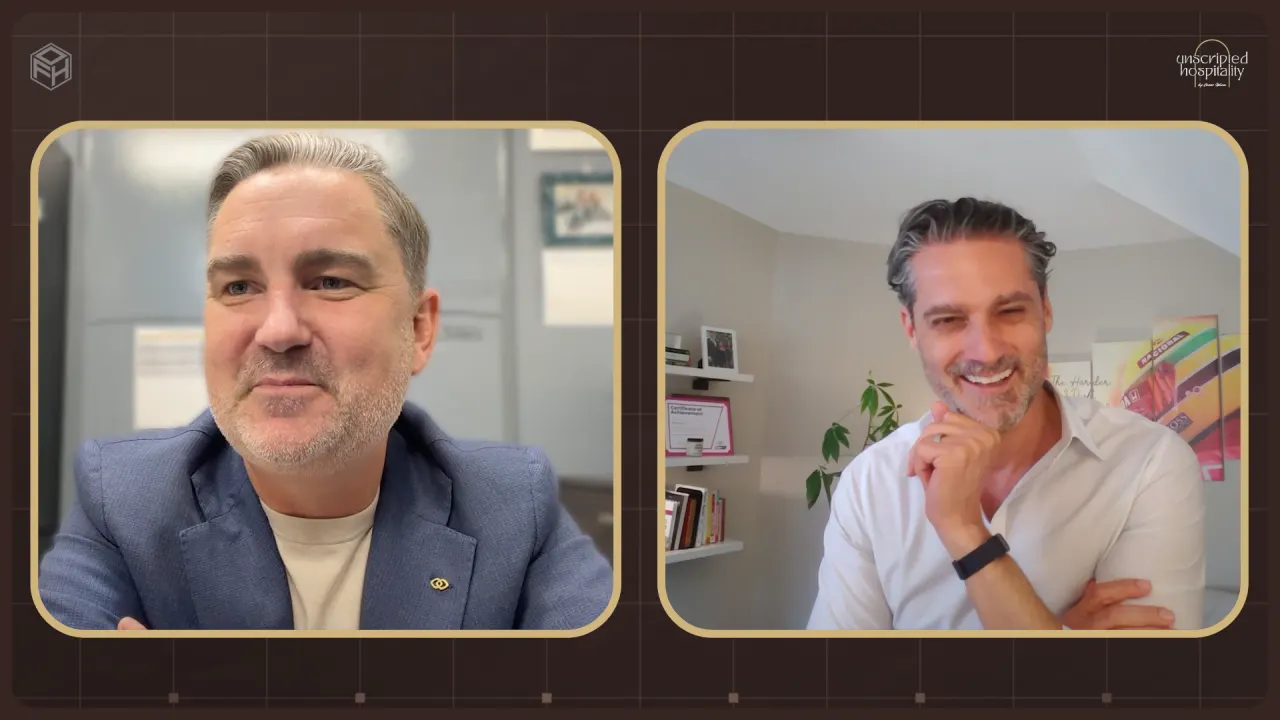
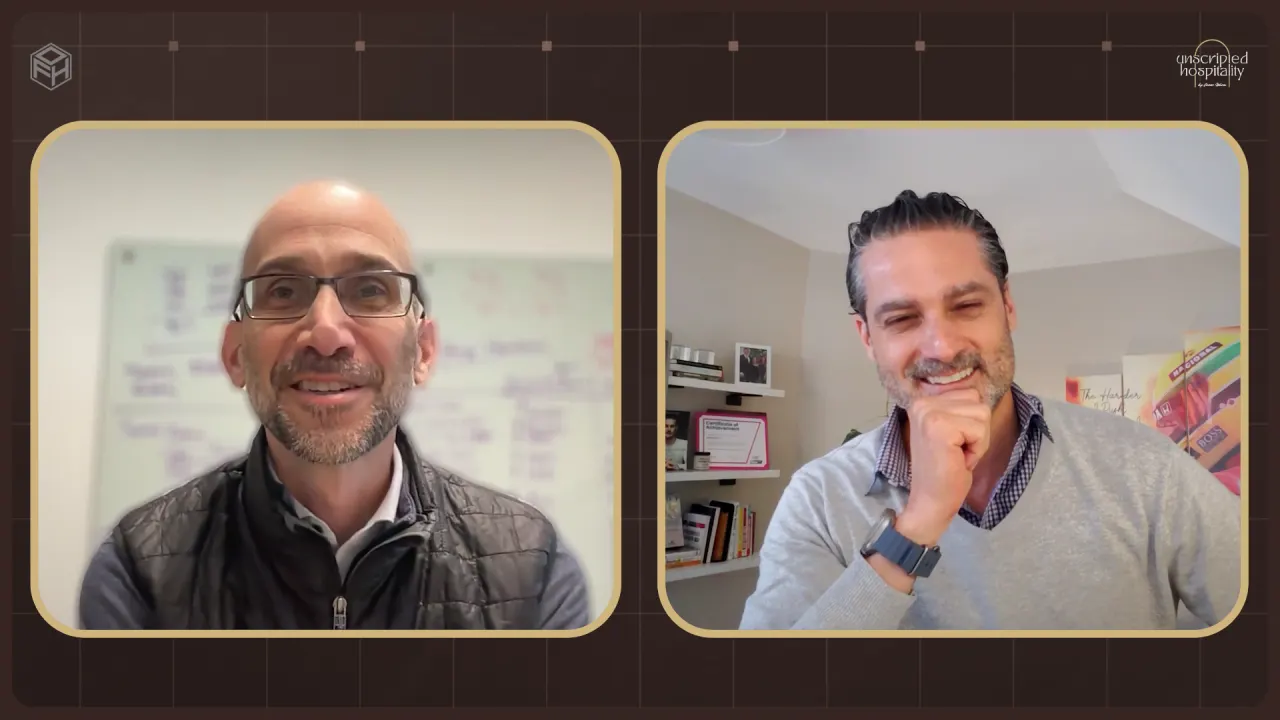
I don't wanna make that mistake at this point in life. If there's something I can do to reach my peak and I don't do it, that would be, you know, ridiculous. Hi everybody. Some people are defined by what happens to them and others are defined how they respond. And, today's guest is someone that I'm confident you're gonna love and clearly he chose the second path. And Mohammed Massaquah is a former NFL wide receiver. Also, I'm not a very good guy on American football, but, you know, one of the best ever in Georgia, where we are, you know, actually talking from even though not in person. But, you know, he's an entrepreneurial, you know, leadership expert that really, helps others from, you know, life experiences like all of us have, and he had a big one in '17. And since then, he's been dedicated to helping others build resilience, lead with purpose, and really perform at highest level. So, Moe, it's really an honor to have you. Thanks for the opportunity, and welcome to Unscripted Hospitality. I love it. I love it, man. You're one of the good guys, so pleasure to be here. Thank you. Thank you. Yeah. So I guess let's start with the obvious with, you know, a lot of people that know about you or not. You you know, in '17, your life changed like in an instant. And when when trauma enters our lives, you know, we can hide, we can run from it, or we can face head on. And so just take us back to that time and and really walk us through, like, you know, if you had a conscious decision to really face, what happened and begin to move forward. Well, I think it it's complicated because it's everything happens in stages. And so I think whenever you have something like that happen, you know, I lost my hand, which I played receiver. And so it's a part of my identity. It's a part of what helped me change my life, change my family's life as, you know, parent of immigrants who fled war. And so it's it's not as easy as just, okay, just move on. And so you have to give yourself grace to go through all the emotions, and it takes time. It's a process, to get to the other side. It takes years, to be honest with you. People kinda see me as a finished product. But those early years when, you know, it's really dark and it's confusing and you don't know whether they go right or left, I think that's where a lot of things are defined. And once you get through all those emotions, then I think you're equipped to say, alright, what is next? How do I move forward and start to define it? And I don't think people realize that they're already resilient. Everybody's been through something, some form of it, and if you've got through that and you're still living, you can get through this. And so that's kind of the mindset that I approach life with. Regardless of what happens, I have a reference point or somebody that I know has a reference point of getting through it, and so I'm betting on myself and betting on others to get to the other side. That's amazing. Like, you know you know, to your point, you know, I think everybody has some sort of trauma. People, you know, mini traumas and some people, big ones like you, is like, when something like this happens, are you aware the moment where, you know, you kind of process emotions or it's just a shock that to your point, you know, it may take some time to also start realizing and processing, like how does that happen? How is that about? And so I'll say this before I answer. If a person comes to me, I get a chance to meet a lot of people who have gone through different things. And if they say, Hey, I have a, you know, I know hangnail. If that hangnail to them is important, it's important because everybody views what their life experiences are different. And so I don't, tier or rank, you know, one trauma is higher or lower than the other just because everybody experiences it differently. But I think for me, it's I feel like life has so much to offer, and regardless of where you have to start from, once you make your mind up to go pursue the thing, you just have to pursue it differently. Like, okay. I'm missing, you know, my left hand, but I still have my brain. I still have my legs. I still have my heart. I still have, you know, great relationships. And so there's a lot that still can be utilized to go make something happen regardless of what's missing. And when you do start missing something, you start to discover other things where it's like, oh, I didn't even know I had this at my disposal because I relied so much on the other thing. And so it's a process of getting to that point where you can switch your mentality. It's all mental. It it's not you know, the physical has run its course. I'm not having no more surgeries. I'm not in the hospital. I'm not doing rehab anymore. And so I can't use that as a crutch. Now it's okay mentally, how am I gonna approach this thing? Once you make up your mind to do that, it's a work in progress. It's never, hey, I think it's gonna happen this way. And then it happens, you know, A to Z that way. It's I'm directionally moving this way, and I'll figure it out along the way. Yeah. Yeah. And, like and that brings me back on, I think, when we just started, you mentioned, you know, that was part of your identity. Right, because you're a football player and use your hand. And how so how did that how did your identity change from, you know, that time to where you're today if if it has? It hasn't. I'm I'm still a guy that used to play football. And so, at the time of my accident, I was a retired football player anyway, so I I wouldn't have been of much value on the football field in in any way. So, but, yeah, I mean, I still work out. I still love sports. I still, have a competitive fire that burns very deeply. I I still talk trash. I still, love to grow, love to develop, love to push myself, set high goals. And so that hasn't changed. I think the only thing that has changed is where I apply that energy. I'm not applying it to training eight hours a day or running in front of a 100,000 people. It's put into know, speaking and coaching and leadership development and working with senior leaders on how to help them get better. And so the the fire burns the same, the development burns the same, and the competitive drive to deliver something of value burns the same. It's just in a different environment. What what gives you a biggest high right now if you compare, like, is it being front of, like, to your point, like, thousands of people or, like, hey, being on a stage, even the smaller crowd or is just too different to? I mean, my mind is wherever the the the wherever the platform is, is cannot be the best here. And so it is the the competitive nature. If you look at an athlete's buildup, they wanna compete, whether they're playing in the Super Bowl, whether they're playing pickup basketball, or whether they're playing in something that nobody will see because it's just them and one of their best friends. And so if I'm in front of 2,000 people or it's just me and the CEO, I want to be the person that adds the most value, regardless of who's on the other side, pick, you know, big consultant firm, pick, you know, popular X, Y, Z, pick whoever. My mindset going into this thing is how do I deliver the most value, which means I would've had to prepare more, which means I would've had to show up fresh, which means that I would've had to done research, which means like all the things that are required, the same drive of being an athlete, like, hey, there's 1,600 and I think 96 people in the planet that play in the NFL. And if you go through other leagues, it's probably even smaller, probably 500 people that play in the NBA, MLB, whatever. And so you're dealing with a very small number of people that are elite at their craft. And so that's the same mindset that I have in this world. It's like I wanna be one of the very few people that are operating at such a level that there's so much value added here, because you don't wanna waste anybody's time. You you don't wanna under deliver on something that somebody trusts you with. And I I take that very seriously. Man, that's powerful. You know, and this is a great segue. So to your point, right, you you are part of a very, very small group. So clearly, you have gifts. Right? But that's not enough to take you to that level. So what can you share on, like, how you you got to where you did, and how do you translate that to someone, like, in our industry, right, in the hospitality industry that, hey. You know, it's a relatively big industry, but also there's a lot of opportunity for people to find their path and hopefully achieve whatever success they deem to be that. And, you know, some people have, you know, natural abilities that already help them a little bit. But, how do you help coach or guide people that is like, hey, you know, okay, your talent is is part of the the journey if you have, but then how do you continue to improve and get to the peak, whatever that peak may be for you? Yeah. I I think people look at that, you know, I developed gifts is what I would say, and not just that, yeah, there were certain things that were baseline that maybe I had a higher aptitude for, but they were developed behind the scenes years and years and years and years and years. And over time, the distance grows, the more that those gifts are developed to where it seems natural. But, you know, when I'm running around on the asphalt concrete or running up hills or it's a 100 degrees outside or it's, you know, 05:00 in the morning, and so those gifts are being developed. There's a lot of people that are six one, six two, two hundred pounds that, you know, run that the development was just different. And so in this world, there's a lot of people that are in the space, but how they're developing may not be the same. And that's where you see that gap start to get created. And so I think sometimes people look at the unicorns of, you know, LeBron James or I don't know, pick whatever, you know, freak athlete that you you could think of. Those are outliers. It it may be in y'all's world. I'm not familiar, but somebody has just a a location that, you know, you had to have been there a hundred years ago to get it. You know? You can't do anything about that. But the experience and how you develop and how you train your team and how you show up and how you pay attention to things in real time and how you course correct and how you stay abreast on what everybody else is doing so you can start to add those things to your game, That's just being in an arena and and, you know, situational awareness of what do I have to do to make sure that I continue to create value here? Because I'm I wish I was seven foot, but I'm not. And so I'm gonna make the most of what I have and and operate from there. Yeah. Yeah. And how how did you choose to how did your opening your company, so talk a little bit about that. How did you decide to go that path and and, you know, use your experiences, your knowledge? You're clearly a brilliant mind. You know, you, you know, you have some pretty impressive degrees and and background, but how how do you come about deciding to take this path and taking that leap if was a leap for you? Well, I mean, that's a really interesting question because people assume that people have it figured out, and no one really does. Everybody's kinda doing the best that they can. I think it's more so paying attention to what is naturally happening around you. So after my accident, I was actually working at Morgan Stanley in finance, and people started to reach out and say, hey, I heard about your accident. We need someone that we can think about for leadership, resilience, thinking through change. How do you manage all this? And so it's like, oh, this is a thing. And I didn't know what I was doing once I started. And then I got into it. It's like, oh, I don't know as much as I need to know about this, which is why I went to go back to school. It's not that I necessarily love school and education. I felt that I wasn't strong enough in my business acumen and didn't have enough technical understanding of organizational psychology. And so went back to school for both of those things. Once again, because if you're entrusted to operate at a high level, you can't fake that. You you have to go develop. And sometimes that's formal education. Sometimes that's experience. Sometimes it's a combination of a lot of other things, But it's making sure, am I doing everything that I need to do to succeed? Because the worst thing that can happen is that you have the potential to succeed and you don't succeed for human error. And and I've had that happen before in the past where it's like, man, I left so much performance out there, and that haunts me maybe more than losing my hand because there's nothing I can go back to do to change that. And I don't wanna make that mistake at this point in life. If there's something I can do to reach my peak and I don't do it, that would be, you know, ridiculous. Yeah. Yeah. Did did you have well, probably the answer is yes. But did did you have any big surprises to the positive or negative in your journey on, creating your business and, you know, and and doing doing it? It gives me a lot more empathy of, you know, some life events just happen. You know, they they they happen from, you know, physical to emotional to upbringing to whatever. I think it allows me to connect to a lot of people. It allows me to know that the thing on the surface isn't always the thing that's really the roadblock. A lot of times strategy is good, but there's something else that is more human centered that is troublesome for a particular person. And so it's a lot it's a lot of different things that you can just connect with with people, that help unlock things in ways that I don't think I could have anticipated. Yeah. And, yeah, in talking about that, you know, I would imagine you know, I heard many of your podcasts and, you know, in reading. I see, you know, just like when we asked, I think people are always curious and they asked, like, what what you lost. Right? Or how did it feel when that happened? But, you know, what what do you believe you gained, from from this experience? I don't think I'd be in the work that I'm in now. I would have known it existed. I don't think I would have related to people as as much. I don't think that, the urgency of life would have increased as much. I think sometimes you get a little comfortable. Yeah, I was in a very comfortable place. I think how I approach risk, how I approach danger are different. You know, things that are dangerous, I don't pursue at all. There's really no upside there. But if something is, you know, there is a downside that can be managed, but the upside is great, I'm more apt to go for it because life is very fragile where it could be going tomorrow, so you have to participate, to the highest levels if if you you wanna get there. I mean, I've I've been all around the world and kind of worked with some really incredible leaders and companies, and so I don't think any of that happens without it. And so I couldn't have predicted nine and a half years ago that all of this would be happening now, and I think sometimes people just have to I don't think time heals everything or everything happens for a reason, but I do think you just have to let the game play out. You know? You you know, you that's why you have all four quarters because anything could happen in a two minute drill. Yeah. It's so true. It's it's not done until it's done. Right? It's not done until it's done. Yeah. Yeah. It's funny that you say, you know, time doesn't heal everything. And and and I agree. I don't think I ever heard this much or or people saying because, like, right before we started, you know, I I lost my mom when I was 12. And, you know, from my sobriety journey, you know, there are things that I look back and, yeah, you know, time can help improve or make better, but some things, you know, just at least for me personally, you know, it it it has. And so it's it's good to not not feel alone from from that end. Yeah. And then we'll, like, you know, you you played and I think you in one of the podcast, if my memory is correct, you mentioned your high school coach was probably one of your biggest inspirations or, from leadership. So, you know, walk us through that. And then also very curious to know, you know, being coached, and performing at a high level, big part of your life and receiving, you know, like, feedback about your performance, being held to high standards by your teammates and you, like, how much does that translate as well to what you do in business, and how does that did shape you as a as a leader and business owner? I mean, a lot. You know? So I'm I'm trained as an organizational psychologist, but so much of what I've learned comes from sports and good leaders and bad leaders. I was just fortunate to have a really world class leader and my high school coach. And just for context, my high school, you know, in our run, we've won a 109 games in a row and seven straight championships. And in total, he's won 17 championships, and I don't even know how many he's played in. And so it's just an expectation of not if we're gonna have success, but what do we need to do to have success? And it's not, you know, is it possible, for sure it's possible, just how do we increase the probability of these things to happen through how we work and how we get people, to work together in teams and nobody's bigger than the team and how do we make, you know, bad things good and, you know, kinda control our own destiny. And so it is a reference point of he gives very direct feedback. He has extremely high standards. You know what to get done. He knows how to put people in position to succeed. You're gonna work really hard. You're gonna have a good time doing it. Highly dependable, highly reliable. And so all those things mimic exactly what organizations want. And we're always dealing with volatile conditions that we just have to work through, which is very similar in organizations. And so the vernacular language might be different, but what is trying to be accomplished is very, very similar. And, you know, in talking about performance, to your point, you said, you know, good leaders and bad leaders. You know, I think people can always relate to, like, hey. I've had great bosses or not so great bosses. What's your take since you you studied that as well, but especially from your personal experience? What is your take on, pressuring for performance or driving, like, for very high expectations? You know, what what do you think, you know, is optimal type of environment to to really help push people to, you know, their optimal performance level without breaking them or just going overboard? It depends. And what I mean by that is stylistically, a leader needs to find talent that either matches their style or adjust their style for the talent that they have. And that doesn't always happen. Sometimes a new CEO comes in and they're like, this is the way I did it at my old company, not realizing that this culture is different. Or that new leader may have a chance to bring in their own people that resonate and move at the pace. Somebody leaving leading a, you know, elementary school may be different than the person that's leading a finance company just because the the pressures and the people are different. And so situational leadership is extremely important. The overarching things that have to be true is people need feedback of how they're doing. They need some type of direction. They need some type of autonomy so they don't feel like they're just, you know, pieces in a clog. They need something that stretches them a little bit so that they don't get complacent, and that keeps them motivated as well. They have to have a good fit for what's going on. You know, certain people have more of an aptitude to succeed in certain environments than others. And so there's a lot of different factors that isn't just like, hey, let's, you know, tell everybody to put a smile on their face or have a pizza party. There's a lot of different things that that wire people differently. Yeah. Yeah. And you you went personally, you had an interesting experience, right, when you played for Cleveland. You went through in a, you know, difficult period where there was a lot of, you know, a lot of lot of movement within the organization or may not have been an optimal to your point environment or stable for you coming in. And I think that's very relatable to a lot of the business today especially in our industry because there is a lot of, you know, when you look at hospitality business, overall revenues are pretty good for the most part. Of course, there is markets and segments that are not like thriving, but it's not horrible. But the costs, right? The pressure, the talent, attraction, retention, training. So there's a lot of places where I think people can relate to your experience at Cleveland. So can you walk us through like on how you approached an imperfect environment per se and and made the best, to, you know, to provide value to your point? Yeah. Cleveland, I I think you learn a lot from success, failure, challenges, all of that. And Cleveland was very dynamic. The team was getting sold when I got there. So it got sold going into my third year. So multiple head coaches, multiple, offensive coordinators, high turnover roster all the time, played with seven different quarterbacks who started at some point. Not a lot of veteran presence in certain areas, and so you have talented young people that don't know left and right. And so it's just kinda like a recipe which unfortunately still seems to be the case. I think Topmarket will do a great job cleaning a lot of that up and, you know, getting some stability there. But if you don't have that, you know, it's just a recipe for disaster where you can have a wildly talented team that you don't get, you know, the most production out of because the leadership isn't right or you haven't taught those talented people to be professionals, even though in their best of heart state, they wanna be. And so in organizations, you have young, you know, kids or talent that want to do a good job, they just don't know how to, and they're not being led or the system's not, you know, designed for them to have repeatable success. On the other side of that, I think every year you can see, even if a team isn't about to win it, that they don't put a bad product out there. A lot of, you know, the Miami Heat, you know, or the Green Bay Packers, or, you know, some of these organizations that are always gonna be respectable, whether they have the most elite talent, the most money, the most whatever or not. And I think that that can be learned. Because once again, some people have, you know, genius level talent and they figured out how to get the diamond in the rough or, you know, they have, you know, Shontani and it's like, it's great. You should be successful if you have that. Realistically, not everybody has that elite, elite 1%, and so you have to develop it and set the conditions for it, which isn't done in a lot of organization. It's just organized chaos, I would say, a lot of times, and the output is in spite of whatever barriers people face every day. And then, you know, going back to your to your high school coach where you said that you guys won, you know, he won like, you know, many, many titles, you know, 100 plus wins, consecutively. What sets someone like that apart from another good coach? He was in it with us. And so he, while I was there, he would work out with us. He held himself accountable. He would protect us. Any coach on the outside, like there was no disrespect. Any barriers that we had to getting our job done, he fought for us. And so when he did make ask, we knew that he had our best interests at heart at all times. You know, down to the the most little things where there was a year I think everybody had to dress a certain way to go to the state championship. And he was like, no, my guys are more comfortable than this. And he was like, either this is how we show up or we don't participate. And we were the only team like that, and we we obviously ended up winning. But it's those little things, or if a coach on the other side does something that could be seen as disrespectful, he's gonna go make sure that he gets that out of control really fast. And so always protecting your people, wanting the best for them, inspiring them that they can do more, and it usually works out to where a lot of us. We probably outshot, overshot our potential for what we thought we were gonna be coming in to what we became on the other side of it. And so he I don't know, it's a lot of those situations right there where I'm gonna push you hard, I'm gonna ride you hard, I'm gonna take care of you, I'm gonna love you, I'm gonna leave you in a better condition than I found you, once you're no longer in my care. How does all you all these lessons and experiences help you as a father? You know, I'm interesting. I'm I'm still I'm still learning. I I think I I'm watching what my daughter wants to be and maybe she wants to be an athlete, maybe she doesn't. And pushing her and ushering her to those things and giving her situations where she can learn and she can fail and she's sincere, she can succeed, and she can ask questions, and just equipping her with this is a possibility for you, you know, while setting a very, very high bar for her, setting high, high goals of, hey, you can do it and, you know, cheering her on when she does that and supporting her, when she, you know, is figuring stuff out, giving her the ability to be okay with not succeeding because that's, you know, you learn a lot in those seasons as well. So not trying to be perfect all the time. And actually just giving her grace to be a kid, you know, I think there's so much pressure that I don't want that to be at home. I think as she gets older and more mature, she will settle into who she ultimately wants to become. It's just my job to kinda cultivate the environment that allows her to grow in the best way that she can. And, Mo, as we come, to an end, what is your best memory on the field and off the field? Oh, my best memory on the field. I mean, it's hard. It it it's hard because you have you have games that you remember that that you won that, that maybe you did you didn't have as much success against that team, whether it be Florida or I think we beat the Steelers once while I was there. That that that was nice. You know, whatever you win is is great in celebrating it with your team. It's the it's the locker room, to be honest with you. It's all the little things that lead into winning that, you know, these stories never make the outside world, but they're they're really cool. And then I would say off the field is the same, just participating in life with the people that you've played football with twenty years ago. And that's really cool that you're still doing life and you're still taking trips and your kids are considered family to each other and you're there for each other in hard times. Both of those experiences, it's the human experience. If you have good people around you, the highs, the lows, all that can be worked out. Alright. And to close it, so let's say someone is going through something in life that they didn't choose to. Right? What what message do you have for them? Oh, man. If they live through it, there's an opportunity for an amazing life. And so I think sometimes when we're in it, we think life's over, we think that you know, this is the worst time of our life, you know, woe is me, why'd this happen to happen, why'd this have to happen to me? And then you just live a little bit more and you realize that, man, I've made progress and I've gotten better and I'm in a different frame of mind and it's gonna be okay. And now I have a different perspective of even what I wanna do when things are differently dynamic and amazing. It's not the same, which it won't be because we evolve, we grow, but it's it's different, and it can be just as special or even more if you just get to the other side. That's amazing. Thank you. You know, thanks for the opportunity to connect, for sharing your perspective, your heart with us. And, yeah, what a what a joy. So, you know, to all the viewers and listeners there, you know, check him out. Amazing speaker. As you can see, he's real. He cares. So he does amazing work. So, you know, reach out to him, and, it will be great to, you know, have him support, you know, events or any of your, you know, company, of course, or customers. So thank you, Moe. It's been a pleasure, my friend. Thank you, my friend. Many blessings to you. Yes, sir.
NEWSLETTER
Bleiben Sie auf dem Laufenden
Jeden zweiten Dienstag senden wir Ihnen die neueste Folge, die zentrale Debatte darin und die eine Zahl, die Sie sich merken sollten. Zwei Minuten Lesezeit, kein Spam.










 EPISODE · 30 MIN
 Mohamed MassaquoiFormer NFL Wide Receiver | Leadership & Resilience Speaker