Can franchising be done differently? The case for a fixed fee
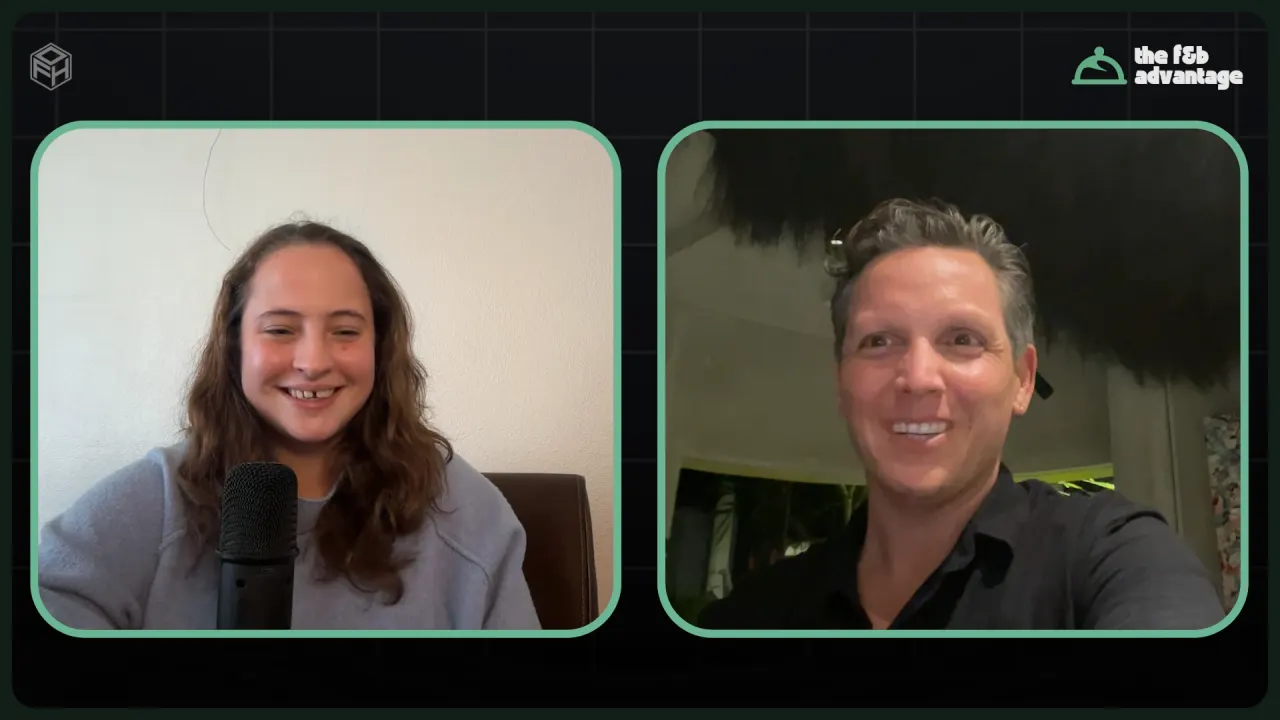
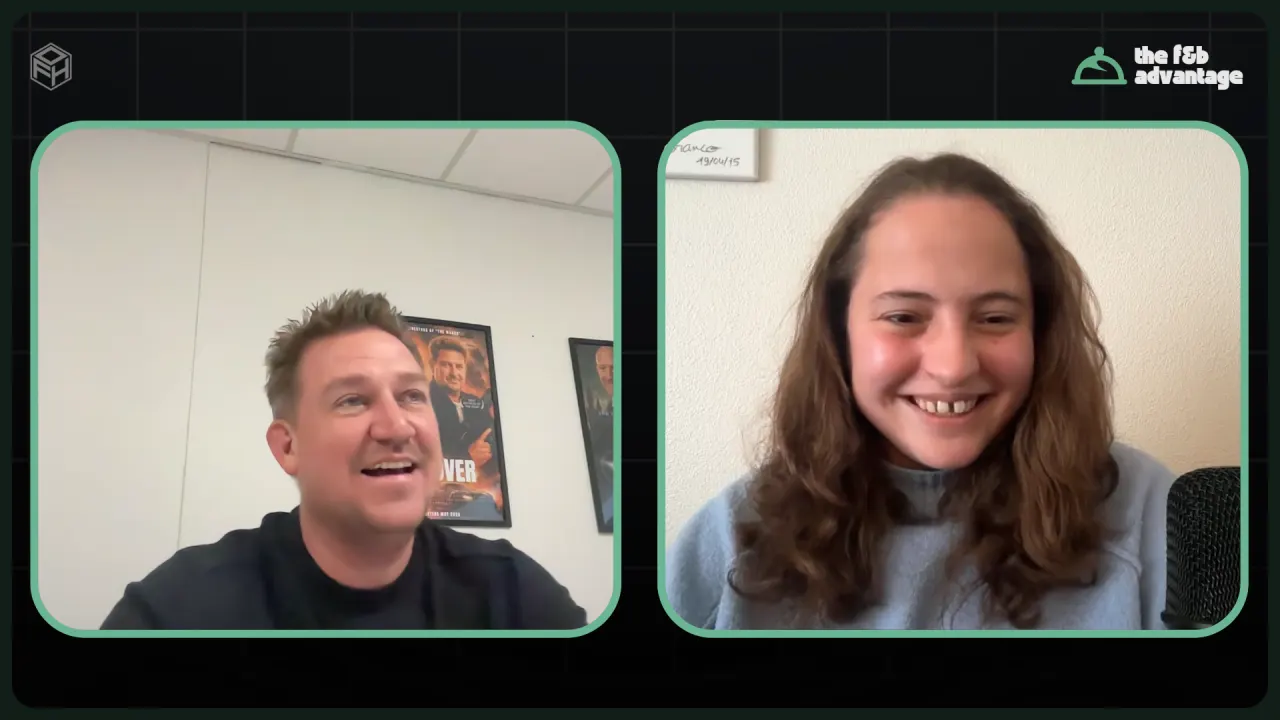
From the first coffee to go in Amsterdam to a franchise model built from both sides, Rick Bekkema reveals why the standard franchise deal works against the franchisee. He joins The F&B Advantage to unpack the 8% turnover fee, the one-sided contract template, and why CoffeeHouse charges one fixed fee of €950 a month instead.
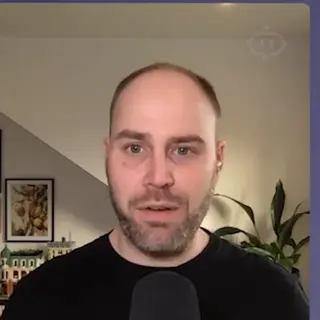
 Rick BekkemaFounder
Ask Rick about this conversation
A short answer from what was said in this episode, with the exact words and the minute.


KEY TAKEAWAYS
Turnover fees punish initiative
A percentage fee charges the franchisee for every extra sale, even the sales that bring no profit.
8% is most of the margin
When a 10% net result counts as healthy, an 8% franchise fee leaves very little for the franchisee.
One nonnegotiable is enough
Fix the product that defines the brand, like the coffee beans, and leave suppliers, cash registers and soft drinks to the partner.
Design the room for the moment
A coffee house sells a break in the day, so leave out what turns it into an office.
One fixed fee of €950 per month, and for that money you get all you need.
Transcript
Click a timecode to watch from that moment.
00:00Cold open: one fixed fee of €950 a month
2
This is the most disrupting thing that I'm, yeah, that I pushed into the formula right now is that I'm stepping away from the turnover related fee, and I'm having one fixed fee of €950 per month. And, for that money, you get all you need.
00:29Welcome: from coffeecompany to CoffeeHouse
11
Welcome to the F&B Advantage, part of the future of hospitality. My name is Gaby. And my guest opened a coffee shop in Amsterdam with a borrowed roaster. It became coffeecompany. 35 stores and later sold to Douwe Egberts. And he did something almost nobody does.
He stayed on as a franchisee of his own formula for ten years. Now he's back with the CoffeeHouse, a franchise model made by someone who knows both sides. Today, we're going to talk about if franchising can be done differently. Welcome, Rick. Hi, Gaby.
01:06The first thing he checks in a shop
11
So let's start with the first question. What's the first thing you do when you walk into the shop? I can't help myself, and I make an immediate scan of everything that I have in eyesight. So, and I immediately also see all little details if there's a light bulb broken or, if cables are not cleaned, stuff like that. So, yeah, that's a sort of, that's a sort of a first reflex. I think I think, to be honest, that's good for reflex also to have.
Right? Having those details in eyesight and seeing what can do... Be better or what's already done really good. I think that's a really nice thing to do in the shop. Yeah.
01:59Quick-fire
20
I mean, before we maybe go deeper, we often do an quick fire where I give you two options, and you just need to choose one quickly. So, our listeners can have a little bit of a feeling. So Okay. are you ready? Born ready. Okay.
Amsterdam or Barcelona? Oof. that's immediately the hardest question you can ask me. But, for now, Amsterdam. Best coffee city in the world. I heard it's Oslo, but I've never been there.
So next trip. Who picks the music, you or your team? CoffeeHouse in one word. Colorful. And then the last one, what's your own coffee order? That depends on the moment of the day.
I've got different types of coffee that I prefer during the day going from pretty milky in the morning to, a straight espresso after dinner. Great.
03:11From one shop to 35
19
So like I said, you started with one shot, and I'm really curious about the story how you went from one shot to 35 and, yeah, what you learned during that period about being an... Yeah. Having a franchise formula. Yeah. Well, I started off when I was 24, 25, something like that. I don't think anyone in Europe was using the word barista for a coffee maker.
It's the Italian word for bartender, actually. Mhmm. So... Which is slightly different because a bartender also serves you beer and wine, etcetera. But, Starbucks sort of claimed that word in The States, and later on, it became a bit more common in Europe. So in Holland, I think I could say that I was the very first barista myself, and we opened a little shop, more based around the Italian theme of standing up espresso plus coffee to go.
And then after one year, we decided to go in a bit more forceful. My partner, who was on the sideline until that moment, being a full time coffee trader, actually decided to step into the company Mhmm. and not only be the the coffee nerds, but also be, yeah, be a shareholder in the in the whole adventure. And then we had a first sort of ambition to open up, 10 shops in three years' time and then sell it and then being free to do whatever we would like to do with coffee, or maybe something else in... For the rest of our lives, which was a bit of a silly and naive, sort of, business idea. But, at that moment, we truly believe that, 10 shops in three years' time plus learning curve and culture change was doable.
Little did we know.
05:34Changing a coffee culture
34
Yeah. Because what are like... I can imagine that it will be a big operation to do that. I'm really curious, like, what were the first learnings, like, the first obstacles that you had going from one to 10 shops? And Yeah. The...
Well, the first thing that we had to, acknowledge was the fact that we were not just trying to put coffee in a different sort of format in the market, but that we actually were trying to change culture, and we totally underestimated that. I can imagine that the first, people that were, selling pizza in other countries also had a bit of a bit of a challenge. We had done something, similar. So, where coffee to go was in other cities, in the world already becoming more common good, Coffee to go was in Holland nonexisting, besides the train station, but that was hardly to be called coffee. So specialty coffee to go was a contradiction in itself, and people didn't understand at all what we were doing. So when I asked them if they wanted to have a coffee to go, they thought that I was sending them off, that I didn't want to have them in the shop anymore.
So there was a lot of a lot of explanation to be done, which we did, and that went step by step. And then step by step, you're... Besides bending a cultural habit, you're also finding out who you are along the way. So, because your brand identity, as you can call it, your DNA is something that has to grow into you. You have to grow into it. Yeah.
Yeah, similar like a person, you have to... You need time to mature, and that go... Goes for a brand as well, I think. And, yeah. So the first, 10 shops were a lot about that, and, I had the privilege to have some very smart friends who were working in advertising, agencies. One of them is called Misha McDonald.
I'm still very grateful for the support that he gave at that time. We also had an advertising company that was far too expensive for us, but, we liked each other, and they also really contributed to our positioning and our communication. That was. they still exist like us. So, yeah, so we were building our... Ourselves while we were growing, I would say is not the easiest, road to go.
No. I can imagine. I think it's super interesting because you're, like, changing the psychology model of people drinking coffee, where you say, okay, you can just take it and go. So I think that's super interesting, the evolvement that, like, we as Dutchies need to have, but also, like you said, like a person.
09:04Store number four and the 22-person table
27
I'm really curious. When was the moment when you kind of had the feeling, okay, there is this momentum and you really thought, okay, this is really becoming a real chain. That was with the fourth... With... That was with store number four. Until that store, we were still hanging on to the to the very small footprint of the shop.
So we were dictating, actually, how people should be drinking coffee, and that was, in a very small place, preferably to go or just for a quick cappuccino or a quick espresso standing up, while... During your, shopping or, or other activity. And then with store number four, we decided to change it around. That was a bit more, like, opportunity driven because there was a place in the little streets. There was a old Chinese restaurant that was closing down, and I really like that street. So, so, when we could get our hands on that property, we decided, okay.
How can we tweak the formula in a way that it also fits a bigger space like this? And then we came up with a sort of a philosophy like, okay. We're... Let's stop dictating how you do your coffee, but let's just offer all the options and, Mhmm. be more welcome to, every type of coffee drinker on any moment of the day. This was all put on paper, and we, one of the biggest symbols of that decision was that we also put in a huge table.
It was a table that weighed, I think, 3,000 kilo, Oh. and it was, for 22 persons. We had a pretty big terrace as well. And, from the moment of... That we opened that shop, it was flying. So that was the big, yeah, big change in dynamics of the company because that gave away what we were doing good, what we were doing well, what, and what was going much better.
And from that moment on, we, kept on focusing on, opening stores with a bigger footprint and more options to present coffee. Yeah. Interesting.
11:46Writing the franchise rules
55
and you were already talking about the rules and how you served coffee, and I'm really... I wanted to ask you wrote the franchise rules yourself. Right? And after that, you also needed to follow them. Which rules did you made for all the stores and when you needed to use them yourselves? Was...
Where you thought, oh, there is a kind of difference when I'm working in the shop or as a franchisee that I didn't see coming. Were there certain rules in that? I think 90% of the rules that I wrote myself, I threw out of the window later on. Yeah. Yeah. The franchise game, it's a it's a it's a strange game by itself, And the way that the rules are set, in order to to look into that, you have to make one step back and ask yourself, how were they...
How did the franchise model, where does where does the existence started? And in Holland, at least, and I think it... It's a it's a more general more general dynamic, is that franchising starts a lot with the need from a from a growing formula to grow further without having the proper capital for it. A lot of the franchise chains, especially in the beginning, were based on that. And, in Holland, you had a few big, companies that were, doing franchise from, yeah, from that one-sided growing ambition perspective, and they united in the Dutch franchise organization. And the Dutch franchise organization was the one and only formal platform where you could get some advice, and they had templates that were being used for the contracts.
But later on, I think, from a legal perspective, everybody found out that these templates who were written from the perspective of the franchisor were very, yeah, one... How do you say that? They were they were very much, protecting the franchisor and much less the franchisee. Yeah. And since that template was sort of the norm, all the advisory agencies, etcetera, all the lawyers that are specialized in it, also developed a certain mindset. So all the franchise contracts that started to exist were based on this first template and then fine tuned per, yeah, per formula.
But in general, the backbone was still pretty similar. And I was finding out the discrepancy of that along the way being a franchisor myself, Mhmm. and I was much more confronted with it, becoming a franchisee from the same contract, after I saw... After we sold the company to huge corporate, organization like, Jacobs, Sara Lee, Douwe Egberts. Because from that moment on, it's not about an... It's not, so much an entrepreneurial game anymore, but you're talking much more with people who reason from, yeah, from a legal perspective.
Mhmm. What are my obligations as a franchisor and, and whatnot? And it's not about, like, okay. How can we find the best way to help each other? Or... No.
it's a different mindset. Yeah. So And, it's a little bit on one-sided relationship. yeah, and you see that a lot in the front... In the world of franchising because the the franchisee in general has very limited, options to, sell his company, Mhmm. because, there's...
Most of the time, there's a very strict competition, competitors clause involved. So if I would be the franchisee of a of a Starbucks, you can imagine that, when the license is finished, that they wouldn't like it if I would offer my place to the highest bidder, which could be, a competing coffee chain like Costa Coffee or something. Mhmm. So when I'm signing that contract, Starbucks puts a competitor clause in, like, okay. You can sell it after, the contract is finished, but you cannot sell it to a coffee, chain. Well, that immediately cuts out, 60% of your possible buyers.
Yeah. And this is just a small example of, how you get in... Into a sort of a relationship where one party is much... Has, yeah, is much more dominant than the other part... Party. Yeah.
Would you, Yeah.
17:31Freedom for the franchisee
30
yeah, would you say that, when you have, like, franchisees that they should run their own shop instead of having an head office, like, forcing down their throats that every shop would be run the same? With running your own shop, you mean that people should, stay independent from franchise formulas? Is that what Yeah. you mean? Yeah. Or having some liberty in also the choices and how they run it.
Or is it more than Yeah. legal? No. What Well, there... is? You have two...
I think you have several different types of entrepreneurs, and let's, let me be clear that joining a strong... Strongly developed franchise formula gives you a great, jump start if you open a new, shop, and it gives you, a lot of, knowledge that will take quite some time and some money to find out yourself. Yeah. So it depends a lot on the type of entrepreneur that you are. And if you like to do this whole, discovery journey of doing everything yourself and keeping 100% control over everything, then you should definitely not franchise. But some people are less creative and...
But have super strong operational skills. And these are people that are, that are a very good fit with a franchise organization because they can operate it as it is their own, and they can, put as much energy in it as they like. But they don't have to think, eight times per year. Okay. What sort of a new drink should I develop now, and how am I gonna make it work on the socials? And, how do I develop this in my, digital brand identity in my shop, etcetera.
Yeah. Yeah. So... Yeah. So there's kind of lenience on how much liberty there should be. Of course, there has the formula that was already working is important.
19:48What Spain taught him about hospitality
42
So before we go to CoffeeHouse, I wanted to have a little talk about the coffee... Between the coffeecompany and the CoffeeHouse, which is your... You went to Barcelona. You stayed there, for a while. And I'm really curious, what did you learn in Barcelona, Spain about hospitality that we can maybe do more here in The Netherlands or in the franchise world? A little bit of patience.
That is something you definitely learn in Spain. And, in, Nordic countries, it can be, the... People can joke about it, like, these lazy Spaniards or slow slow Southern Europe countries, but, I don't see it that way anymore. When I entered that country, I was a bit similar, but I now embraced it much more, and I see the beauty of taking your time as well. So we went with the family. We went grocery shopping every Saturday on one of these, yeah, these markets with all these little, entrepreneurs that are selling fresh foods.
And regardless of how busy it was, there was always time to ask the client, how are you doing? I didn't see you for a while. How is your mother doing? Is she fine? and they couldn't be bothered with the fact that there were 25 people waiting, because it was part of... For them, having that conversation and having that social connection was just as important as filling the till.
You know? It... It's not all about profit maximization. It's what you can see over there. And they do it a little bit more with the heart and not only from the wallet. and that is something that I that I really liked.
And, don't get me wrong. I think profit is, is fuel for a company like food. It is for a human being, and it's super healthy, to have proper foods and to have proper profit. But there is also a risk of, of loss in, identity and in, quality if you are only focused on, maximizing your profit all the time. and Yeah. I think that in Nordic countries, we are a little bit more into the profit maximization, and I would say that Spain is more in profit optimization.
So, I like that. I like the fact that some things just take time, and that goes for specialty coffee as well. I mean, you can... A good espresso by itself takes thirty seconds to drip out of the machine. Yeah. You could do it in five seconds, but then you have a very watery, ugly espresso.
You can make six times as many in the same amount of time, but your quality sucks. So, for some products, you just, need to take time, and, and it pays out as well. You see that back in the quality of the product. Yeah. Yeah. That's super interesting.
23:12What he takes to CoffeeHouse
21
And if you look at all the learnings from Spain, but also, of course, at your at your time at, coffeecompany, what are the learnings that you're taking with you... with... For CoffeeHouse and how you started it? Well, as I said, just said, the social elements, Mhmm. is something that I have more focus on than I had before. And so this is very important, when we select, students to become a barista, the openness, the smile, the open face, the ability to make contact is very important.
Mhmm. The skill set you need to make the perfect coffee is something you can learn. I mean, ninety five percent of people have enough, motoric skills to be able to learn that. But being on a hospitable personality, that is a bit harder. So, I definitely, implement that more. The timelines that we, obviously, we try to be as quick as possible, But, yeah, without compromising on quality, it always takes a little bit longer than, than pushing a button on a full automatic machine.
And what I, as a company, what I truly, like, is that, Spain is much more family orientated, and a lot of the families that run companies, run it for the third or the fourth generation. And that means that they, yeah, they walked the long roads with all the ups and the downs, and, and they're in... Into it together as a family, knowing that it will bring ups and downs. But, it's something that... Yeah. A lot of family companies exist still like that, and I found that very inspiring as well.
So I'm taught... My son is 21 years old, and I'm also speaking with him about, how to grow this company and what it could mean, on the longer run. Yeah.
25:48Laptop workers in the coffee house
22
I'm really curious. We are often working a lot more from home, but also a lot more from coffee shops. What is your opinion about that, having people work with their laptops in your coffee shops? I think if you really come for work, you should go to a co workplace. And, because a coffee house, in my opinion, is a place where you break out of the of the normal rhythm of your day. You give yourself a little treat.
You say hi to the neighbor that you, that you, just, met. You take a little bit of... you read into the newspaper a little bit. You are in doubt whether to take a brownie or not with your with your, cafe latte. And, altogether, it's a it's a little bit of a of a nice little moment for yourself. That effect is pretty sabotaged if the entire shop is filled with people that are silently sitting behind their laptop with their headphones on.
So in CoffeeHouse, I also didn't install any electricity sockets, and I don't encourage people to sit there behind their lap... Laptop, to work. For me, there's a difference in working or just checking your mail for a few minutes. If you're coming in and you need to make a phone call or you need to arrange something work wise and you open up your laptop and you're sitting down fifteen minutes to do so, that is perfect. Coffee houses are brilliant for that. But if you are sitting on a latte, of €3.50 for four hours because you don't wanna spend your time alone in your student, room, then you are then you are not fitting into how I see the concept.
There are other formulas that see it differently, Mhmm. and it also makes a difference if you have 300 square meters or 80 square meters as a as a footprint of a shop. But, in general, I would say it's a place to, be a little more so than, just wear my laptop. Yeah.
28:27The coffee shop as a meeting place
28
So I think it's interesting because I also read that one of your children once talked to an older lady at your shop. And I was really curious, what's this like in conversation that you have maybe with a guest or someone random in your shop that you remembered this year that you thought this is what I'm... Why I'm doing this for this social interaction? Oh, that happens all the time. I would say that happens every day, multiple times. Yesterday, I had a...
Yesterday, I was very early, in the in the coffee house because I was, giving entry to one of the mechanics that was, doing some maintenance on the machines. And, I was actually following all the conversations between the regulars and the and the baristas, and I loved it. It was, they know each other. It's like, the baristas also find their rhythm in their study, and therefore, they often have a sort of similar type of, schedule that they work. So they take the morning shifts and the other one takes, afternoon shifts, etcetera. And that also, means that you are seeing the same faces a lot because people have their own rhythm in visiting a coffee house as well.
Yeah. so you really get to know each other. And so I heard a lot of... Yeah. There's a lot of conversations going like, hey. How are you doing with your study?
How did your exam go? How was your holiday? This relationship can... With regulars can get so, intimate that, in Holland, we had, in one shop a long time ago, people started to celebrate, holidays together. So there was Sinterklaas, which is in Holland, sort of a Christmas light version. and that was actually celebrated in the shop between the baristas and the regular, customers.
Oh, that's so nice. I think it Yeah. remembers me, like, of, like, when you used to go to, like, the town, square and where you meet people and then having that more town feeling, I think that's wonderful to have that relationship with Yeah. your customers and your baristas.
30:59A business-to-business franchise
34
Yeah. So with CoffeeHouse, how do you now choose your partners with who you're going to work to have, like, the... Yeah. Getting more shops. Yeah. Like, what are criteria as it are important?
Yeah. So, CoffeeHouse is mainly a business to business franchise formula. Yeah. I'm focusing on expansion through relationships with professionals. So think of catering companies, hotel chains, big real estate developers that have multiple projects, that sort of offices, that sort of, profile fits the best to CoffeeHouse. Why?
Because I took out a lot of obligations. And, in my past, I found out that a lot of the bigger professional companies, they already have a lot of things very well in place. Yeah? Like, if I'm taking a professional catering company like Compass, as an example, Yeah. They are the biggest catering company in the world. They have, I don't know, 50,000 people working for them.
I have no Insane. idea, actually, Really but easy. pretty big numbers. They are doing their purchasing, on the highest level. I don't have to be here to explain to them, how they can buy their milk in the cheapest way and how to do their logistics. they are better than me in that.
What I can offer is, a part of that DNA that is a bit specific, And that DNA translates into the line of products, into a work method, and into a marketing, structure that I can provide. And then leaving a lot of the, logistics, to the franchisees themselves gives, opens up a lot of, possibilities as well for people to step in. Because if you normally would like to, collaborate with a franchise, brand, it means that you have to, often, you have to change your cash register system I or see. you have, strictly preferred suppliers that you have to work with. And that's something that I, cut out of the of the formula. So, I think there are...
In the current digital world, there are multiple ways to, to track your results. And, yeah, I want to make... I want to help them make the place that they want to fill in the nicest coffee house that they that they can imagine there. And I don't want to struggle with them about, whether they should reinvest in, a new cash register system, for instance.
34:29Why the coffee beans are fixed
52
I Well, think it's funny because you give them a lot of, yeah, openness or choices that they can self make. But one thing that is, really, more strict or not strict, but where there's less discussion about are the coffee beans. why are those coffee beans so important? Yeah. And why Yeah. I know.
But that... That's it. That is the one and only nonnegotiable item that you have to, purchase through the through the franchise brand. Because a coffee flavor, is very specific, mhmm. and it's quite an art to, create an sustainable... How do you say that?
it's quite a challenge to create a flavor that will, year in, year out, will be the same, while in reality, your harvest that you are making this coffee from is changing every year. Right? You like wine. One year is, has a less good harvest than the other year. So it's a lot of tweaking that you're doing all the time in order to have a very, constant flavor, and a constant freshness and a and a good pipeline that can be filled up constantly. Well...
And, we, that's the part that we don't want to compromise on, because it's the basic of your drinks. Yeah. and it's... It makes all the difference if you are economizing on, buying, the one Brazil coffee from the other Brazilian coffee. Yeah. It totally changes what the end result in your cup, and, that should be the best.
So you... That's the that's the part that you don't want to be flexible in. Yeah. But it's also, like, the cornerstone, right, of the... The coffee should be everywhere the same quality. Yeah.
Yeah. Yeah. No. It is it is. It's super important. and then if it's...
Whether it's Pepsi Cola or Coca Cola that you, sell as one of your supporting products, I couldn't care less, to be honest, Mhmm. Yeah. No. I understand. because, these are these are very, similar products, and and there are different contracts that are beneath it. So, the one hotel chain has a worldwide contract with Coca Cola.
Mhmm. You... It would be silly to get into a discussion like, sorry, we can't work together because, we are, we are dictating to you that you that you should be, selling Pepsi Cola, and that they would be saying, no. No. No. We can't because we have a worldwide contract with Coca Cola.
No. It's not about that. it's about, it's about, 20% of your of your products that are creating 80% of your margin, and Yeah. that's where we are focusing on.
38:02A fixed fee instead of a percentage
76
Yeah. Hey. I have one last question before we jump to the future questions. And as most franchisees take a part of... Yeah. Franchise people take a part of your sales, if you're a franchisee.
Would you... You asked, like, a fixed price. Why? I'm really curious about the reasoning why you do that. Yeah. So instead of, so the norm in franchise contracts is that normally, there's a franchise fee, like a royalty, and there's a marketing fee, for Mhmm.
supporting, activities. In total, that sums up to 8% of your, turnover. So it's a five to 6% franchise fee and then, one or 2%, marketing fee. Yeah. If you have, a normal healthy coffee house, let's say that it makes, between, 500 k and a and a million, euro turnover, Yeah. 8% of your turnover is pretty steep.
I mean, if you make a million, euro turnover and you pay €80,000 per year just on your franchise cost, I think that's a lot. And considering that, in a lot of the profit and loss schedules, a 10% net result is seen as pretty healthy, you can imagine that if your franchise fee already eats away 8% of that 10%, it leaves very little for the franchisee. But the franchisee can't get out anymore, because they are in a contract. They have very limited options to sell. So this is, yeah, this happens a lot, but the franchisees are so optimistic in the beginning that the pain of paying €6,000, €7,000 every month, only starts to become very annoying once they are two to three years up the road. Yeah.
I want to avoid that, disappointment. And I think that, in the current times, it's unnecessary to have a big to have a big head office and, make extra cost, to provide the services that you want to provide as a franchisor. So marketing, can be automated a lot. If you want to fill up your, social media pipeline, it's not necessary anymore to have one person full time sitting on that. Yeah. And if you have digital signing in your shop, it's not needed anymore to have people, driving around with posters because there's a new matcha latte for the coming season.
Yeah. And, so there's a lot that can be, cut out of that, cost pattern. And, so that's the main reason why I want to be much cheaper than is the norm right now. And why I'm choosing for a fixed fee is because there's no logic in the fact that if you, as a franchisee, do, the utmost to maximize your turnover, that the franchisor is the first one that benefits from it. Because Yeah. if you push up your turnover with...
Let's say that you have a coffee house in the middle of, of an attraction park where there's a lot of children there. And because of that, you decided, you know what I should do? I should also make pancakes. And... But the pancakes can't be sold too expensive, but it will fit the need for the children very well. Then you then you create a crazy situation that maybe your turnover goes up a 100 k.
Over that 100 k, you have to pay €8,000, franchise fee without Yeah. even knowing how much profit you will, you will have. So, in my opinion, this is the most disrupting thing that I'm, yeah, that I pushed into the formula right now is that I'm stepping away from the turnover related fee, and I'm having one fixed fee of €950 per month. And, for that money, you get all you need. Yeah. Yeah.
And I think it's also more incentive for franchisees to grow. Right? Because if you take every time a percentage of their sales, they are maybe be thinking, like, why should I grow if I'm handing in the extra profits that I'm making? Yeah. Yeah. And sales are not profit.
I mean, Yeah. Yeah. you can you can, sell pancakes because, that... In that way, you also have more parents in your shop drinking coffee, but, the pancakes on itself are not automatically a profit center. Mhmm. Yeah.
So, and when it's... And when it is successful, then at one stage, people will also start to feel a little bit uncomfortable. The franchisees, at one stage, they will say, listen. Yeah. I pushed the turnover from 700,000 to 1,000,000 because I did this, I did this, I did this, I did this, I did this. But I'm but I'm paying, €25,000 extra in, franchise fees for it.
Yeah. That's a bit silly. And in reality, Yeah. the capacity from a franchisor to be able to push the sales on specific locations is much more limited than a lot of the franchise brands would like to let you believe. I Yeah. think franchisors have a very good database in order to be able to give you good benchmarks over your performance.
But if you ask them, okay. Give me a good product that will push my sales during Christmas with 25%. There are very few franchisors that can live up to that desire. Yeah.
44:47The franchise deal of the future
20
I know. I think it's super disruptive what you're doing, and I think that's also the bridge to the future and especially, like, the future of the franchise world. We already discussed not taking a percentage. We also talked about more liberty to choose Pepsi or cola. if you have, in ten years time, a franchise deal, which a Yeah. franchisee should, do, what are three things in that contract that should be there to make it a good deal in ten For both parties, you mean.
Yeah. Yeah. Well, the... What would be in there in ten years is all... Is also there right now. True.
And, and that is that, the franchisee should never lose his entrepreneurial spirit or his, or being his own boss. I mean, like I said, I don't have to tell a catering company how to, how to run sale... How to run, the purchases of goods. So independency, up to a certain level is definitely there. The fixed, fee is definitely in it. And I think, what I can imagine that would happen is that together with the franchisees, we'll...
We will explore the effects of, the artificial intelligence supports that you, that is becoming much more relevant, every month as we speak. So I can imagine that, a little bit further in the future, having a good understanding how we're using that would be in there as well.
46:43The coffee shop in ten years
15
And that brings me to my last question. You were a little bit already further ahead about talking about AI, but I'm really curious to ask you the question. What will a good coffee house do still in ten years without an app or AI or machine? Make fantastic coffee, obviously. And, Great. Yeah.
yeah, and provide that little moment that you want in your day. Right? I think life is a little bit more than, commuting from work to home and next day do it again in the other way around. there's much more for... Than that. And, and that's what I would like to, yeah, I would...
We are providing that to... We can provide that to the world to create that little colorful moment, during your day. Yeah.
47:40Closing
10
Rick, thank you. I think we have learned that we can maybe learn something of the Spanish about patience. I think also, what you said about fixed price, having more liberty is really important. And I'm really curious to see what CoffeeHouse will do and how the disruption will be in the whole franchisee world. So thank you for your time. You're very welcome.
Thanks for having me. And for the listeners, if you enjoyed this conversation with Rick, follow the Future of Hospitality on Spotify, YouTube, LinkedIn, and Instagram, or visit our websites. I will see you next time. Have a nice day.