The bottle behind the sustainable stay
A sustainable bottle on the nightstand may be the most visible sustainability win in a hotel. Arjan sits down with Bart Willems, co-founder of Bottle Up, to explore how a reusable, sugarcane-based bottle replaces single-use plastic without operational hassle. They discuss less waste, stronger branding and happier guests.
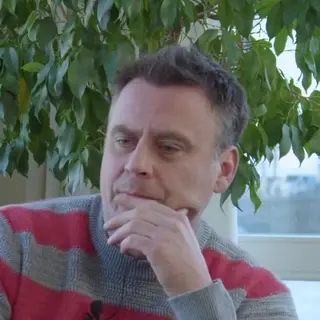
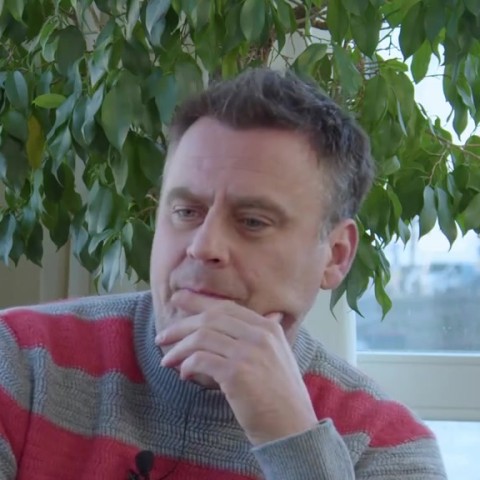 Bart WillemsCo-founder of Bottle Up
Ask Bart about this conversation
A short answer from what was said in this episode, with the exact words and the minute.
Bart Willems co-founded Bottle Up in 2019 around a simple idea: bottled water in a reusable bottle made from sugarcane instead of oil. Talking in Amsterdam, he explained why he sees sustainable water bottles for hotels as the easiest sustainability step a hotel can take, how a cancelled airport order in March 2020 put his bottles in hotel rooms, and why he calls the bottle a first step rather than the end state.
Bottle Up started with a question about the water cooler
Before Bottle Up, Willems and his co-founder worked in media for a long time. They kept brainstorming about what they could do that would make an impact, instead of selling media for the rest of their lives. His co-founder had been selling empty reusable bottles. The new idea was to sell water in a sustainable bottle, which, as Willems put it, had not been done before. Three founders started the company in 2019.
Two things pushed them. Criticism of single-use bottled water was everywhere, including Instagram posts of bottles floating in the sea or in the canals of Amsterdam. Yet the same single-use bottles had sat in the water cooler for decades with no innovation. Empty reusable bottles sold for 20 euros or more, but there was no reusable bottle of water in the cooler just for grabs. The founders asked how they could change that category from within.
They wanted to start selling in the UK, one of the biggest bottled water markets in Europe, and found a producer there. That alone took more than a year. Making a reusable bottle and filling it at scale is hard, Willems said, and the producer had to adjust its machines.
A cancelled truck in March 2020 sent the bottles to hotels
By the end of 2019 Bottle Up was ready to sell and had a big deal with Amsterdam Airport. The first truck was due to go in March 2020. COVID started that same week and the order was cancelled. The founders were left with a truckload of bottles that was financed and paid for, with a best before date. They did not want to throw them away, so they started sampling them at hotels. The hotels loved the concept, and that is how the company began working with them.
The founders did not return to media. They went full time on Bottle Up straight away because they believed it could work. Today the company sells through wholesalers who supply hotels, so Willems does not know the exact number of UK hotels, only that it runs into the hundreds. Expanding to other countries and hotel chains takes time, he said: the hotel community is close, contacts matter, and every hotel makes its own decisions. So Bottle Up joins hotel communities and goes to exhibitions where hoteliers meet.
Why he calls it the clearest sustainability statement a hotel can make
Willems argued that sustainability is usually abstract: energy use, food waste reduction. A bottle on the nightstand is concrete. The guest receives it, takes it home as a memento of the stay, and sees straight away that the hotel takes sustainability seriously.
The material does need explaining. Most PET bottles are still made from oil, and plant-based materials are not widely known. Bottle Up uses resin from sugarcane. According to Willems, sugarcane absorbs more CO2 from the air while it grows than is emitted in producing the bottle, which is why he calls it carbon neutral. Since the first hotels, he said, guests who find the bottle in their room have always been positive, and many send messages or post pictures because they love the design and want to keep reusing it.
He compared it with what hotels use now. Refillable glass bottles have to be washed and filled, which costs energy and staff time. Single-use bottles have to be collected and taken to recycling plants, which costs money and time. A guest takes the Bottle Up bottle home after checkout.
“Sustainability is most of the time very abstract, you know. It's about energy usage, about food waste reduction. But starting with bottle up is the easiest and most clear statement of reusability.”
Hotels want no hassle, so the order goes through their usual wholesaler
What held hotels back at first, Willems said, was the guest experience: they wanted to be sure the bottle was an add-on. Single-use water was cheap and caused no pain, so why change? Now he shows them how it works at another hotel, which he calls the best proof they can get. Meanwhile the audience looking for sustainable hotels keeps growing and wants to see real effort.
Hotels order through the wholesaler they already use for single-use bottled water, because they do not want hassle. They want sustainability credentials, but it must not cost too much and must be easy. The price is a little higher than single-use, he said, while the waste reduction is significant. Events see the same effect, because visitors take the bottle home and keep using it.
For 2026, Bottle Up partners with companies that make water dispensers for hotels, so guests can refill the bottle in the hallway. Willems does not expect single-use water to disappear by 2030. His mission is to make reusable the new normal and to become a serious alternative in the water cooler.
“This is not the end state, you know. The end state is truly circular at scale. But this is a first step to change habits, to make it easy for hotels to change habits.”
Questions answered in this conversation
What is the Bottle Up bottle made of?
It is made from resin of sugarcane instead of oil, which most PET bottles still use. Bart Willems says sugarcane absorbs more CO2 while it grows than is emitted in producing the bottle, which is why he calls it carbon neutral. The bottle is bio-based, not biodegradable: it comes filled with water and is meant to be refilled and reused.
How did Bottle Up start working with hotels?
By accident. Its first big deal, with Amsterdam Airport, was cancelled when COVID started in March 2020, the same week the first truck was due. With a paid-for truckload of bottles that had a best before date, the founders started sampling them at hotels. The hotels loved the concept, and Bottle Up now reaches hundreds of hotels in the UK through wholesalers.
How does a hotel switch to a reusable bottle without changing operations?
According to Bart Willems, a hotel orders Bottle Up through the same wholesaler it uses for single-use bottled water. Housekeeping puts the bio-based bottle in the room instead of a plastic one, and the guest takes it home after checkout. There is no washing and refilling as with glass bottles, and no collecting of empty single-use bottles for recycling.
Does a reusable sugarcane bottle cost a hotel more than plastic?
A little. Bart Willems says it is slightly more expensive than single-use, but it reduces waste significantly and saves the time and money of collecting single-use bottles and taking them to recycling plants. Guests also often post the bottle on social media, which he sees as a PR benefit for the hotel.
KEY TAKEAWAYS
Visible sustainability
Replacing single-use plastic with a reusable sugarcane bottle is one of the easiest and most visible sustainability wins for hotels. It sends a clear message to guests the moment they enter the room.
Guest experience upgrade
Guests don’t just drink from the bottle - they photograph it, post it, and take it home. It becomes a memorable part of the stay and strengthens brand perception.
Operational simplicity
No refill logistics, no washing glass bottles, no operational complexity. Hotels can order through existing wholesalers and instantly reduce waste without changing internal processes.
You hardly ever see a reusable bottle filled with water that looks like ours. People instantly fall in love with the bottle.
Transcript
Click a timecode to watch from that moment.
02:20What is the biggest misconceptions that hotels have about bio based bottles?
8
the Future of HospitalityWhat is the biggest misconceptions that hotels have about bio based bottles?
Bart WillemsWell, one thing is that we that that is not very well known yet, plant based materials. Mhmm. Most PET bottles are still made from oil based materials. Mhmm. So it it takes some explanation. But when we explain what it's about, the fact that it's made from the resin of sugarcane instead of oil Mhmm. Sugarcane absorbs more c o two from the air while it grows than is being emitted during production of our bottle Right. Which makes our bottle carbon neutral. This makes our bottle so much more sustainable than any other alternative. So
the Future of Hospitalitywith with this bottle, we're gonna learn more about it, the the why and the how and the what. You're targeting the hotel industry. Have you thought about events and where would be the win for events?
Bart WillemsAlso waste reduction. What we see with events is that they cope with a lot of waste after one day or several days of people having over mass mass amounts of people consuming single use products. And what we experience with events as well, just like with hotels actually, is that there are a huge waste reduction when they sell our bottles because people bring the bottle back home and keep reusing it. Right. So that's an instant
the Future of Hospitalityquick win. Okay. How do the first question that pops up, how do guests in hotels back to hotels, how do they what is their feedback on these these bottles?
Bart WillemsThe funny thing is we started with hotels in 2122, and without a doubt, people who receive this bottle in room are always positive about it. We have received so many messages or posts of people showing the bottle, that they were so happy with its gift given from this hotel, and that they really want to keep reusing the bottle, because they love the design, the whole concept. It's it's a it's a whole concept they have never seen before and that they're inspired by, because you hardly ever see a reusable bottle that's filled with water, made from sustainable materials, that looks like our bottle. So people instantly
the Future of Hospitalityfall in love with the bottle. And the subject? Take it home? I would take it home. Because if I know, knowing that it's bio based, it's not biodegradable, that's something different. Yep. Bio based and you can refill it. So I'm doing actually something good. It's I'm I'm I'm lowering my my footprint my carbon Absolutely.
Bart WillemsYeah. That's that's that's that's true. And what what we see slowly is that the demand from from hotels is really has really gained the last few years because they're all looking for a sustainable solution, but the solutions that that they have nowadays are often not really sustainable. For example, they use glass refillable glass bottles for in the room. Mhmm. But then they have to wash these bottles, fill them. It takes a lot of energy, a lot of time from staff, so it's not ideal. And with our bottle, have a quick solution,
06:24What were you doing before you started Bottle Up?
10
the Future of Hospitalityan easy solution, and people bring the bottle home after checkout. So you don't have to waste it in a hotel. Okay. That's a good win. Tell me about the the inspiration. What were you doing before you started Bottle Up? You co founded Bottle Up with your partner. Tell me about that story, please. Yeah. So we started with the three of us in 2019.
Bart WillemsAnd it came from the idea that on one hand, we saw a lot of criticism on single use bottled water. Posts on Instagram where you saw bottles floating in the sea or in the canals. Here in the canals in Amsterdam, I see them all Absolutely. Lot of criticism and people rejecting single use. And on the other hand, we still saw the same single use water bottles in the water cooler for decades. No innovation, no new packaging, no reusability. Of course empty reusable bottles for €20 plus, but not a reusable alternative within the water cooler just for grabs. So that made us think, how can we change this category from within?
Bart WillemsChange behavior from within.
the Future of HospitalitySo that's when we started thinking. Can I go back to what you were doing before you got that inspiration Of course? And then move forwards? Of course. Because that is very interesting. You were working in another completely different industry, right? Yeah. Me and my
Bart Willemsco founder were working in media for a long time, and we always had brainstorms about what could we do that would make impact Mhmm. Instead of selling media the rest of our lives. And that was we were sure that was something we didn't want to do. So that's after brainstorms, we came to the up to this idea. My cofounder had been selling empty reusable bottles, but then we had the idea, let's try to find a mix of selling water in a sustainable bottle, which hadn't been done before. And then we found a producer in The UK. We wanted to start selling in The UK because the the market is this is one of the biggest bottled water markets in Europe.
Bart WillemsSo we thought, let's start there. So
the Future of Hospitalityyou mentioned the The UK, the hotel in UK. That was your first hotel. The first hotel. I wanna hear that story. How that goes? How did that go? That's a funny story. So
Bart Willemsin 2019, we started with the concert. It took us a year to find a producer who wants to adjust all the machines because it it's very hard to a to produce a reusable bottle and fill it at scale. So it took us more than a year. And then at the end of twenty nineteen, we were ready to start selling. And then we had a big deal with Amsterdam Airport. Mhmm. And we were about to send our first truck in March 2020. So this truck was going here.
the Future of HospitalityOur first deal A truck full of bottles, I imagine. Yeah.
Bart WillemsWe were very excited, of course. Our first client, and then COVID started in the same week. This was October no. March 20 Yeah. So we the the order was cancelled. We had a a truckload of bottles, financed, paid for. So we decided what can we do with the bottles. Mhmm. They have a best before date. We don't wanna throw them away, obviously. So we started sampling them at hotels. And we saw the first reaction from these hotels. They love the concept. And that's when we started with connecting to hotels.
10:36How many hotels in The UK do you serve through right now?
22
the Future of HospitalityHow many hotels in The UK do you serve through right now? We work through wholesalers who are selling to hotels, so the exact number we don't know, but hundreds of them. Cool. Yeah. Okay. I like that. So what is the what is the plan? So you started Bottle Up in 2019. Yeah. COVID happened. Hotels were closed in the first two years off and on Yeah. Especially here in Europe. So that was a big challenge, I imagine. Absolutely. It was a big Did you close the business the media business?
Bart WillemsBecause I'm interested in that part as well. Yeah. The media business before, you mean. Yeah. Yeah. So, no. We started immediately with bottle of full Full time. Full time. Alright. Because we we had this belief that this is something that could really work. So we put all our time and effort and energy in this project. We still do, of course, but and we immediately saw attraction. Large retailers, like I just mentioned, hotels, and it's now spreading. The word is spreading. And the funny thing is when people like a product and buyers like a product, it speaks for itself and it starts rolling and and people start talking about it. And that's that's the phase where we're in now, that we're expanding to different countries, different hotel chains. How do you do that?
Bart WillemsIt's it takes a lot of time because the hotel community is quite a close community. It's all about your contacts. Mhmm. Who you know. Every different hotel makes their own decisions, so it takes time. And we are so so we're part of hotel communities.
the Future of HospitalityWe go to exhibitions where hotels meet. You try to to to to to share the message as good as you can. So what would you tell a hotelier that is watching this, listening to us, what would you tell them? Why would they get in touch with you Yeah. With Bottle Up to get more information about how this works? Well,
Bart Willemsit just a few things. It's one of the most easy ways to make a clear statement about sustainability with hardly any fraction Mhmm. In terms of pricing. Just a little bit more expensive than single use, but it reduces waste significantly. You get a product that people love, and people bring with them after checkout, as a memorable about their stay in the hotel.
the Future of HospitalitySo, it all benefits just for a small extra. What is holding hotels back? What could be what would you tell a hotel, hey, but you see more dangers or more risks, and there are no risks. How would you say that? Well, for hotels,
Bart Willemseverything is about the guest experience. Mhmm. So they really want to be sure that it's an add on, that they don't want to have any hesitation. And now that we have a proven track record, we see that it's easier for other hotels to step in, because they have seen other hotels and they heard stories from other hotels that it works. So, that's what we always show to them. We show them how it works for another hotel, and that's the best proof they can get. So, it's getting easier and easier, but definitely in the beginning, it was quite some explaining and hesitation for hotels to change to something different, what was new. Yeah. And they had this single use bottle of water, which was cheap, and there was no pain, you know, for why should they change? Mhmm. And nowadays, we see that it's different.
Bart WillemsSee that the audience that is looking for sustainable hotels Mhmm. Is growing and growing and growing, And they want to see real efforts from hotels that they really want to become sustainable. Yeah, well, this is one of the easiest way to
the Future of Hospitalityto to become more sustainable. And guests are really happy with it. I what I know is that guests even post it on their Instagrams,
Bart Willemsetcetera. Yep.
the Future of HospitalitySo it's, like you said yourself, a memorable
Bart Willemsguest experience. Yep. So that is a good thing, because that something that hotels are looking for. So that's a really good point. Absolutely. For PR reasons as well. So when you get the benefit of people posting the amenity that they were given by the hotel,
the Future of Hospitalityit all works positive. Yeah. I would be. I would be. If I would check-in a hotel and I would see this bottle on my nightstand, I would probably make a picture of it and post it indeed, because I wanna see stuff like this. Yeah. This everywhere. Yeah. So imagine I'm a hotel, and I want to start trying these bottles, make order. How does that work?
Bart WillemsThat's that's not very difficult, because we want to make it as easy as possible for hotels to order bottle up through their wholesalers, the wholesaler that they use for their single use bottled water, they can give a ring and start ordering our bottles. So we want to and we also experience that hotels don't want the hassle.
the Future of HospitalityKnow? No. But it needs to be easy. If it's not easy If it's not easy, it's not going to work. Nuisance and they don't want that. Yeah. I get that. I don't want that either. So they want to have the sustainability credentials, but it shouldn't cost too much,
Bart Willemsand it should be made very easy. Mhmm.
the Future of HospitalityThose are the the the restrictions. So there is really no change in the whole operations in the hotel. The only difference is that the one who changes, cleans the rooms, instead of a plastic bottle, they put a bio based bottle on it. And it saves a lot of work
Bart Willemsof collecting the disposed bottles, the single use bottles. Right. And collecting them and bringing to recycling plants. That's something you don't have to do anymore, which saves you a lot of money, time, and waste. Yep. Indeed.
the Future of HospitalityHours, efforts. Yep. Exactly. So it's twenty thirty. A guest asks for asks for water.
Bart WillemsWhat happens next? Single use bottled water will still be there. But our mission is make reusable the new normal. I like that. What we see is that the audience that doesn't want to buy single use water anymore is growing and growing and growing. And we are the sustainable alternative that offers something for this audience. So we are on our way to to to, yeah, be become a serious player in hospitality and retail, and be a serious alternative in the water cooler to single use. Wonderful.
the Future of HospitalityAnd I can only imagine that especially the the last generation, generation z and alpha Absolutely. They are I've I've spoke to a lot of students Yeah. 19, 20, 21 years old. People who are entering the hospitality industry industry from hotel school, and they're really, really connected and involved in their own future, in designing their own future and in in the world itself. And it also made so that is good. So I think you got that on your side. That is good. But it's also when when you were telling your story, I was like fifty years ago. We didn't even have plastic. Yeah. Yeah. Yeah. Everything was reusable. Yeah. Yeah. Yeah. Crazy. So we're going back to the old days. Yeah. And we should because we got too dependent on plastic. It's oil. It's not good for for the environment.
Bart WillemsThis is not the end state, you know. The end state is truly circular at scale. But this is a first step to change habits, to make it easy for hotels to change habits. Okay.
19:16How do you see bottle up at the end of this year?
6
the Future of HospitalityI have a last question for you for I mean, it's the the start of 2026. How do you see bottle up at the end of this year? What
Bart Willemswe see is that a lot of hotels are looking for a sustainable solution, but they often they're not sure yet what to do. Okay. There's a big win there. Yeah, there's a big win there. So, what we offer as well is we partner with companies that make water dispensers specifically for hotels, because we see the demand for water dispensers is growing, and they often see bottled up in combination with the water dispenser in the hallway. Go hand in hand. So Yeah. They give away the bottle or people buy the bottle, and then they can refill it everywhere in the hotel. So slowly, these hotels are making steps and becoming more sustainable and finding a way of refilling, reusing water in their hotels.
Bart WillemsSo and we think what we see is that it's getting more they're getting more used to these new ways of consuming, and this is going pretty fast. So we will be seeing bottle up quite more often in hotels in 2026. That's good.
the Future of HospitalityOne last thing, where can people find bottle up? You can find bottle up here, at the Prince Island. Ah, that's where we are. That's where we are. One
Bart Willemsof the most beautiful Yeah. Spots in Amsterdam. Near the canals. No plastic bottles here, by the way, today. No, this lovely place here in Amsterdam, next to the candles, a very inspiring place. Where is your website? Www.bottleup.com.
the Future of HospitalityOh, that's an easy one. Alright. Okay. Well, thank you so much for this Thank you, Ariel. For highlighting Bottle up. You got a fan and Thank you. I'm gonna keep an eye on you 2026 because I wanna see these bottles all over Amsterdam. Yeah. For the viewers, please follow our page on LinkedIn, future of hospitality. And thank you for watching, and all also follow our socials, please. Thank you, Bart. Thank you, Ariane. It was a pleasure.
Read the article about this episode →