Emotional labor in the workplace: what hotel teams need
Alon Shkuri · 19 Oct 2026 · 6 MIN READ

A guest has paid around a thousand euros for one night and expected a spectacular view. The room looks out on a wall next to the kids' pool. The person at the reception desk has to absorb that disappointment, stay friendly, use the guest's name and say the right sentences, while a mystery guest might be standing in the queue. That is emotional labor in the workplace, and in hospitality it is part of almost every shift. This article looks at where that pressure comes from, why most support arrives too late, and what hotel leaders can do about it.
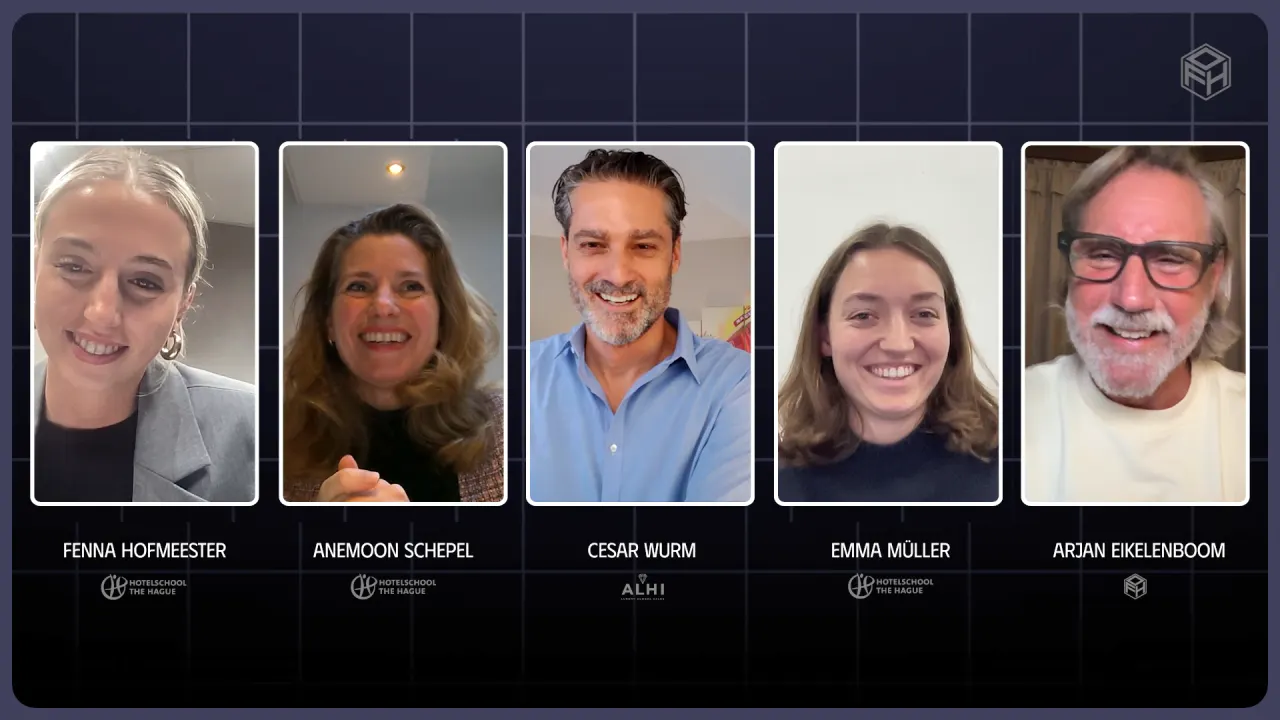
The insights come from a roundtable on wellbeing with Anemone Schepel, senior lecturer at Hotelschool The Hague, her students Emma Müller and Fena Hofmeister, and a senior executive with more than twenty years in hotel sales. Fena researches emotional labor for her thesis and worked front office in luxury hospitality in Dubai.
What emotional labor in the workplace looks like at the front desk
In Fena Hofmeister's view, the front office is where this work concentrates, because that is where guests talk to the hotel.
“You can see that front office or at least the reception is the main department and, obviously, the main part of communication for guests where most emotional labor appears.”
Fena Hofmeister, 14:34
Her day to day as a guest service executive was a stream of check-ins, check-outs and formalities, with complaints in between. Knowing how to handle guest complaints was part of every shift. Expectations rise with the price, she explains. When the lowest room category already costs a thousand euros a night, the gap between what a guest imagined and what the room offers lands on the person behind the desk.
The second factor is control. With occupancy continuously at 95 to 99 percent, there is very little chance to solve a problem with a room move. In her current role as an intern duty manager in a business hotel, the situation is different again: with an average stay of 1.3 nights there is almost no time for service recovery, so it moves toward points or an upgrade the next day.
Where the pressure in luxury hospitality comes from
Nobody on the panel argued against high standards. The question is how they are enforced. From Fena's six months in Dubai, the sources of pressure were concrete:
- Mystery guests and inspections from organisations such as Forbes and LQA, each with its own set of rules and expectations.
- Sentences that had to be said at check-in, room features that had to be mentioned, and the guest's name used many times.
- Role plays at every morning briefing, in front of the whole team and management, as an intern who had just turned 18.
- Reviews that described the employee, traced back in the system to whoever handled the check-in.
- Complaints shouted in front of everyone, at a person wearing a name tag.
She says she learned a great deal from it, and that role plays and feedback give staff the control a high standard needs. The senior executive adds a structural view: real-time reviews and dashboards are not going away, labor cost pressure drives a constant search for efficiency, and prices are not going down. Emma Müller, now interning at a management company, sees the same tension from the other side: investors often look at the numbers at the end, not at what happens in operations to produce them.
Why wellbeing support often arrives too late
Mental wellbeing has become a much bigger topic in hotels. Anemone Schepel has seen the change over the last eight to ten years. In education there is now far more attention for wellbeing, mental health, emotional intelligence and the adversity quotient, meaning how you deal with adversity. Hotel chains that partner with the school offer sports schemes and mental health interventions. A strong role for HR in hospitality makes that support more structural. Behind it sits a well known idea in the industry, she says: happy employees make happy guests.
Fena's research found a gap, though. Many initiatives start after the harm has already been done. There are few preventive efforts that help employees before they run into difficulties. That is where preventing employee burnout has to start. Her thesis therefore proposes a guide for leaders to use emotional labor as a strength rather than a weakness. Her reasoning is simple: emotional labor in the workplace cannot be removed from hospitality, so the better question is how to recognise it, prepare people for it and value it.
How hotel leaders can manage emotional labor at work
The panel offered no single program, but practical habits any hotel can adopt:
- Make onboarding preventive. A longer, more extensive onboarding period prepares staff for the emotional side of the job before the first difficult guest arrives.
- Take five minutes per person. Emma learned from one of her first general managers to check in with everyone on the team, even in the kitchen, so you notice when something is off.
- Handle review feedback inside the team. When a review names an employee, Fena checks who was involved and addresses it privately rather than openly.
- Treat every rank with the same dignity. In staff housing in Dubai, interns had their own room and bathroom while lower ranked engineers shared rooms and one bathroom per hallway, and worked six days instead of five.
- Talk openly about wellbeing. The panel warns that easy access to alcohol after shifts and at networking events can become a slippery slope.
For years, he says, he assumed what others expected of him instead of asking. Once he started sharing his story, he expected judgment and found acceptance, and people opened up to him in return. For a hotel team, that is the case for making these conversations normal rather than exceptional.
Belonging as the other side of emotional labor
The same emotional skills that make the work heavy are also what make hospitality meaningful. Emma Müller lived and worked in South Africa for years, including at a luxury boutique hotel in Cape Town. In her experience, service there is built on genuine connection and a sense of belonging, with team members showing guests their community and culture. At the Cape Town hotel, guests who wanted to understand where the team came from were taken on a private tour of the local community, and the team members were open about it.
“I would love to see more appreciation for actually the work that goes on beyond the customer experiences.”
Emma Müller, 12:30
Anemone Schepel connects this to regenerative hospitality: giving back more than you take, one step further than sustainability, which is about doing less harm. For her, that includes the staff and the wider community, not only the guest.
“I think the emphasis should not move away, of course, from the guests, but should be equally divided.”
Anemone Schepel, 52:27
Her hope is that doing good for people will, in the end, also become profitable. You can watch the full conversation for the complete discussion, or explore more voices from students and young professionals in the NextGen Hospitality series.
Frequently asked questions
What is emotional labor in the workplace?
It is the effort of managing your own feelings so the guest gets the experience they paid for: staying calm during a complaint, saying the expected sentences, smiling under pressure. In hotels, this panel sees the front office and reception as the place where it is felt most.
Why is emotional labor so intense in luxury hotels?
In the experience shared here, higher prices raise expectations, while mystery guests, audits and reviews check every interaction. At 95 to 99 percent occupancy there is little room to fix a problem with a room move, so the employee at the desk carries the disappointment.
How can hotels support staff wellbeing before problems start?
The panel points to prevention rather than repair: a longer and more thorough onboarding, managers who take five minutes to check in with every team member, feedback on reviews handled within the team, equal treatment across ranks, and open conversations about mental health and the after-work drinking culture in hospitality.
What does regenerative hospitality mean for employees?
As described in this conversation, it is about giving back more than you take, one step beyond sustainability, which aims to do less harm. For employees it means the industry looks after its people and communities as well as its guests, with attention divided more equally.