






















Building a resort on a remote island: lessons from the Seychelles
Alon Shkuri · 19 Oct 2026 · 6 MIN READ
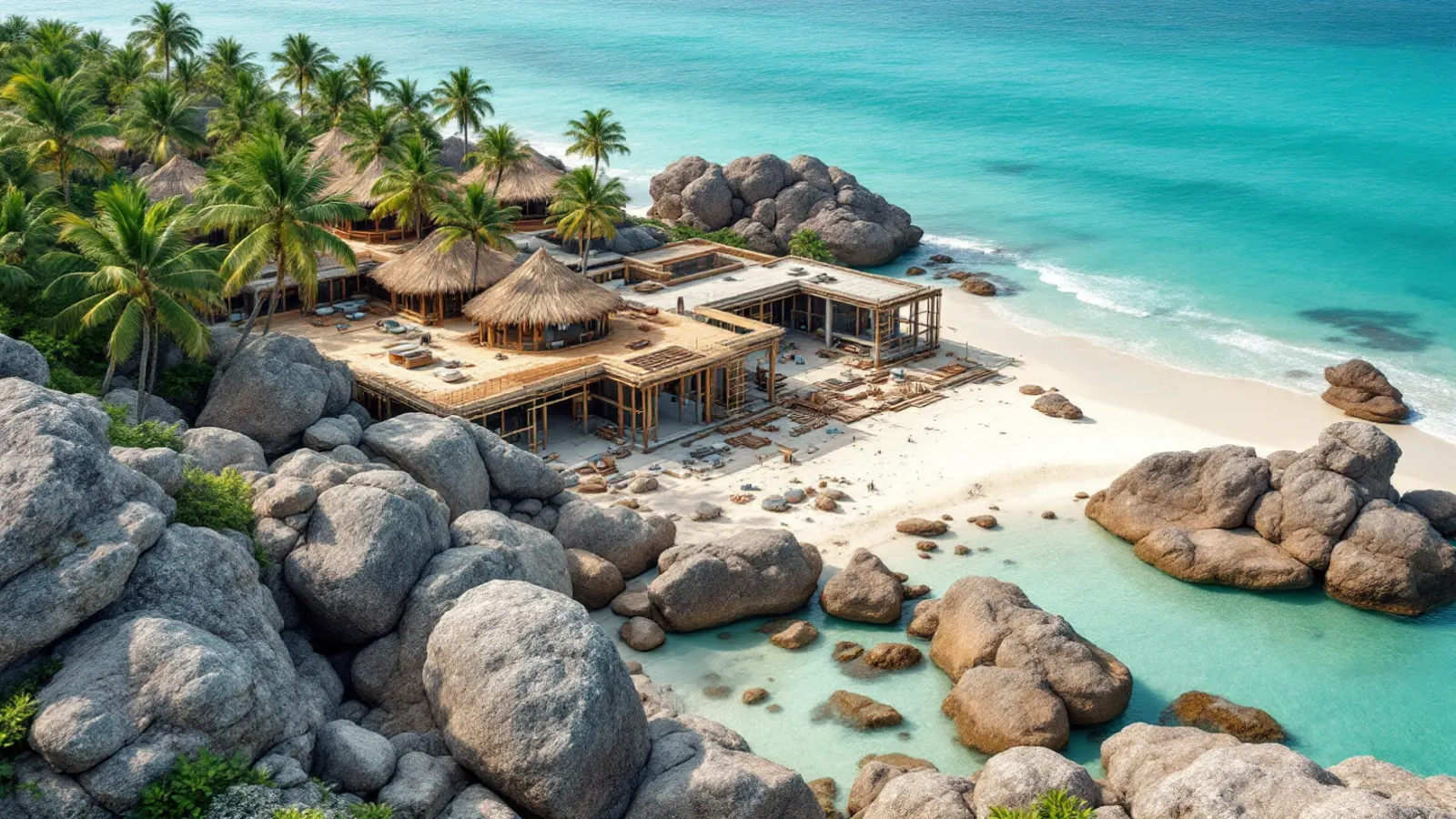
What does building a resort on a remote island involve, beyond the construction itself? The hardest parts are people and timing: hiring a full team for a place where nobody lives yet, turning strangers from dozens of countries into one crew before the first guest arrives, and designing around the natural setting that is the reason guests come at all.
Elias Pertroft has done it from day one. He arrived in the Seychelles in August 2022 as the first employee of a 5-star resort, on an island that had been a coconut plantation, with only a construction team for company. He went on to lead a team of 170, earn a Forbes five star rating and close the year with the highest guest scores across Hilton in Europe, the Middle East and Africa.
Why remoteness shapes every pre-opening decision
On a remote site, nothing can be improvised at the last minute. The resort sits on Platte Island, about 130 kilometers from the nearest island, and Pertroft calls it the most remote island he has ever worked on. Before the team moved there, he spent time on Mahe preparing. Only after that did the first group relocate, roughly two years before the recording. Opening in uncertain times brings its own lessons, as this new hotel opening during a crisis shows.
The guest product is substantial for such a small place: 50 villas from one to five bedrooms, three signature restaurants and a private plane that lands on a runway dividing the island in two, a twenty minute flight from Mahe. Guests stay five to seven nights on average. Length of stay is one of the levers behind long term hotel profitability.
How to recruit for a remote opening
A remote opening needs a far larger hiring funnel than its final headcount suggests. The numbers Pertroft shares give a sense of the scale.
“It was an amazing recruitment process. We had over 5,000 people applying down to a team that, to begin with, we were a 170. Now we're about 200.”
Elias Pertroft, 15:11
The team is about 40 percent local, with the rest drawn from more than 40 nationalities, from Myanmar and Argentina to China and Indonesia. For Pertroft, that diversity is a strength rather than a problem to manage. The hardest part, he says, can be the team cafeteria, where finding food everyone enjoys means staying open to suggestions and adjusting the menu week by week.
- Recruit early and widely: over 5,000 applicants for 170 opening roles.
- Build a local core, around 40 percent, and add international specialists.
- Plan for the team growing after opening, here to about 200.
- Treat daily life on the island, food included, as part of the employee experience.
Leading a team of many nationalities
A mixed team works best when the leader focuses on what each person loves to do. Pertroft did not come through hotel school. He left Sweden at 19 to become a dive instructor, worked his way through dive and cruise operations in Asia and the Pacific, and fell in love with hospitality while running cruises for a resort in Indonesia. He describes the general manager role as helping each person shine in their own passion.
Rather than telling guests they will have dinner at a restaurant, the resort tells them they will have dinner with a named chef who shows them how to prepare something fresh from the garden. The same applies to a barista who grew up on a coffee farm in Kenya, or the personal concierge, the resort's term for a butler, who looks after a guest for the whole stay.
“I think that the key here is really motivating the team to go above and beyond in service, in personalization, in treating the guests as the special people they are.”
Elias Pertroft, 16:58
In his view, once everyone works towards the same goals, cultural differences matter far less.
Using the quiet weeks before opening for team building
The weeks before the first guests arrive are the only time a whole team is available at once, which Pertroft calls a privilege that running resorts rarely have. His team used it for a programme built around "tribes".
Everyone first learned about each other's personalities, introvert or extrovert, then went deeper using the elements of fire, water and earth to describe different types. Staff from every department were mixed into small groups. Each group invented an imaginary people with its own anthem and personality, then competed in games. The goal was to break the ice and let people see a creative side of colleagues they would later work next to every day.
He links the later results to that closeness. On an island nobody goes home at the end of the day. People play sports in the afternoon and get to know each other far more deeply than in a nine to five setting. In his view, that is part of why the resort earned the first Forbes five star rating in the Seychelles and closed the year with the highest stay scores within a region of over 1,000 hotels and resorts.
Building a resort around nature
Building a resort in a protected setting is also a set of design choices about the environment. On Platte Island the lagoon is a sanctuary for hawksbill turtles, an endangered species, and this season alone more than 400 turtles laid eggs on the island. All villas are set back about 50 meters from the beach behind greenery and gardens, so hatchlings do not get disoriented by the resort when they head for the sea.
“We recognize the beautiful nature that we have around us and we want to leave a positive impact rather than a negative one.”
Elias Pertroft, 25:39
The practical measures he lists are concrete, and they mirror other sustainable hotel practices:
- Between 70 and 90 percent of the resort's power comes from solar, depending on the clouds.
- Much of the waste goes back into compost.
- Glass goes through a crusher so it can leave the island efficiently and be recycled by vendors.
- Island Conservation Society, an NGO, works on the island and tracks the turtles.
- Guests can walk with the resort's marine biologists and learn how to help protect the species.
Helping guests experience the destination
A remote destination only sells itself when the team helps guests experience it. Pertroft's advice to people starting in hospitality applies to opening teams too: be present, connect with everyone you meet and be suggestive. Staff know the place better than any visitor, so they should push guests to get up early for a sunrise walk around the island or a tuna fishing trip at dawn.
If you are building a resort or planning its opening, or want to hear the full story from dive instructor to general manager, watch the full conversation with Elias Pertroft. More leaders sharing how they shape guest experiences can be found in the Lead the Experience series.
Frequently asked questions
What does building a resort on a remote island involve?
In the Seychelles case it started with one person. Elias Pertroft arrived in August 2022 as the first employee, when only a construction team lived on the island. He prepared on Mahe first, then recruited from more than 5,000 applicants to an opening team of 170, and used the weeks before the first guests to bond that team.
How do you recruit staff for a remote island resort?
The Seychelles resort cast a wide net. Over 5,000 people applied, and the team that opened was 170 strong, now about 200. Around 40 percent are local and the rest come from more than 40 nationalities, from Myanmar to Argentina. Living together on the island also means the team bonds outside working hours.
Why should villas sit back from a nesting beach?
The setback protects marine life. Hawksbill turtles nest on the island in large numbers, with over 400 laying eggs this season. Keeping villas about 50 meters back, behind a band of greenery and gardens, stops the hatchlings from getting disoriented by the resort when they leave the nest and head for the sea.
How can a luxury resort reduce its footprint on a remote island?
Pertroft describes a resort that is 70 to 90 percent solar powered depending on cloud cover. Much of the waste goes into compost, glass is crushed so it can leave the island efficiently and be recycled by vendors, and an on-site NGO tracks the turtles while guests can join marine biologists to learn about local species.
