


















Hotel concierge service: how to make every guest feel special
Alon Shkuri · 19 Oct 2026 · 6 MIN READ
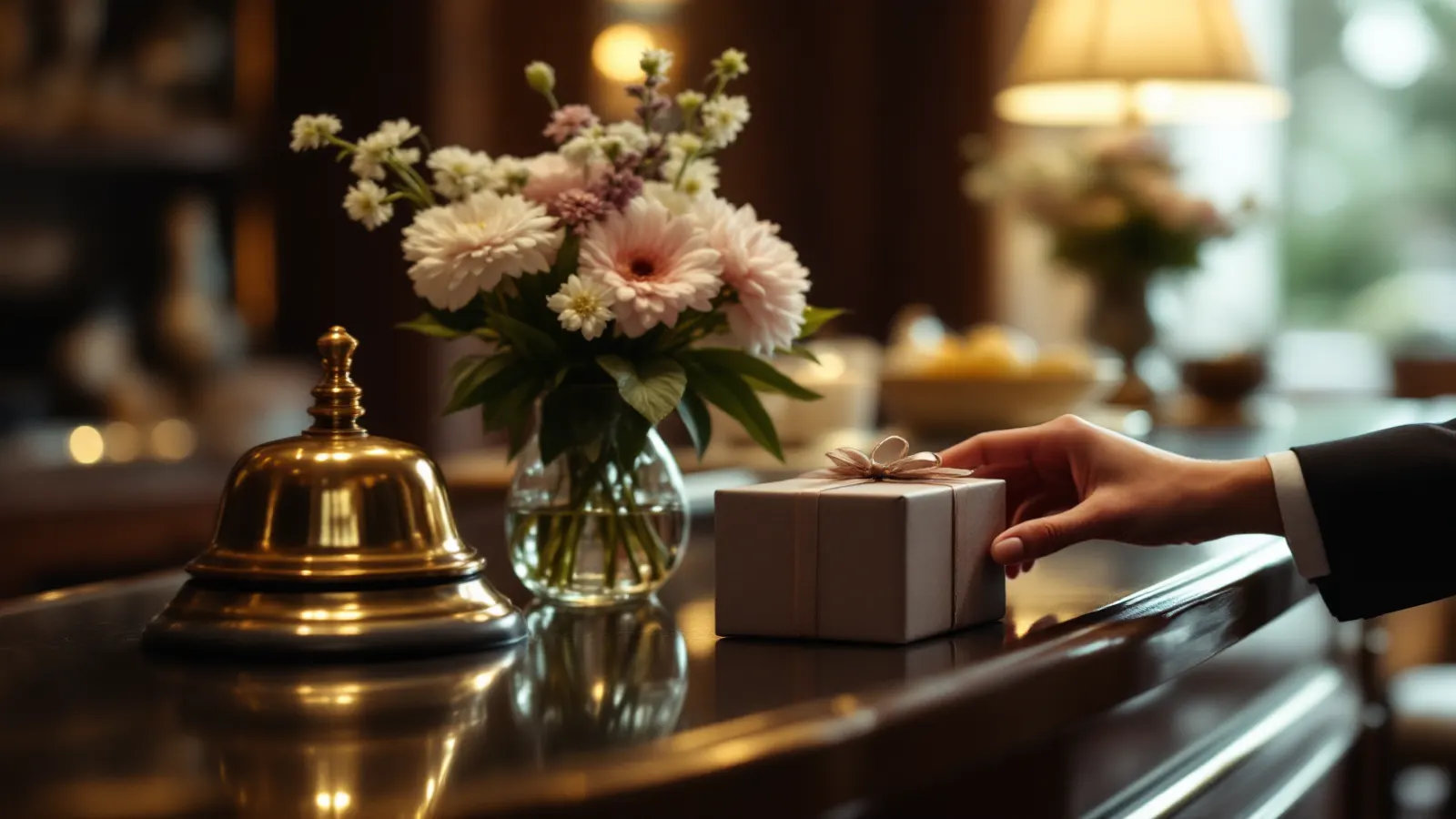
Guests can book a table, a show or a transfer on their phone in seconds, so what is a hotel concierge service still for? According to someone who spent years behind the desk, the answer has less to do with information and more to do with connection: reading a guest, solving the request behind the request, and making a person feel special.
Sarah Dandashy began as a professional concierge in luxury hotels in 2005 and in 2012 started Ask a Concierge, a brand she built while still working at a hotel. Today she is a luxury hospitality media personality, best-selling author and podcast host, and she says the blend of performing and concierge knowledge is still what she does on a regular basis. Her lessons apply to any hotel that wants its guest-facing team to be remembered for the right reasons.
What a hotel concierge service is really for
In Sarah's view, everything in hospitality comes back to the human element. She traces that belief to her childhood. Half Lebanese, born in the United States and living in Saudi Arabia until she was six, she grew up travelling to see family spread across Europe, the Middle East and the United States. In a multicultural household where she never learned Arabic, she was often in rooms where she did not share a language with the people around her.
“How can we connect? If we're not speaking the same language, how can we connect?”
Sarah Dandashy, 11:28
That question is a useful brief for a hotel concierge service. Guests arrive from every background, with needs they do not always put into words. Reading those needs well is how hotels improve guest satisfaction. Sarah says hospitality made sense to her precisely because it is a natural place to connect with people from all different backgrounds.
Read the guest before they finish the question
As the child who did not always follow the conversation, Sarah learned to pick up on body language and to fit in, or even chime in, without knowing every word. She sees that skill as central to service, because small gestures and nonverbal cues often say more than the request itself. For a concierge team, her experience points to a few habits:
- Watch body language for what the guest does not say out loud.
- When there is no shared language, look for another way to connect.
- Treat a guest who is different as someone interesting, not as a problem.
- Remember that small gestures are the core of hospitality.
Turn a fully booked request into a memorable yes
The real test of a concierge is the request that cannot be met as asked. Sarah's favourite story from her years at the desk shows how to handle it. A couple staying at her hotel wanted to visit the Magic Castle, a members-only venue in Los Angeles where you need an invitation just to get access. Hotels can learn a lot from that private members club approach. It was last minute, on a holiday weekend as she remembers it, and it was full. She could arrange access, but she could not make space become available.
So she offered an alternative: bring the Magic Castle to them. She proposed a private magic show in the couple's suite, interviewed magicians over the course of a week, sent the guests their options and let them choose. When the chosen magician wanted to bring a rabbit and a dove, she checked with the general manager whether a pet friendly hotel could make room for them too. He said yes. Afterwards, the guests told her she had turned a challenging situation into something unexpected and memorable.
The steps behind that save work for any hotel concierge service:
- Be honest about what is not possible, then move straight to what is.
- Rebuild the experience the guest was after in a new form.
- Give the guest real options and let them choose.
- Clear the practical details with the general manager before they become a problem.
Unusual requests and knowing where the line is
Not every request deserves a creative yes. Sarah remembers guests visiting from another country who bought a dog during their stay, which meant arranging shots, training and a way to take the new pet home. Another guest wanted to come with a pet snake, and there the answer was simply no.
A strong concierge does both: goes a long way for a request that makes the stay better, and says no clearly when a request does not fit the hotel. Sarah also has a view on difficult guests. From her years at the desk, she noticed that the guests who kept complaining rarely had things go smoothly. Knowing how to handle guest complaints helps the team keep those moments calm. Her advice is not to fester when something goes wrong but to stay positive, because in her experience that is when luckier things happen.
Stay responsive without losing presence
A concierge desk trains a particular muscle. Sarah calls it multitasking, and describes the daily rhythm like this:
“When I was at a concierge desk, I'm just used to people coming up to me in person, phone calls coming in, responding in emails.”
Sarah Dandashy, 29:55
Years later, the habit is still with her. For work matters she believes in responding immediately, because she does not want to be the reason something breaks down or loses traction. She is equally honest about the cost: being pulled in so many directions makes being present very challenging at times.
For a concierge team, the balance is speed on the request and full attention on the person in front of you. Sarah also recommends a habit for the people doing this work: regular check-ins with yourself. She keeps reminders in her phone to review every quarter what is working, what is not and what needs to change, just as businesses review their own quarters.
Why simple gestures make guests feel special
When Sarah prepared her TEDx talk, the topic she and her coach landed on was the secret to making someone feel special. At first she found it too simple. Then she changed her mind:
“Sometimes people just need the simple reminders, and it is just about the simple things. And that's also the core of the message.”
Sarah Dandashy, 16:33
That is a fitting summary of what guests remember from a stay. It also rests on a team mindset. Sarah calls hospitality a we industry rather than an I industry, and she sees extending a hand to each other as the root of hospitality. You can watch the full conversation or find more candid stories in the Unscripted Hospitality series.
Frequently asked questions
What is a hotel concierge service?
A hotel concierge service is the team or desk that helps guests with what they need beyond the room: reservations, plans, advice and special requests. In the view of former luxury hotel concierge Sarah Dandashy, its real purpose is human connection. A good concierge reads the guest, understands the request behind the request and makes the person feel special through simple, thoughtful gestures.
How can a concierge make guests feel special?
Start with the simple things. Sarah Dandashy built her TEDx talk on the secret to making someone feel special and concluded that it comes down to simple reminders and small gestures. Pay attention to body language and other nonverbal cues, give the guest your full attention, and look for the small personal touch that shows they were noticed and not just processed.
What should a concierge do when a guest request is impossible?
Be honest about what cannot be done, then rebuild the experience in another form. When a couple could not get into the fully booked Magic Castle in Los Angeles, Sarah Dandashy arranged a private magic show in their suite instead. She researched magicians, let the guests choose and cleared the details with the general manager. The guests remembered it as unexpected and memorable.
Should a concierge say yes to every request?
No. Sarah Dandashy went to great lengths for requests that made a stay better, such as helping visiting guests arrange shots, training and travel for a dog they bought during their trip. When a guest wanted to bring a pet snake to the hotel, the answer was a clear no. A strong concierge knows which requests fit the hotel and which do not.