






















Hotel guest app: where upselling during the stay begins
Alon Shkuri · 20 Oct 2026 · 6 MIN READ
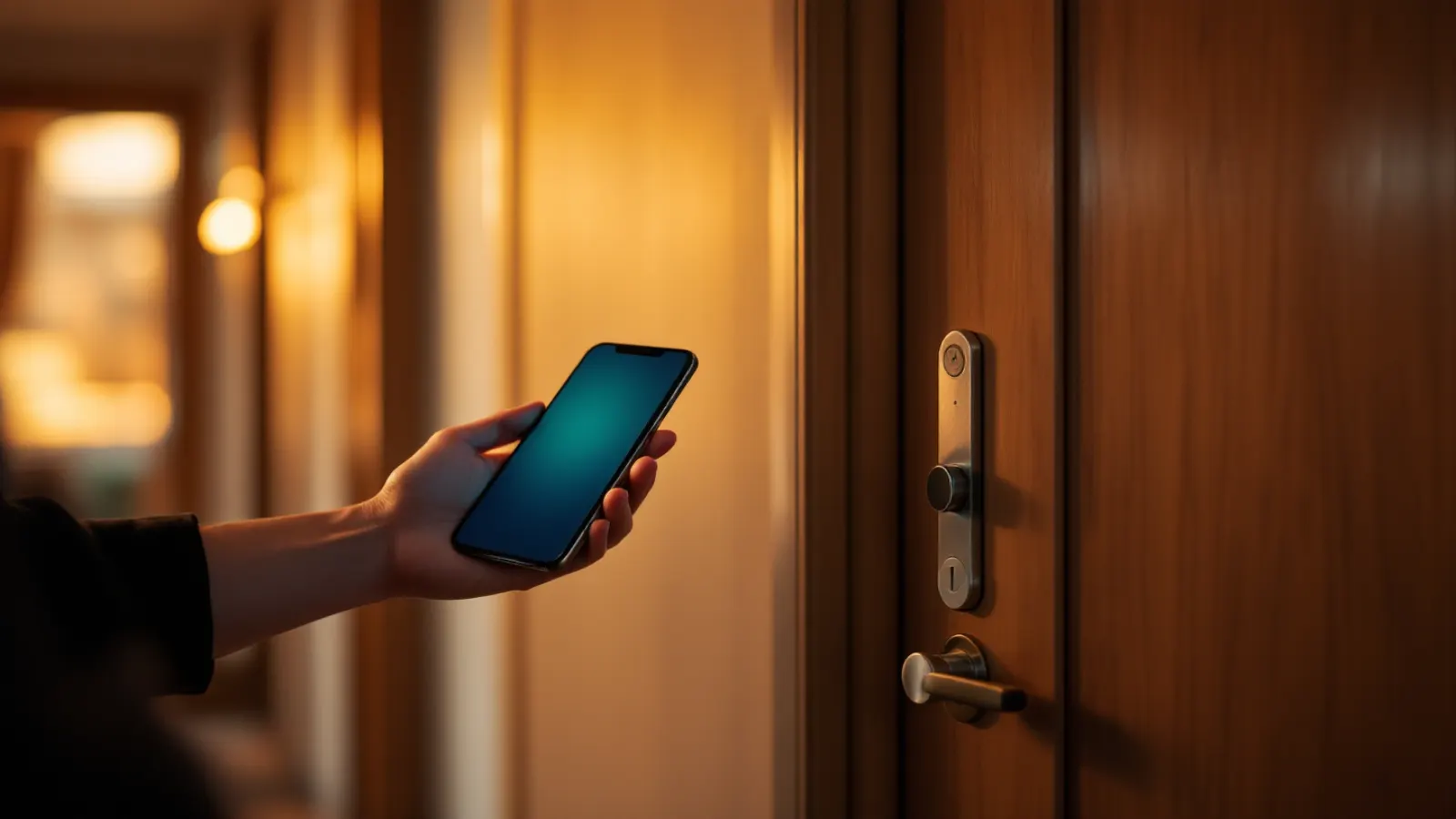
Most hotels stop selling the moment a guest picks up the key. The pre-arrival emails offer breakfast or bikes, and then the conversation goes quiet for the rest of the stay. A hotel guest app changes that, because it keeps a direct line open to guests while they are actually on the property and in the mood to spend.
David Claessen has spent eight years building native apps, the last four of them for campsites, holiday parks, hotels and B&Bs. His company now works for a little over 600 of them in the Netherlands and across Europe. In his experience, the biggest commercial opportunity sits in a window many hotels leave empty: the days between check-in and check-out.
Why upselling usually stops at check-in
The usual setup works like this, in Claessen's description. A guest finds the hotel on Google, books on the website, and the reservation lands in the property management system (PMS). Before arrival, the PMS can send emails asking whether the guest wants extra towels, bikes, a breakfast package or a picnic basket. That is the pre-stay upsell.
Then the guest arrives, and the PMS loses them. An app connected to the PMS fills that gap: the guest can add products during the stay and either charge them to the room or pay directly on their phone.
“Tijdens het verblijf is het PMS ze helemaal kwijt en dan komen wij, omdat wij dus een web app of een app maken gekoppeld aan het PMS, kunnen ze tijdens het verblijf producten bij boeken.”
David Claessen, 13:13
(Translated: “During the stay the PMS loses them completely, and that is where we come in: because we build a web app or an app linked to the PMS, they can book products during the stay.”)
The lesson for any hotel: pre-arrival offers are planned weeks ahead, while in-stay offers depend on the moment, such as the weather or the time of day.
Push messages versus email during the stay
Claessen starts with a simple question: do you read your email on holiday? A push message arrives on the phone the guest already carries, which is why he sees reach as the real strength of an app.
For longer stays, such as a week or two on a holiday park or campsite, his team builds a native app. When reception closes early, an activity is cancelled or a storm is coming, staff can reach every guest at once.
“Daarom is een native app heel waardevol, want met 1 druk op de knop stuur je een pushbericht en bereik je al je gasten op het park.”
David Claessen, 4:20
(Translated: “That is why a native app is so valuable: with one press of a button you send a push message and reach all your guests on the park.”)
Hotels are different. In his experience, guests staying fewer than three nights are not always willing to download an app. For them, a web app behind a QR code does the same job without the download, showing a pop-up notification instead of a true push message.
What a hotel guest app should contain
The principle Claessen repeats is to keep it simple and relevant: everything a guest wants to do before and during the stay sits in one place. For a hotel, that typically means:
- A personal welcome linked to the PMS, showing the booking, arrival details and what has already been paid
- Mobile key, connected to the lock supplier, so the guest opens the door with the phone
- Upsell items such as breakfast, extra towels, room service and the minibar
- A Go Green option to skip room cleaning
- Practical information on parking, arrival times and the wifi code
- Local tips, including an AI travel tool that finds restaurants and activities nearby, much like a digital city guide
- Rentals and bookings such as bikes, boats, canoes, e-choppers or the sauna
Asked which features add the most value, Claessen is clear: the connection with the reservation system and the mobile key. Digital magazines, a holiday postcard or a small game are experience tools in his words: pleasant, but the PMS link and the key give guests a reason to open the app.
“Alles zit achter 1 QR code, scan hem en je hebt hem en alles wat je wil doen zit erin.”
David Claessen, 8:12
(Translated: “Everything sits behind one QR code: scan it and you have it, and everything you want to do is in there.”)
Timing in-stay offers to the moment
Once the channel exists, the offer can follow the day. Claessen gives the example of a message saying that Friday will bring beautiful weather, with the question whether the guest would like to rent bikes.
One hotel he visited sends a push notification every Friday evening for a late night snack, with pizza that guests order straight from the app. A small nudge, timed to a moment when guests are hungry and unlikely to go out again.
A few practical rules follow from his examples:
- Tie each offer to something that is happening: the weather, the weekend, the evening
- Let guests book and pay in the same place, on the room bill or by phone
- Use the statistics from the BI tool behind the app to see which offers are read and used most
Answering the objection about personal contact
The most common pushback, in Claessen's experience, comes from very small boutique hotels that want to protect personal contact with their guests. His answer is that a hotel guest app takes over the practical questions, so the receptionist can become more of a host or hostess.
He lists what a hotel gains: fewer printed materials, which is better for the environment, less busy work, fewer repeated questions and less pressure on reception. Reception then has more time for front desk upselling face to face. He still meets hotels with a printed information folder in three languages, an old-fashioned reading table and an A4 sheet of house rules, while reception answers the same questions again and again.
When pitching to a hotel, Claessen shows a custom demo in its own branding, so the team can picture how it would look for their guests.
Where in-stay technology is heading
Claessen expects hospitality to keep revolving around convenience and experience, and points to self check-in, where guests complete the passport scan at home with one tap instead of queuing at the desk. The receptionist does not disappear in his view, but the job moves towards host, hostess or experience manager.
He also sees WhatsApp tools coming up as a quick way to ask a question inside the app, and expects hospitality IT suppliers to consolidate into one tool for both guest and hotelier. For hotels weighing a hotel guest app, his argument is simple: the value lies in reaching guests during the stay, when other channels have gone quiet.
You can watch the full conversation (in Dutch) for more of his examples from campsites, holiday parks and hotels.
Frequently asked questions
What is a hotel guest app?
In David Claessen's description, it is one digital place where guests find everything for their stay: the booking, mobile key, upsell offers, room service, practical information and local tips. Hotels with short stays often use a web app behind a QR code, holiday parks a native app with push messages.
Do hotel guests need to download an app?
Not necessarily. Claessen finds that guests staying fewer than three nights are not always willing to download one, so for hotels his team builds a web app behind a QR code. It offers the same services, but true push messages require a native app.
How does an app increase revenue during the stay?
The PMS handles upsells before arrival but loses contact once the guest is on site. An app linked to the PMS lets guests book extras during the stay and charge them to the room or pay by phone. Timely messages, such as bike rental on a sunny Friday or a late night pizza offer, prompt those bookings.
Does a guest app replace the reception team?
Not in Claessen's view. The app handles practical questions about parking, wifi and arrival, which lowers the pressure on reception. Personal contact should be protected, he says, and the role shifts from receptionist towards host or hostess, with more attention for the guest experience itself.
