




















Employee loyalty in hotels: why it has to work both ways
Alon Shkuri · 20 Oct 2026 · 6 MIN READ
Most hotels want employee loyalty. They want people who stay for years, know the regulars by name and look after guests as if the hotel were their own. Yet many hospitality workers learned the opposite lesson: when COVID or another crisis hit, hotels let staff go, and then expected loyalty once business returned. So where does lasting employee loyalty come from, and what does it take for a hotel to earn it?
Manish Gupta, CFO and acting CEO of Aureum Palace Hotels, has a clear answer, and it is not the one you might expect from a finance director. After about fifteen years in hospitality, spent at two hotel companies that own and operate their own properties, he believes the numbers follow the people, not the other way around.
Why employee loyalty has to work both ways
In Gupta's view, loyalty runs in two directions. Hotels expect employees to stay and to do their best for guests. The second direction, from the company to its people, is the one that often goes missing. And a company is not a person: it is made up of managers and supervisors, so they are the ones who have to show that loyalty in daily work. Even a cluster manager overseeing several hotels carries that responsibility.
“But the second part of the loyalty flows from the company towards the people.”
Manish Gupta, 6:43
He sees two layers that have to line up:
- Company policy: what the organisation commits to on pay, benefits and job security, in good years and bad ones.
- Personal leadership: the relationship that managers, the CEO and other leaders keep with each person on the team.
In his experience, both have to point the same way.
What a crisis reveals about a hotel's commitment
The real test comes when revenue disappears. Gupta works in Myanmar, where hotels went through COVID, a political coup, a currency depreciation and a civil war, one after another. For long stretches there was little or no income, yet the hotels kept running because guests still arrived. The company, with about 1,000 employees, had to decide what to do with its people.
Roughly 20 to 25 percent of staff had worked there for more than ten years, and about another quarter for more than five. Those were the people who had helped the group grow from one or two hotels to around ten. The chairman and the board chose not to terminate anyone. Instead, the company took a different route:
- Salaries were cut in proportion, rather than cutting jobs.
- The company worked out what a family needs to survive each month, somewhere between 50 and 100 dollars, and paid at least that during closures, even without revenue.
- Staff were free to take daily wage work or jobs in other industries while staying part of the company, which remained their safety net.
- When the crisis eased, the company called people back. Some returned, others had found new opportunities.
The principle behind it, as Gupta puts it, is that everybody should suffer a little rather than some people suffering completely. But the message to staff was clear: whatever happens, the company is not going to let them go.
“Of course, every hotel has to earn money to satisfy the investors, satisfy the operating needs, capital appreciation needs, renovation needs, but it does not mean that we have to cut corners on the staff.”
Manish Gupta, 2:56
Keep performance reviews away from job security
Many companies now cite performance as the reason for layoffs. Gupta's company deliberately does not. It holds a performance evaluation every year, but the appraisal is a tool for development. It does not decide who stays, and it does not even set salary increases, which follow a separate, fixed policy.
“We have a performance evaluation every year, but that is for improvement purposes, not for laying off, not for salary increment, nothing.”
Manish Gupta, 9:29
Separating the two keeps the review about getting better, which is the only purpose Gupta gives it.
Small benefits that build employee loyalty
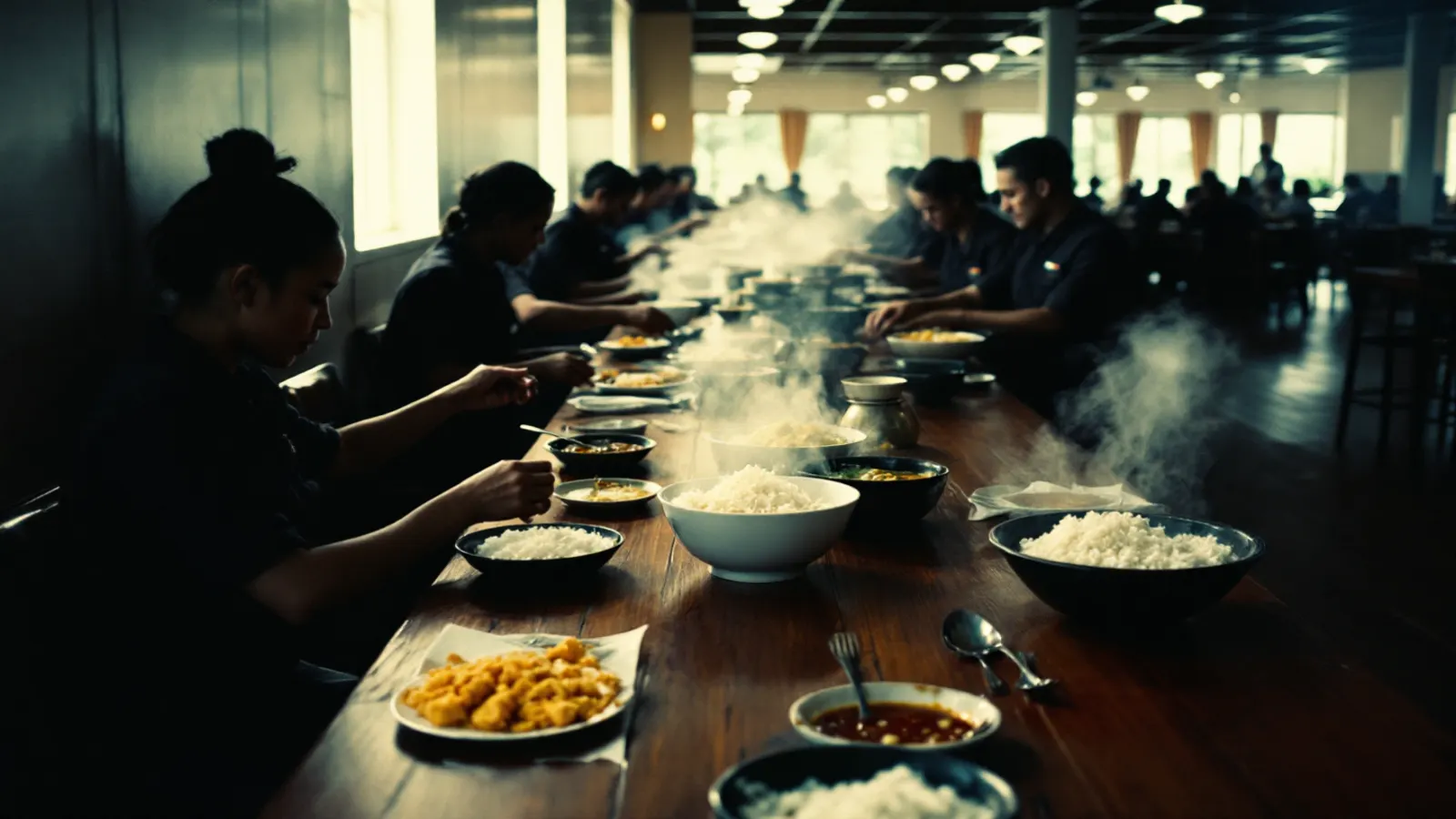
Loyalty is not only built in a crisis. Gupta formed much of his view at the luxury hotel group where he started in hospitality, a company that called its workforce a family and, in his experience, meant it. He still uses its staff canteen as an example: in his words, it was better than a two or three star restaurant. Meals, leave and free hotel stays for directors and above all added up. As a director, he once spent seven days in Hong Kong in the group's hotels without paying for a room.
His conclusion is that these little things create a lot of loyalty among staff. Seven years after leaving, he is still in touch with former colleagues he calls brothers and sisters. The biggest lesson he took from that time is to take care of people as if they were members of your own family.
The return: staff who stay, guests who come back
A CFO is expected to see staff as a cost line. Gupta sees the return. That return matters to owners as much as how brokers value a hotel. Several people on his team have turned down offers elsewhere with raises of 20, 50 or even 70 percent, because they want to stay with their colleagues and in the working environment they have. After five or ten years together, colleagues become friends, and some have married each other.
He links that loyalty directly to the guest. In his view, guest satisfaction does not come from fluffy mattresses but from clean rooms prepared by people, with the small, thoughtful touch of someone who cares. Technology keeps improving and hardware can always be copied by a competitor, but the talent a hotel develops, from housekeeping to a strong front office team, is, in his words, unmatchable. His boutique properties, with 50 to 100 rooms, see a repeat guest ratio of about 30 to 40 percent, with some guests returning several times a year.
Protecting employee loyalty when budgets are tight
Gupta's rule for cost management is that savings should not hurt the customer, and they should not come from cutting corners on staff. When electricity costs rose to 30 to 40 percent of revenue, his team went after waste instead: lights left on in daytime, water heaters running all day when nobody showers after 9 a.m.
Technology follows the same logic. He would invest in automation not to reduce headcount, which he does not believe in, but to free people from manual work so they can personalise service. For younger staff, he argues, speed matters too: a leave form or travel claim that takes three days to approve frustrates people, so internal processes need to be as quick as the guest facing ones.
For the whole story, including how a finance director learned to talk to guests at breakfast, watch the full conversation.
Frequently asked questions
How do you build employee loyalty in a hotel?
According to Gupta, it starts with loyalty from the employer. That means company policies that protect people in bad years, managers who keep a personal relationship with each team member, and small benefits such as good staff meals, leave and hotel stays. Over time, people who feel protected tend to stay, even when they are offered more money elsewhere.
What are alternatives to layoffs during a hotel crisis?
In Gupta's company, salaries were reduced in proportion instead of cutting jobs, and every employee received at least the basic amount a family needs to survive. Staff could take temporary work elsewhere while remaining part of the company, and were called back once the hotels recovered. The idea is that everyone carries a small share of the pain.
Should performance reviews be linked to pay or layoffs?
Not in his company. It holds a performance evaluation every year, but uses it only to help people improve. The review is not a reason for layoffs and does not decide salary increases, which follow a separate policy. Good work is still rewarded, just not through the appraisal itself.
Does staff loyalty affect the guest experience?
In Gupta's experience it does. Guest satisfaction comes from people, such as the room attendant who prepares a room with care, more than from mattresses or technology. Hardware can be copied by any competitor, while a loyal, well trained team cannot, which is why he treats caring for staff as part of caring for guests.
