






















Hotel automation: back of house yes, front desk with care
Alon Shkuri · 20 Oct 2026 · 6 MIN READ
Hotel automation is no longer a question of whether, but of where. Qualified staff are hard to find, systems keep multiplying, and every supplier promises that a machine can take over one more task. Yet guests still choose a hotel for its people. The real decision for an owner or general manager is which jobs to hand to software and robots, and which ones to protect because they are the reason guests pay the rate.
Three general managers gave a clear answer during a roundtable on independent hotels and chains: put the machines where guests do not see them, and keep people where guests feel them. Klaus Spiekermann has worked for large multi-unit organisations as well as family-owned hotels. Frank Prasmo is in charge of seven hotels in a privately owned group of 16 and works on the island of Usedom. Panagiotis Kalogeridis leads an independent beach resort. You can watch the full conversation in the Lead the Experience series.
Where hotel automation pays off first
The general point from the panel is simple: the back of the house absorbs technology far better than the front. Many people think artificial intelligence always belongs at the front of the house, he said, while in his experience it helps most behind the scenes. His own list shows how broad that can be:
- Revenue and pricing: his team still produces its regular forecast, but runs a shadow forecast with AI next to it.
- Staff planning: a planning system helps predict labour costs and overtime more accurately.
- Kitchen: he is building an automatic kitchen system that lets him run a shift with four chefs instead of eight.
- Engineering: a big area for AI, in his view.
- Marketing and positioning: where he sees the most potential for AI systems.
The reason behind the kitchen project matters for any operator. In Germany, he said, qualified chefs are hard to find, and so is staff willing to work weekends. Here, hotel automation is a response to a labour market that no longer fills every shift.
Robots in the hotel: useful, but out of sight
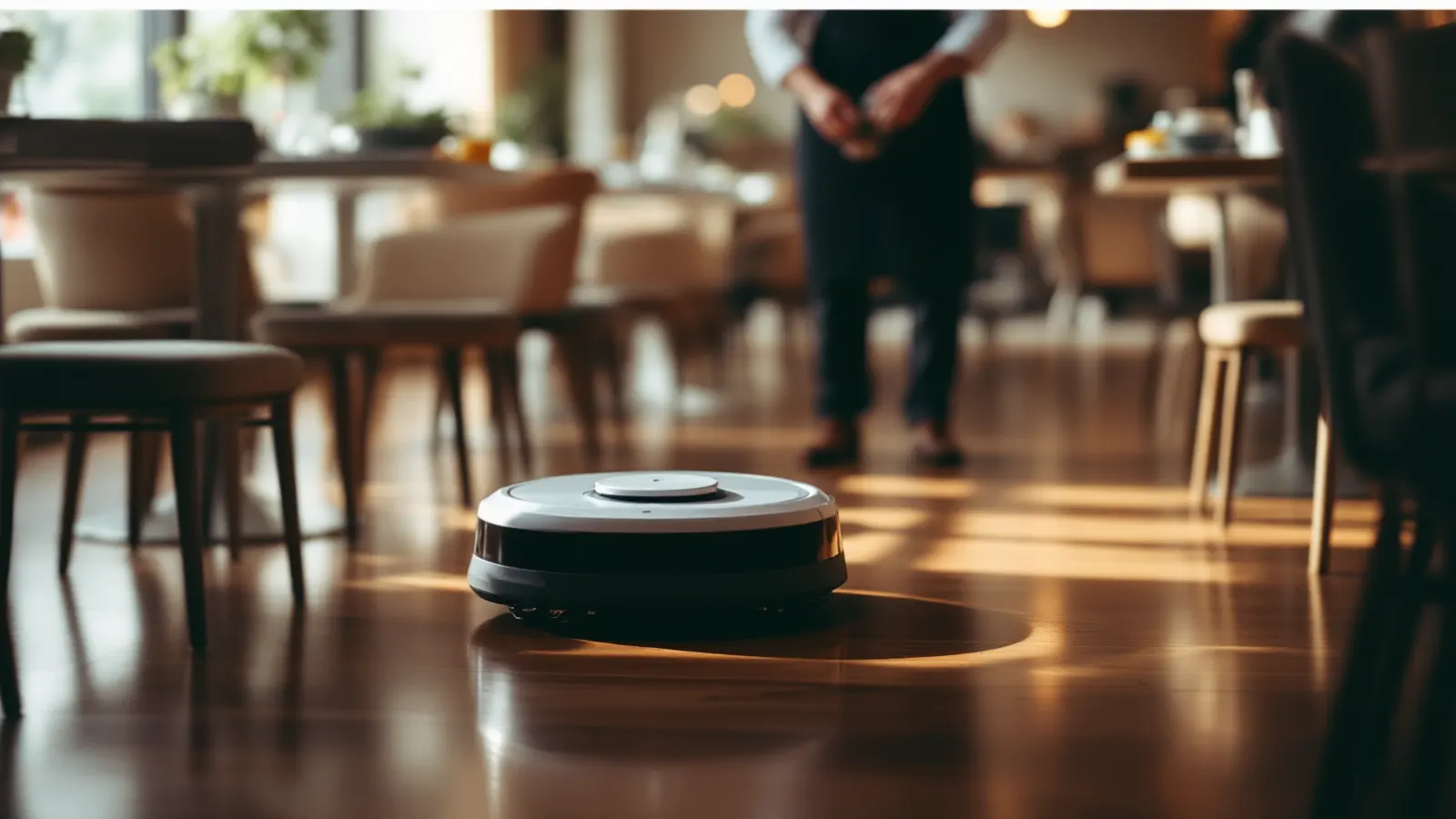
Frank Prasmo uses cleaning robots for floors and restaurants. One machine cost him 16,000 euros, and he expects it to save the work of two staff members over the long run. His robots roll into the coffee shop once breakfast is closed and clean outside public hours. During operating hours, he called it a big no go. He also pointed to a practical risk: when a cleaning robot breaks down, you fall back on the old way of working, so the manual process has to stay in place.
Klaus Spiekermann recalled cleaning robots at a Paris airport that turned out to be a moving bin with a little face. His conclusion:
“The face to face is still something that in hospitality cannot be replaced by a cleaning robot.”
Klaus Spiekermann, 19:53
Why the front desk still needs people
The second lesson is about what guests come back for. Frank Prasmo has front desk staff who have worked in his hotel for twenty or thirty years, and returning guests ask for them by name. Panagiotis Kalogeridis sees the same at his resort: guests who come every year want to see the same familiar faces, not a robot of the kind shown at trade fairs. If that person delivers fast and stays close, he said, they return.
On a business trip, Klaus Spiekermann cares little about the reception and wants to be in and out quickly. On a family trip with children and a dog, the situation is different. Then he wants a recommendation from a human being, and for that he is willing to pay 300 to 500 euros a night.
Hotel automation only works across the whole guest journey
A common mistake, according to Klaus Spiekermann, is to automate one touchpoint and call it a strategy. Many hotels invest in AI for reservations and the front of house, he said, and that alone does not make sense. A chatbot for frequently asked questions is nice, but the experience has to connect from booking to arrival.
“Then you arrive at the hotel, and the team, beyond the reception has no clue what you actually want, has no idea where you're coming from, and this is then where AI breaks down.”
Klaus Spiekermann, 8:34
He calls this the three sixty degree journey. Panagiotis Kalogeridis gave an example of what a connected setup can look like at an independent hotel. His resort worked with a company that built a guest app. After check-in, guests find all hotel information there, can check in faster or even before arrival, book restaurants, get tips about the area, buy tickets and chat directly with maintenance, housekeeping or reception. The resort now does the same through the smart TV. Independents often add such tools during renovations, he noted, while the old school way of working keeps running alongside.
The hidden cost: staff overload and training
More hotel automation does not automatically mean less work for the team. Frank Prasmo counts seven different systems at his front office alone, and he sees staff overloaded with information about how to handle all of them.
“The weakest part we all face, doesn't matter if you were branded hotel or independent hotel, is our staff.”
Frank Prasmo, 13:32
Klaus Spiekermann answered the question of what owners and managers need most in three words: training, training, training. Many people claim they already use AI because they have opened a chat tool, and in his view they have not really started. Even inside a global brand, he said, he needs outside specialists to get his hotel ready.
Panagiotis Kalogeridis sees the upside. AI helps his team move faster in development, budgeting and marketing, which frees time. That time, he said, should go to training the people you work with and to being out on the floor to see where the operation can improve. That is the idea behind artificial intelligence in hotels that puts people first.
How to decide what to automate
Where exactly to draw the line is hard to say, Frank Prasmo admitted. It depends on your guests. On Usedom, many guests are older people and families, and it took his hotels a long time to establish QR codes. Now spa reservations by QR code work well. Restaurants face the same choice with a QR code menu that adds service. He sees adoption as a learning process for society, not just a technical choice. And some tasks resist automation altogether: he tried to build a brewing schedule for his brewery with AI and called it mission impossible. From the panel's experience, a few questions help any hotel decide:
- Does the guest see or feel this task? If yes, keep a person involved.
- Is there a real shortage of staff for this job, such as chefs or weekend shifts?
- Can the machine work outside public hours?
- Is there a manual fallback if the system breaks down?
- Are your guests ready for it, and will your team be trained to run it?
Frequently asked questions
What is hotel automation best used for?
In the experience of the general managers in this roundtable, it works best behind the scenes: revenue forecasts, staff planning, kitchen production, engineering and floor cleaning outside public hours. These are tasks where a shortage of qualified staff hurts most. Marketing and positioning also have a lot of potential.
Will robots replace hotel staff?
Not in the view of these hoteliers. A cleaning robot can take over floor work and save on labour in the long run, but guests come back for the people who know them. Robots support the team outside public hours; they do not replace the welcome.
Should hotels automate the front desk?
Only with care. Pre-arrival check-in through an app or spa bookings by QR code can save time, but many guests expect a familiar face and a personal recommendation at the desk. Technology should also inform the team behind reception, or the experience breaks down on arrival.
How can an independent hotel start with AI?
Start with one back-of-house process, such as an AI forecast next to your normal revenue forecast, and compare the results. Bring in outside support if you lack the knowledge, add guest-facing tools during renovations, and invest in training so your team is not overloaded.