





















QR code menu: how to add service instead of replacing it
Alon Shkuri · 20 Oct 2026 · 6 MIN READ
A QR code menu has a mixed reputation in hospitality. Many guests remember the pandemic version: scan a code, pay for every drink separately and hardly see a person all evening. Owners worry that a QR code menu makes a venue feel cold, and staff worry about their tips. Yet the same tool, set up with the team instead of around it, can give people more time for guests on exactly the days they are most stretched.
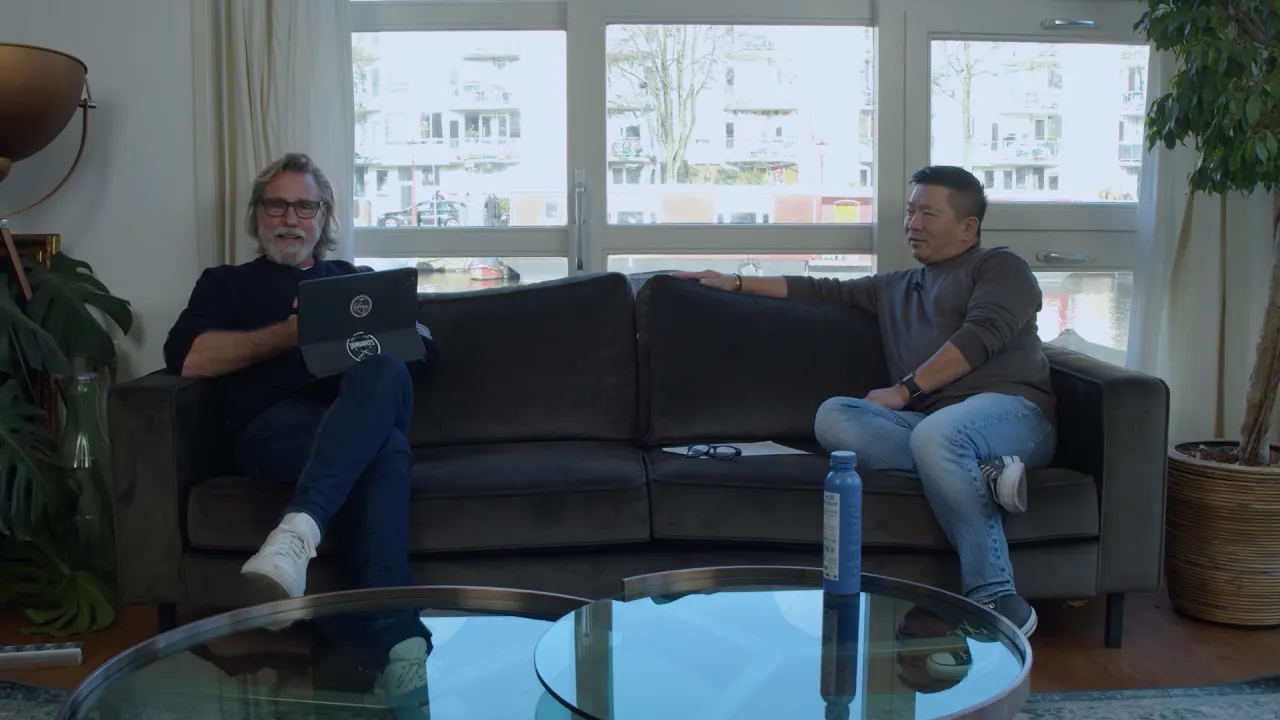
Maurits Franken, co-founder of the Dutch ordering platform Orderli, has been building QR ordering for a little over five years, for pubs, terraces, beach clubs and hotels. He worked in hospitality himself. In his experience, the real question is whether the system supports the people who serve, or quietly tries to replace them.
Why a QR code menu fails without staff buy-in
The first lesson is about the team, not the guest. Franken is blunt about it: if staff do not like a QR system, it will not work, because they will simply tell guests not to use it. Every rollout therefore starts with the people on the floor, who need to see the tool as help rather than as a threat to their role.
“We really have to work with the staff where the staff sees us as an addition that on the busy Saturday where they normally would have to run their stress out, they can just do their job.”
Maurits Franken, 6:32
That means sitting down with managers to map their workflow and ideal scenario before deciding where codes go. In his view, a busy Saturday is the moment that wins people over. Once a manager has had a day where too few staff were on and the QR system kept service going, he sees them start to plan their staffing around it. That is when usage really takes off; he describes it growing tenfold.
The staffing problem that digital ordering solves
Franken's starting point came from his own shifts. When the sun comes out, a terrace is suddenly short of two or three pairs of hands. When a manager plans those extra people and the weather turns, they get sent home after three hours with a small paycheck.
His answer is to keep a solid baseline of skilled staff: the people who can explain the wines, inform colleagues and do the real hospitality work. The two or three extra runners you would otherwise schedule as insurance are replaced by the ability to absorb a sudden peak in guests through self-ordering. The goal, as he puts it, is peace of mind for the owner that service can always reach the level they want.
For this to feel natural, the ordering flow has to be fully integrated. An order placed through the code should land on the same receipt as an order given to a waiter, and connect to the POS or, in a hotel, the PMS. For the team, he says, it should feel like an extra staff member they just cannot see. That follows the same logic as hotel automation behind the scenes.
Design the guest journey before the technology
A QR code menu that works in one outlet can be wrong in the next. Franken describes a modular approach where each venue decides where and how QR ordering is used. Common choices from his work with hotels include:
- Room service where guests pay straight away, so nobody has to carry a payment terminal to the room.
- Terraces where guests can order freely, sometimes with a rule that a hard-to-see corner pays at once.
- Pay later for seated guests, so they can order several rounds and settle at the end.
- No QR codes at all in the more high-end restaurants, where the hotel prefers to plan for full table service.
He believes the pandemic version went wrong because the setup was pushed as far as possible toward automation, and guests ended up paying for every single drink. The better pattern he recommends is a human first touch. The host greets the table, takes the first drink order and explains that guests can also use the code when staff are busy. Beach clubs he works with follow the same flow.
According to Franken, this produces more personal contact than before, not less, because staff are no longer rushing from table to table just to take orders. Age matters too: younger guests often prefer to order by phone, which frees staff to spend more time with older guests who would rather be served in person.
Keep one menu and make it smarter
The practical headache behind any QR code menu is maintenance. Franken notes that every general manager dreads switching to the summer or winter menu, and nobody wants to maintain prices in four different places. The problem grows with every restaurant expansion to new cities. His rule is that the menu should come from the POS and sync automatically, so the only thing the team manages in the ordering tool is upsell and cross-sell options.
Once the menu is digital, it can change with the moment. In the morning, coffees sit at the top; at lunch, coffees and sodas; at dinner, beer, wine and mains. A table for two may be on a date and open to a bottle of champagne, while a table for four may need the children's menu. Experienced waiters know this intuitively, he says, but printed menus never adapted to it.
Pictures need the same restraint. A photo for every dish overwhelms guests, he has found, but a few highlighted favourites at the top work very well:
“If we do pictures from just your favorites, chef's favorites for the cocktails, it sells like crazy.”
Maurits Franken, 24:22
He estimates that this can double the sales of those cocktails. Suggestions follow the same logic a good waiter would: cake with a coffee, a wine that pairs with the dish, a bottle instead of two glasses. The system learns which categories sell together over two or three months of data and then tests combinations by time of day. He is careful about the limits. There is a fine line between helpful and creepy, guests should not face a cookie prompt or pop-ups on a terrace, and sometimes people just want to order a beer.
What self-ordering does to staff tips
A common fear is that staff lose tips when guests order on their phones. Franken's experience points the other way, with one condition: the payment setup.
“We actually get, on average, more tips than the staff when they do it themselves.”
Maurits Franken, 17:13
When guests pay at every order, tips tend to be lower, because nobody tips on each beer. With pay later, the system suggests a round amount, for example turning €40 into €44, the way a guest would say keep the change when paying cash. It also removes the awkward moment at the card terminal. Paying at the table also raises the question of alternative payment methods. In his model, tips are paid out to the staff every month, separate from their wages, which gives the team a direct reason to support the tool.
The broader point is the one he returns to throughout: efficiency is welcome, but a person at the table or the reception is what guests ultimately pay for. To hear how these ideas developed in practice, watch the full conversation.
Frequently asked questions
Does a QR code menu replace waiting staff?
In Maurits Franken's view, it should not. He recommends keeping a baseline of skilled staff and using QR ordering to absorb peaks instead of scheduling extra runners. The host still greets each table and takes the first drink order, so guests know a person is available and staff gain time for real conversation.
Should guests pay per order or at the end?
It depends on the area and the venue. Franken describes room service and hard-to-see terrace corners where guests pay straight away, and seated areas where pay later works better. He links paying for every single drink to the poor experience many guests had during the pandemic, and notes that tips also tend to be lower that way.
How do you keep a digital menu up to date?
Franken advises syncing the menu from the POS system, so prices and stock are maintained in one place and changes such as a new summer menu flow through automatically. The team then only manages upsell and cross-sell options in the ordering tool, instead of keeping separate menus for every channel.
