






















Hotel room design that helps guests sleep and recover
Alon Shkuri · 19 Oct 2026 · 6 MIN READ
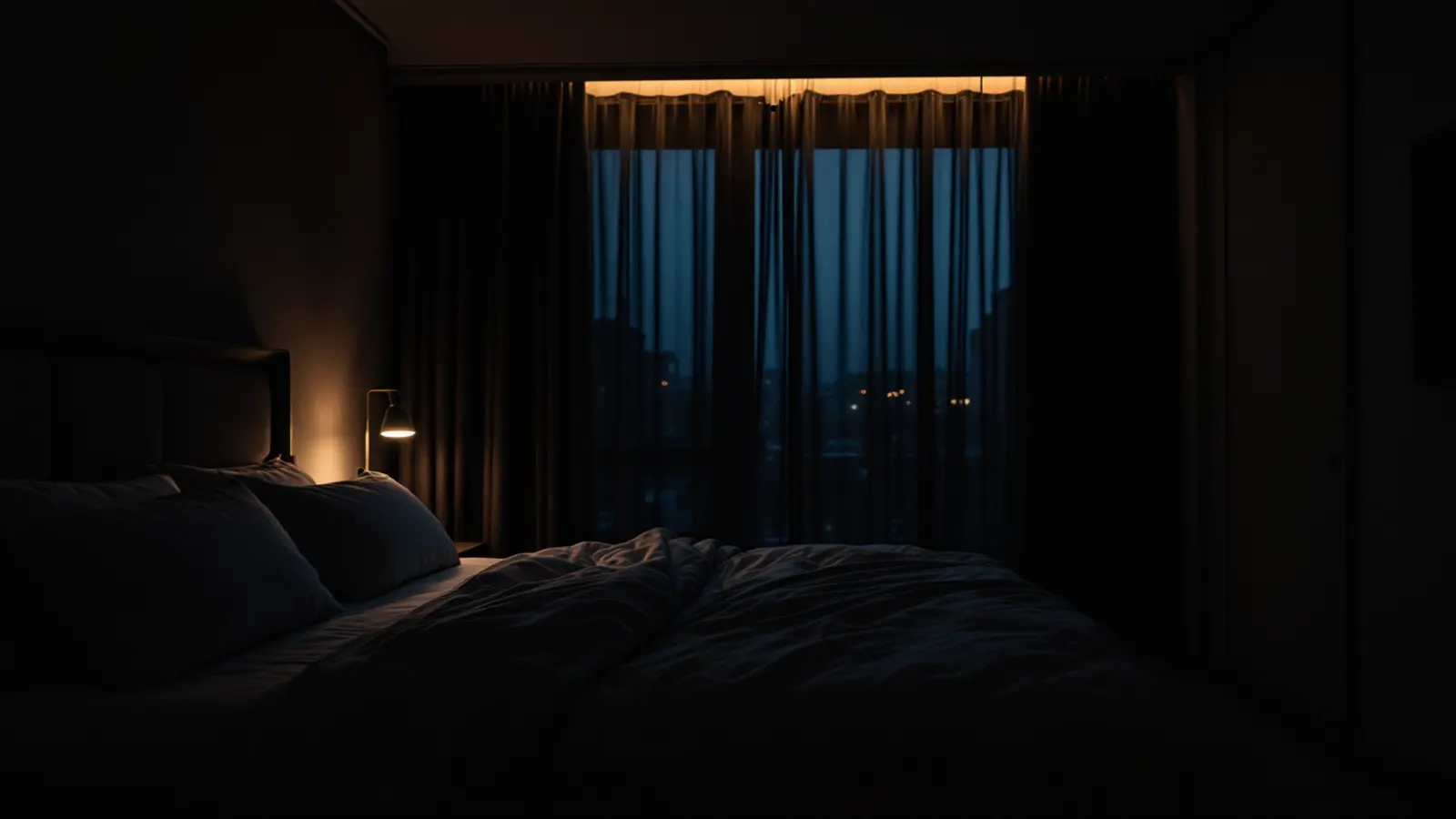
Most hotel room design is judged on a photo: the headboard, the lamp, the view from the bed. The guest judges it at three in the morning, when the air conditioning switches on and a red standby light glows across the room. If a room looks calm but does not let a tired person sleep, the design has missed its main job.
That gap was the focus of a roundtable on mental wellness in hospitality with Keith Dickey, Chairman and CEO of Youmind, which produces neuroacoustics to help regulate the nervous system; Henri Munyengango, Regional Director, Design Strategies, Americas at IHG; and Rod Eggleston, Onboard Culinary Experience Lead at Delta Air Lines, who earlier led hotel openings at InterContinental Hotels Group. You can watch the full conversation in the series The Sustainable Stay.
Why hotel room design should start with how guests arrive
Guests rarely walk into a room rested. Rod's consumer insights from aviation show that travelers reach the airport with a high level of anxiety before anything has happened: packing, traffic, security. Henri sees the same at a hotel's front door. Travelers are at their most vulnerable in a foreign environment, so the first goal is to give them back a sense of control, through wayfinding and a clear path to check-in, the bar or a water station.
Keith calls this accumulated stress allostatic load: small micro threats that build up through the day, like filling a cup of water. In his view, hotels handle check-in well and then lose the guest a minute later. A guest who cannot find the elevator bank, does not know whether to turn left or right, and cannot find the light switch has collected new stress before the first night starts.
“So while the experience matters, it cannot be at the expense of the biological reality of the human being.”
Keith Dickey, 17:45
What drives a good night's sleep in a hotel room
Keith points to a 2021 study that looked at 609 travelers, half business and half luxury travelers, with no difference between the two groups. Sleep and guest satisfaction turned out to be tied together. The researchers narrowed the possible causes down to 26 variables and ran a regression analysis. According to Keith, the three factors with the clearest impact on a satisfactory night were:
- HVAC noise, the sound of the heating and air conditioning
- the comfort of the pillows and the sheets
- noise from outside the room
Keith also points to the first night effect: in a new environment, part of the brain stays on and keeps scanning for sound. When the air conditioning kicks on and off in an unfamiliar room, a guest wakes up over and over again, and the stay is off to a rough start before breakfast.
The small details a guest notices on the first night
Many sleep problems are tiny. Keith describes a five star hotel in Switzerland with blackout curtains that still left a gap, plus red lights on the TV and the phone and a glowing alarm clock, none of which he could switch off. People who know a room stop seeing these things. A new guest sees all of them. A careful hotel housekeeping round can catch them first.
Henri agrees that sleep is understood as important. Every brand in his portfolio has a rollout blackout shade, because light leakage matters, especially for flight attendants or night shift workers. He also admits a blind spot: he has discussed HVAC noise with suppliers, but never the standby lights on TVs or phones. A useful night time check for any guest room covers:
- the sound of the HVAC when it switches on and off
- where the unit sits, central or in the window sill
- blackout curtains that close without a gap
- standby lights a guest can turn off
- light switches a guest can find right away
- pillows and sheets, the second factor in the study
Why a calm photo is not a calm room
A space can look restful in a booking photo and still work against the people in it. Keith's example is the vaulted ceiling with a chandelier: beautiful, and an acoustic nightmare, because every sound echoes back several times. In his view design has long been led by sight, while the nervous system responds mainly to sound and temperature. A strong photo still matters, as hotel room photography sells the room before the guest arrives.
“You've designed an Instagrammable beautiful aesthetic moment that is biologically combative to the human being that's gonna be in that room.”
Keith Dickey, 34:00
Henri adds that noise is fine when it is intended: Las Vegas is loud on purpose. The risk sits in spaces that are later repurposed without rechecking the acoustics, and in lighting, such as a beautiful restaurant where guests cannot read the menu. Keith draws the line this way: in some places design should put the experience first, but in a private, quiet hotel room the experience to design around is sleep and recovery.
Balancing hotel room design against cost and owner ROI
Rod explains that owners and franchisees compare prices: a slightly noisier HVAC system might be, in his illustrative figure, a thousand dollars cheaper, a saving repeated across 200 rooms. That choice works directly against the quiet room the design team wants.
Henri describes comfort as a combination. A good HVAC system, a good mattress and good blackout together give guests their respite; when one is of inferior quality, dissatisfaction jumps. Owners expect a return on investment, so the job is to balance reality, guest expectations and ROI. Retrofitting a 30 year old building to the right acoustic level can be astronomical.
“However, what we have done is continue to work with those owners to phase whether it's, floor by floor to mitigate some of those things.”
Henri Munyengango, 20:21
On what gets compromised first, neither sees a fixed rule. Rod says it depends on the franchisee, the market and the competition. Henri starts from the brand promise, then looks at the location and the main competitors.
Staff are part of the room experience
Rod stresses that the team members who check guests in affect their wellbeing as much as the air conditioning or the shower, so culture and training belong in the design conversation. Keith calls this coregulation: people pick up each other's stress, the way a dog reads its owner's energy. A front desk employee who comes back stressed from a chaotic break room passes some of it on to the guest.
In Keith's view, keeping staff in a regulated state is not only about turnover or burnout; it protects the experience the hotel paid to design. He suggests that giving staff tools to look after themselves, such as a thirty minute walk on the clock, may make business sense. Henri sums up the goal behind good hotel room design: anticipate the guest's needs and create intuitive spaces where guests feel comfortable and in charge.
Frequently asked questions
What matters most in hotel room design for good sleep?
In the 2021 study of 609 travelers that Keith Dickey cites, the three strongest drivers of a satisfactory night were HVAC noise, the comfort of the pillows and sheets, and noise from outside the room. Stray light also counts, such as a gap in the blackout curtains or a standby light on the TV.
Why do guests often sleep badly on their first night in a hotel?
Keith Dickey points to the first night effect. In an unfamiliar room, part of the brain stays alert and keeps scanning for sound, so an air conditioner that switches on and off can wake a guest again and again. Stress from the journey and poor wayfinding add to it.
How can an existing hotel improve room acoustics without a full renovation?
Henri Munyengango notes that retrofitting an older building to the right acoustic level can be astronomically expensive. His approach is to work with owners to phase improvements, for example floor by floor, alongside quieter HVAC units, blackout shades without gaps and questions to suppliers about standby lights.
Does staff stress really affect how guests experience a hotel?
In Keith Dickey's view, yes. Through coregulation, people absorb each other's stress, so an anxious front desk employee passes some of it on to the guest. Rod Eggleston adds that culture and training are part of the experience, because a well designed room cannot make up for a team that cannot deliver it.