






















Managing gen Z hotel staff: what works on the work floor
Alon Shkuri · 19 Oct 2026 · 6 MIN READ
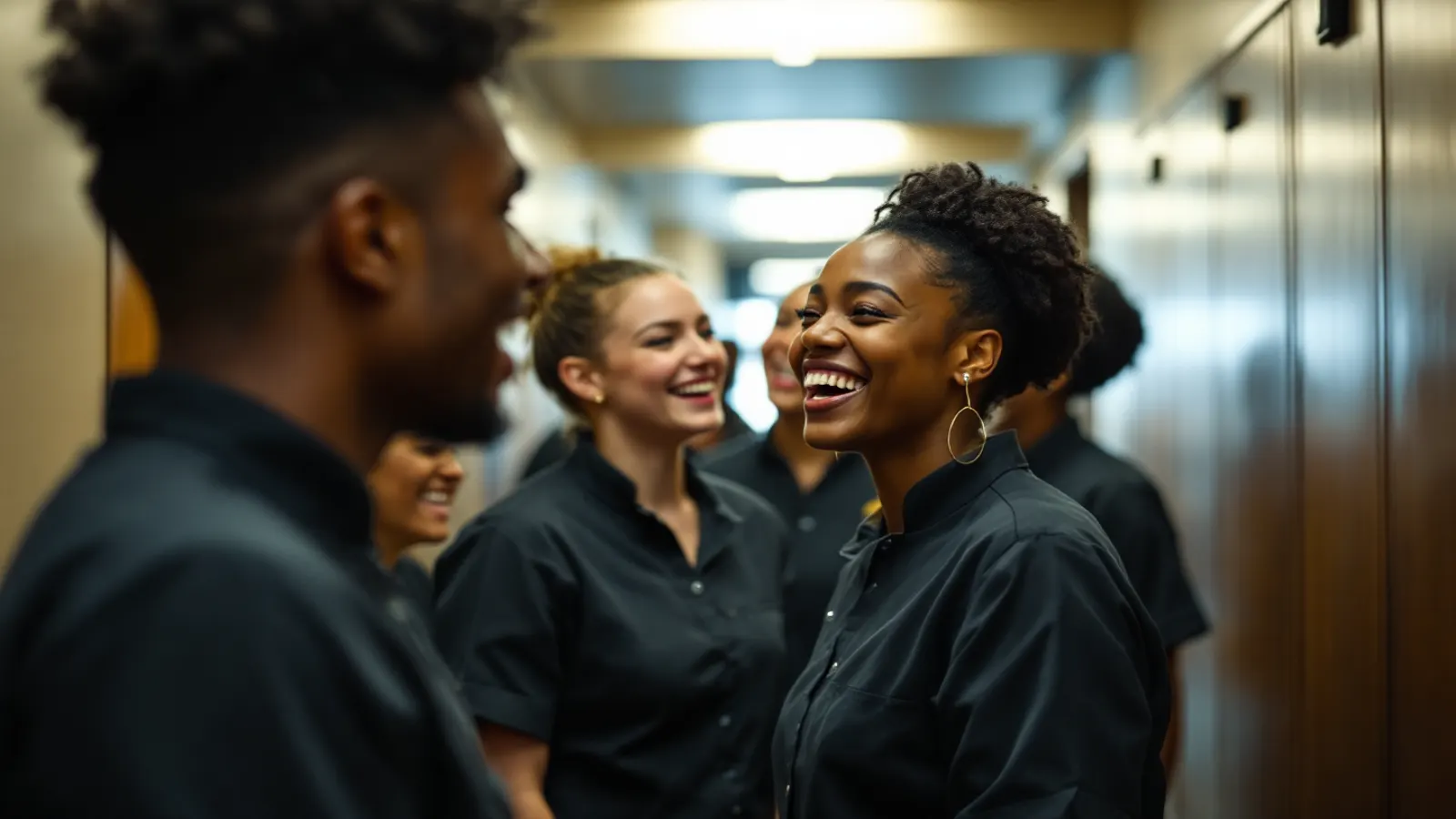
Why do younger hotel employees reply slowly to email, ask for a four day week and leave after six months? Managing gen Z has become a daily question for hotel leaders now that four generations share the same work floor. The useful answer is not a list of complaints. Young staff are not doing the job worse, they are doing it differently, and that changes how you lead, communicate and keep them.
Mark Welbers, General Manager of Carlton Square Hotel in Haarlem, sees this every day. His team runs from baby boomers who are slowly moving towards retirement, through Gen X and millennials, to Gen Z, the generation now starting its first jobs. He calls that mix lucky: it brings challenges, but in his view also an opportunity, as long as people are open to learn and develop.
Managing gen Z starts with a change of perspective
It is easy for older colleagues to write down what younger staff do wrong: less commitment, a wish to work three or four days instead of five, slow replies. According to Welbers that list goes on and on, but it misses the point. The starting point is a willingness to understand the other generation, because what looks like a weakness is often a different set of values.
“The key to understanding them is to put your perspective or their perspective on yours sometimes.”
Mark Welbers, 33:10
For any hotel the lesson is the same. Before you judge a behaviour, look at it from the younger colleague's side. Welbers says you can apply that approach to every aspect of work.
Why younger staff do not answer email
A frequent frustration in mixed teams is communication. Older colleagues send an email and expect a quick reply, or a reply with the answer they had in mind. When it does not come, it reads as a lack of effort.
Welbers changed his own view after a professor who researches generations told him that Gen Z sees email the way older generations see the fax: an old fashioned way of communicating. Seen from that angle, it makes sense that young staff prefer WhatsApp, Messenger or another social platform for daily contact, and use email for formal matters such as a contract. The practical point for managers: use the channels your team actually uses, and keep email for what it is good at. Gen Z also books travel on trust, as seen with alternative payment methods.
What builds loyalty in younger hotel staff
A common complaint about young employees is that they lack loyalty. Welbers does not agree. In his experience Gen Z values work and is willing to commit, on one condition: they need to feel part of a group and know what they are working for.
“They value work still, and they're not lacking loyalty or commitments, as long as they feel part of a group, and there is a cause they're working for, that they should have a cause is very important to them.”
Mark Welbers, 34:23
He contrasts this with older generations, for whom a job was not a given. If you had one, you kept it for ten, twenty or thirty years and did not take the risk of changing. Gen Z grew up with more options. If a place does not suit them, there is a plan B, C and D, and they move to the next door. For a hotel, that means the reason to stay has to sit in the work itself: a team that feels like a group and a clear purpose behind the daily tasks. That is also the core of an employer branding strategy for hotels.
Why young employees quit too early
The loyalty question is closely linked to speed. Younger generations are used to instant gratification, something Welbers also sees in guest expectations. Yet some of the most important parts of personal growth are not efficient at all. Building relationships and gaining practical experience take time.
When a young employee who is not used to waiting enters a job where important things move slowly, impatience follows. They feel they are not making an impact, decide the role is not working and quit. This is where managing gen Z becomes real work for experienced colleagues.
“That's the moment where I feel that our generation should step up and put a hand on their shoulder and say, it's okay.”
Mark Welbers, 36:39
If managers have those conversations more often, Welbers expects to keep young staff for one, two or maybe three years. They will still move on at some point, because they need to, and that is good for them. The difference is that they leave proud of what they achieved, instead of changing jobs every six or seven months because progress felt too slow.
Practical steps for leading a mixed generation team
Put together, his approach gives any hotel a short checklist for managing gen Z next to older colleagues:
- Look at a behaviour from the younger colleague's perspective before you judge it.
- Use the channels your team uses for daily contact, and keep email for formal matters.
- Make the team feel like a group and make the purpose of the work explicit.
- Tell young staff when they are growing, especially when they feel progress is slow.
- Accept that people move on after a few years, and aim for them to leave proud rather than frustrated.
Welbers places this in the wider labour market. Since COVID he sees a positive shift: hotels understand that they have to take good care of their guests and even better care of their employees. Partly that comes from shortage, because it is hard to find young staff who want to stay for a long time. Hotels have to adjust and adapt, he says.
How to make hotel work attractive as a career
Part of the challenge sits outside the hotel. Hospitality used to be seen more as a profession, while today many people see it as a side job during school or between jobs. Welbers calls that a wrong impression. The work takes a certain skill set and talent, like any other profession, but because the industry accepts anyone who is willing to learn on the job, it is undervalued. That image also affects hospitality recruitment and what candidates expect.
His advice to newcomers, young or changing careers, is to rotate. Go through all departments, from the kitchen and reception to revenue and sales and marketing, learn how a hotel works behind the scenes, and then choose where you fit best. He compares a hotel team to a big household with its own kitchen, housekeeping and reception.
To hear him describe his team in his own words, watch the full conversation, or find more episodes in the Lead the Experience series.
Frequently asked questions
What is the best approach to managing gen Z hotel staff?
Start by understanding their perspective instead of listing what they do wrong. In Mark Welbers' view, Gen Z is not worse at the job, just different. He recommends regular conversations, a team that feels like a group, a clear cause behind the work, and telling young colleagues they are growing, even when progress feels slow to them.
Are gen Z employees in hospitality less loyal?
Not in Welbers' experience. He says Gen Z values work and does not lack loyalty or commitment, as long as they feel part of a group and work for a cause that appeals to them. The difference with older generations is that they have more options and change jobs more easily when a place does not suit them.
Why do younger hotel staff respond less to email?
A professor who researches generations told Welbers that Gen Z sees email the way older generations see the fax: an old fashioned channel. Younger staff prefer WhatsApp, Messenger or other social platforms for daily contact and use email for formal things such as a contract. Once you take their perspective, the behaviour makes sense.
How long can a hotel expect to keep young staff?
Welbers expects that managers who make the connection and have more conversations with young staff can keep them for one, two or maybe three years. After that they will likely move on because they need to. The aim is that they leave proud of what they achieved, not after six or seven months out of impatience.
