






















Rooftop bar concept: from photo stop to local favourite
Alon Shkuri · 20 Oct 2026 · 6 MIN READ
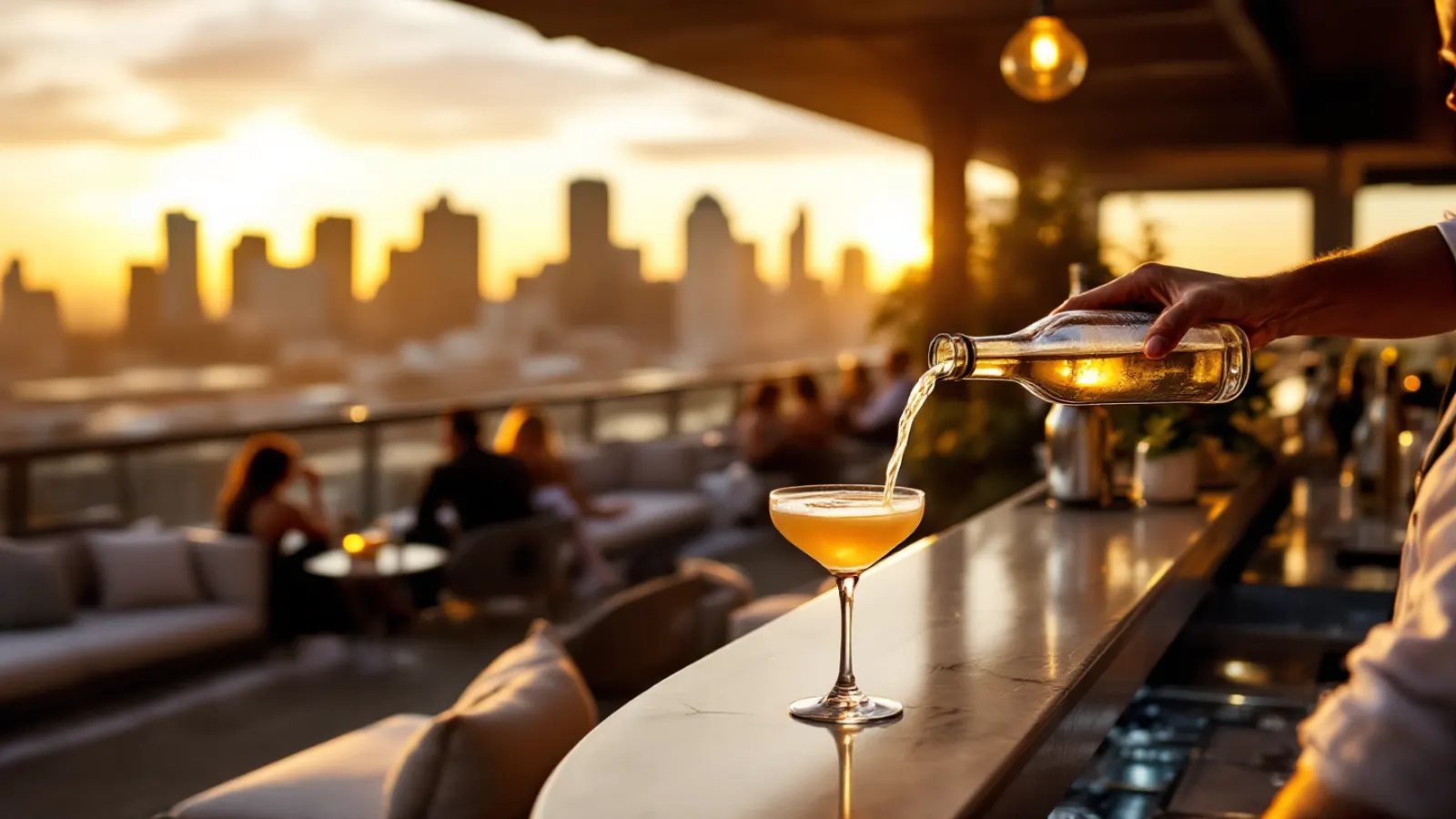
A rooftop bar concept usually starts with the view, and that is exactly where many hotel bars get stuck. The view brings people up once. They take a picture, order a drink and leave, and the venue slowly turns into a photo stop for tourists instead of a place locals choose for their evening. The real question for any hotel with a venue on its top floor is how to become a destination in its own right.
Olga Galiuk has worked in hospitality for more than fifteen years, including more than thirteen years in Dubai, where she ran a rooftop venue for five years. As General Manager of LuminAir Amsterdam, she led the full rebrand of the hotel's top floor bar, which was later named the best hotel bar in the Netherlands. Her approach offers practical lessons for anyone building or rethinking a bar on top of a hotel.
Why a rooftop bar concept needs more than a view
In Galiuk's experience, the hardest part of a rebrand is not the renovation but the perception. The old venue was seen as a photo stop, and the new concept had to break with that completely: no connection to the old place, a renovation of around six months, and a different way of working for the team that stayed.
The goal was to compete with the best standalone cocktail bars, not only in the Netherlands, and to be recognised by those bars as a serious peer. For a hotel bar, she says, that recognition does not come easily. It takes effort to win over the local bar scene.
Her central idea is that a strong concept connects every piece of hospitality: the drinks, the food, the story and the service. That same idea guides any restaurant expansion to new cities.
The team behind a rooftop bar concept
Galiuk is clear that a good story about cocktails and food only works if the people on the floor can deliver it.
“You can have the most exclusive champagne on your menu, if your team, they are not ready to provide great service, then you might face some difficulties.”
Olga Galiuk, 5:25
Her team includes hostesses, service staff and bartenders, many of them young, from 16 to around 25. She leads together with a floor manager and a bar manager, and the three of them try to be on the floor with the team as much as possible. The aim is trust, so staff are never afraid to report a mistake. The same trust drives hotel restaurant management across several outlets.
A few practices from her approach stand out, and any hotel bar can apply them:
- Connect with every team member on a personal level, starting at the job interview.
- Grow people internally, both into higher positions and into other departments such as marketing and events.
- Give staff the independence to fix an unhappy guest's situation on the spot, then report what happened and how to prevent it next time.
- Drop scripted phrases at the table. Staff should be themselves, read the guest from a distance first and then connect personally.
- Keep the work fun, because a young team that enjoys the job stays motivated.
The personal approach pays off commercially. In her view, it creates regular guests, and regulars give a venue a steady income. Many guests come back for a specific team member or for their favourite bartender.
“I always say, you take care of your team, then they will take care about you and about your business.”
Olga Galiuk, 24:17
Winning back locals takes about a year
Reconnecting with the local community was a team effort, not one person's job. Marketing, a PR agency, local magazines, local influencers and special events all played a part, so that word of mouth could spread. Awards helped too, because they reach the news, social media and printed magazines.
Social media matters as much as the drinks themselves, she believes.
“I do believe that social media plays a great role in having your place busy and how you make pictures of your drinks, how you represent your cocktails, what is the storytelling behind each and every dish and cocktail.”
Olga Galiuk, 14:06
She adds a warning: what guests see in a picture must match what they find in reality. Consistency is the point.
How long did it take before locals came back on their own? Around one year of consistent hard work, according to Galiuk. And the work never stopped. The team keeps attending local events, because the moment a venue thinks it is the best, someone else who works harder can take its place.
Speed and consistency at high volume
A busy rooftop venue faces a problem that small cocktail bars do not. Galiuk describes days with a minimum of around 600 guests and up to 1,000. Serving that many people precise, beautiful cocktails is different from serving forty or fifty, and guests still expect their drinks on the table within three to five minutes.
The answer was preparation behind the scenes. The team works a lot with pre batching and has its own lab where cocktails are created. Guests only see the result of that precise work.
Designing the guest journey from the lobby up
A rooftop bar concept inside a hotel has an advantage that standalone bars lack: an audience that is already staying in the building. Galiuk says the bar became a destination that guests consider when they book their room, and that being one of the best rooftops in the country makes a real difference.
To make that work, the journey has to be visible from the moment a guest enters the building. Her suggestions:
- Give hints on the ground floor, so guests know where to go and sense how special the bar is.
- Use the ride up. Her hotel has an experience elevator that plays videos of the bar with music, so the feeling starts before arrival.
- Reach in-house guests after booking with a newsletter about what they can do in the hotel's venues, alongside a digital city guide.
- Show the daily programme in every room and update it when promotions change.
- Make the visit warm from start to finish: greet, escort, tell the story of the menu, take the jackets and say a proper goodbye.
She also advises promoting the venue like a standalone bar, especially on social media, so guests lose the feeling that it is just a hotel bar. Where hotel bars go wrong, she says, is in following every rule of the hotel industry without trying new ideas.
That openness shows in the programming. Every day offers something different, planned in monthly brainstorm sessions where crazy ideas are welcome. If something does not work, the team changes it.
Galiuk also expects guests to become more open to hotel bars as they learn that these venues keep a high standard. You can watch the full conversation for her complete story.
Frequently asked questions
What makes a rooftop bar concept work in a hotel?
According to Olga Galiuk, the view alone is not enough. A strong concept connects drinks, food, storytelling and service into one experience, and it is promoted like a standalone venue instead of a hotel bar. The guest journey should start in the lobby, and a well trained, motivated team has to deliver on that promise every single day.
How long does it take to attract locals to a hotel bar?
In Galiuk's experience it took around one year of consistent work, using PR, local magazines, local influencers, special events and social media. Awards helped to spread the word. She stresses that the work does not stop once locals arrive, because a venue that stops improving can easily lose its place.
How do you serve cocktails fast at high volume?
Galiuk's team serves from around 600 up to 1,000 guests a day and aims to get drinks on the table within three to five minutes. To keep quality and speed consistent, the team works a lot with pre batching and develops its drinks in its own cocktail lab. Most of this work happens in the back area before the doors open.
How do you keep bar staff motivated?
Galiuk connects with her team on a personal level, stays on the floor with them and builds trust so that problems are reported openly. She grows people internally, gives them the independence to solve guest issues, and keeps the work fun. Her motto is that a team you take care of will take care of your business.
