Hotel restaurant management: three outlets, one team
Alon Shkuri · 19 Oct 2026 · 6 MIN READ
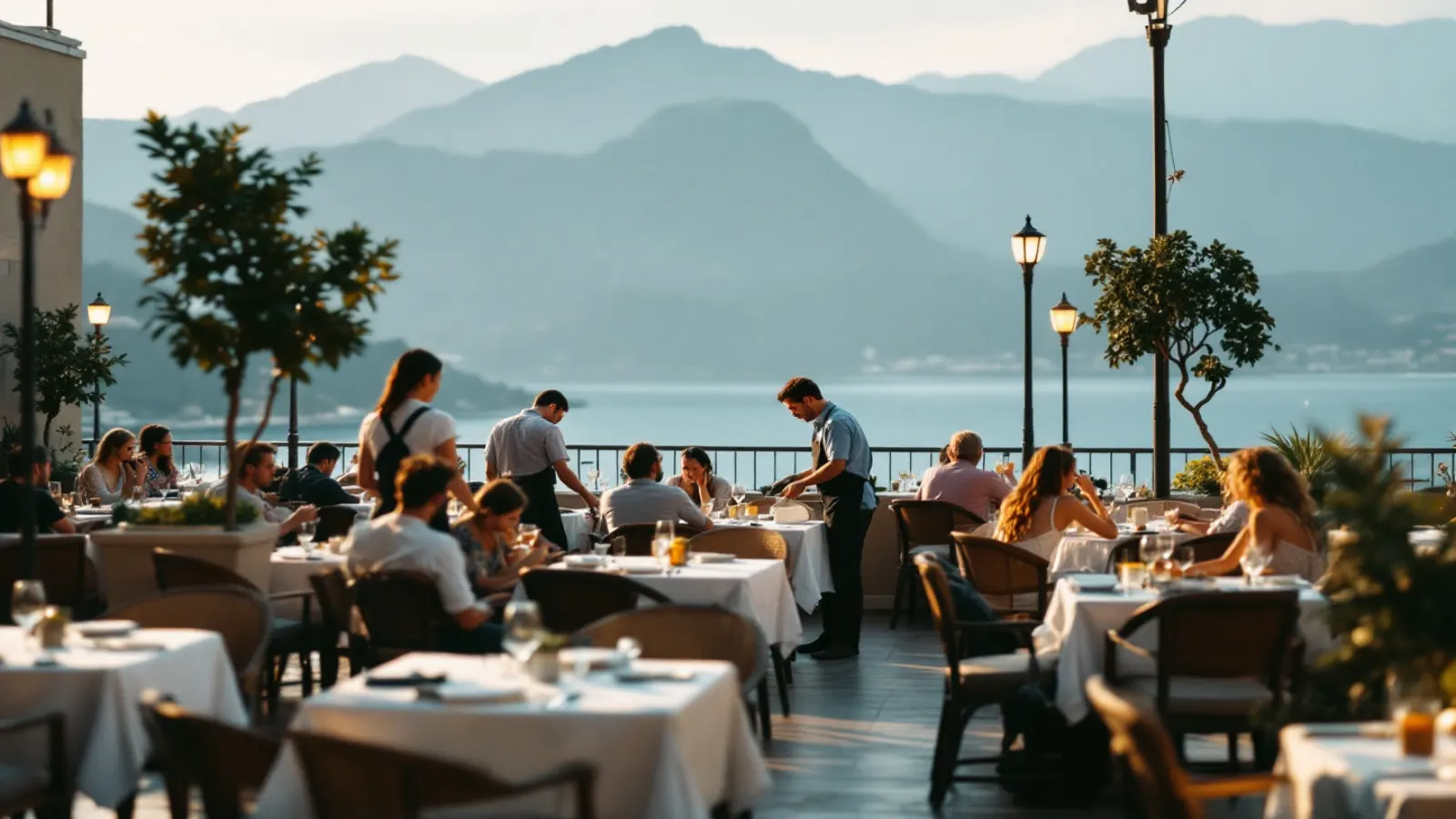
Hotel restaurant management gets hard when the restaurants are not a service for the rooms but the main business. Picture a hotel on an island with three restaurants side by side, each with its own concept and menu, open 365 days a year and with a season that swings between full and quiet. Who do you hire, how do you keep a team together, and how do you lead people so that three outlets feel like one house?
Harold Pekel, Hotel Manager of a hotel on Vlieland in the north of the Netherlands, runs exactly that kind of property. He grew up in an expat family with a father who was an executive chef, started as a kitchen apprentice at 14, worked from fast food to two-star Michelin kitchens, and later managed restaurants and openings in China, Singapore, Qatar and Dubai. His lessons apply to any hotel where food and beverage carries the numbers.
What hotel restaurant management means when restaurants carry the hotel
The first step in hotel restaurant management is honesty about what kind of business you run. Harold Pekel describes his property as more of a restaurant property than a hotel property, because the majority of the income comes from the restaurants. That changes the priorities: the menus, the terrace and the dining room decide the year, not only the room rate. That is why hotel F&B works best when the hotel thinks like a restaurateur.
Three individual restaurants with three individual menu cards bring their own challenges, and a strong seasonal pattern makes them sharper. In his words, a seasonal business is either running or standing still. Planning, purchasing and staffing all have to follow that rhythm.
Building a seasonal team that holds together
For Harold Pekel the hardest part is people. Staff is difficult to find, and getting a team together and keeping it together is a second challenge. Every year it is a challenge to get the right people in the right positions.
“Obviously, we don't want to have a high turnover concerning staff, keep that as low as possible.”
Harold Pekel, 6:38
His model is an onion: a core team that stays, with seasonal layers added in the busy months and peeled off again in the low season. What helps him build that core:
- A stable core of people who stay all year and carry the standards.
- Returning colleagues: several staff from last season coming back is, in his view, a real plus.
- A central HR department, shared with around fifteen other hotels in the same group.
- International workers, whom he is more than happy to have, even if some guests on holiday expect to be served in Dutch.
The lesson for any seasonal operation: invest in the core first, because the core is what makes the seasonal layers work.
Trust and shared decisions as a leadership model
Asked what builds a successful food and beverage culture within a hotel, Harold Pekel answers that trust is number one and quality is number two. You need a team you can rely on no matter what. Mistakes will be made sooner or later, but if the team learns from them and moves forward together, it becomes stronger, and that is the base of a good product.
His style comes from working in several cultures. As a Dutchman he was used to being direct. In Asia he learned to approach a subject more gradually and to do things together. One piece of advice from a director in Shenzhen stayed with him: think first before saying something. Today he tries to run his team like a family and to involve as many people as possible in decisions, so that everybody is behind them and stays open for feedback.
“It is not my way or the highway. It is we do it. It is our hotel. It is our restaurant. It is not me or I. It is us, and that's the way I like to manage it currently.”
Harold Pekel, 9:57
For a business with several outlets, that shared ownership matters. Three restaurants cannot depend on one person making every call. The same principle drives kitchen leadership in fine dining: freedom inside clear boundaries.
Standing out when the competition is next door
An island is small, and in Harold Pekel's street alone there are seven or eight eateries and hotels. His answer is the concept mix. Three restaurants next to each other, with three different concepts, are already something different, and some of those concepts cannot be found elsewhere on the island. Add the hotel on top, and the property offers a choice that single restaurants cannot.
The broader point: in a crowded street, distinct concepts under one roof are a competitive advantage, provided the team behind them works as one.
Guest attention matters more than speed
Guests increasingly want things fast. Harold Pekel does not fight that with speed alone. In his experience it starts with the welcome and the greeting: if a guest feels at home within the first two minutes at the table, five or ten extra minutes rarely matter, as long as they get the attention they deserve within the limits of the budget.
He remembers a wedding at a bar and bistro he managed in China. Rain forced the team to move everything inside. Then the father of the bride asked if they could move it all back outside, because his daughter wanted to marry outdoors. The team did it, the ceremony started a little later, and the smiles of the couple are, for him, the reason he loves hospitality.
Technology supports that attention rather than replacing it. His hotel uses an AI chatbot that answers guests' practical questions about check-in, checkout and breakfast times, and it was better received than he expected.
“It's basically a sort of FAQ, but then with a sort of intelligence behind it.”
Harold Pekel, 13:50
When the bot does not know the answer, it connects the guest to someone at reception. That handover is the point: routine questions get answered, and people stay available for the moments that need them.
Career lessons for the next generation of F&B leaders
Good hotel restaurant management depends on people who grow into it. Harold Pekel was promoted from intern to restaurant manager within eight months, yet his advice to his younger self is patience. He wanted to rise faster than was good for him. That impatience is familiar to anyone managing gen Z hotel staff. What he tells people starting a hospitality career:
- Take your time. It will come.
- Be accurate.
- Get it done: when someone asks you to do something, do it sooner rather than later.
- See every task as a chance to show yourself and to develop.
- Work hard. Somebody will notice sooner or later.
In his view, it all comes down to people: a core team you trust, decisions you make together and guests who feel seen. You can watch the full conversation or explore more episodes in The F&B Advantage.
Frequently asked questions
What is hotel restaurant management?
Hotel restaurant management is running the food and beverage outlets inside a hotel as a business of their own: staffing, concepts, menus, service and the guest experience at the table. In a property where most of the income comes from the restaurants, as in the example in this article, it is the core of the job rather than a side task.
How do you keep a seasonal restaurant team together?
Harold Pekel's approach is to build a stable core team that stays all year and add seasonal staff around it in the busy months. He works to keep turnover as low as possible, welcomes back colleagues from previous seasons and relies on a central HR department and on international workers to fill the rest.
Why does trust matter so much in F&B leadership?
In Harold Pekel's view trust comes first and quality second. You need a team around you that you can rely on no matter what. Mistakes will be made sooner or later, and a team that learns from them together becomes stronger, which in turn is what builds a good product for the guest.
Do guests accept slower service in a hotel restaurant?
According to Harold Pekel, guests rarely mind five or ten extra minutes if they feel at home within the first two minutes at the table. A warm welcome and real attention throughout the visit buy patience. Attention has to fit within the budget, but it lets a restaurant get away with a lot.